February 2024
From pressing items into clay, you get a texture. I really want to get, for example, a horse portrait on clay. The next thing to try besides sgraffito is pressing a lino cut into the clay tile.
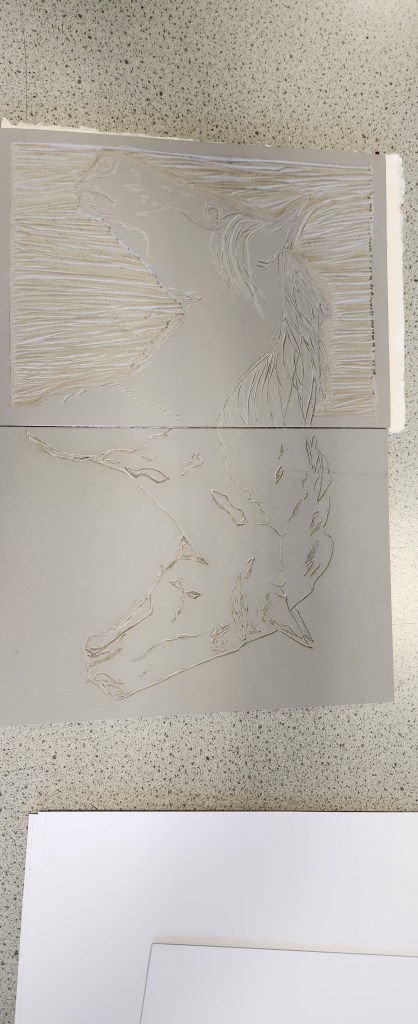
source an image, remove the background, trace the image, I did this in photoshop as well as the traditional way of print photo, use tracing paper and then transfer onto the lino.
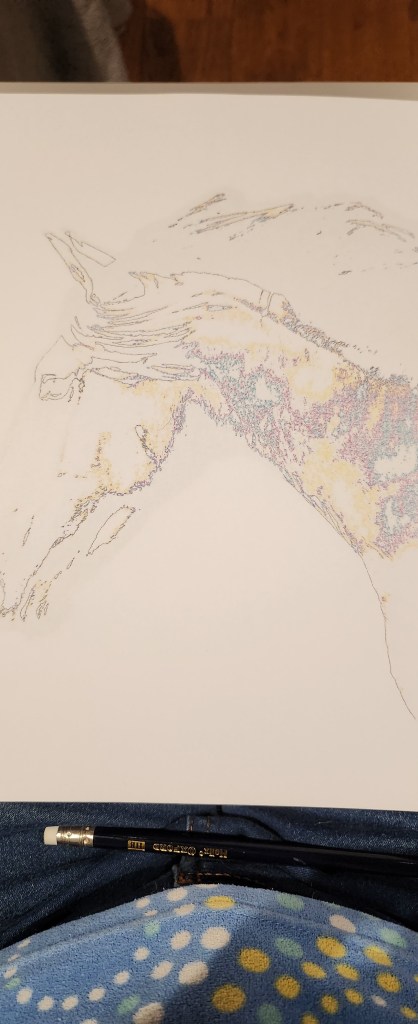
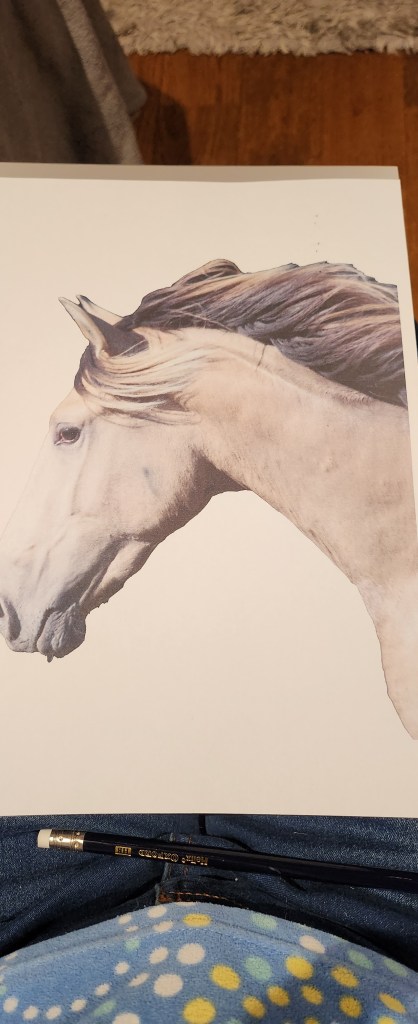
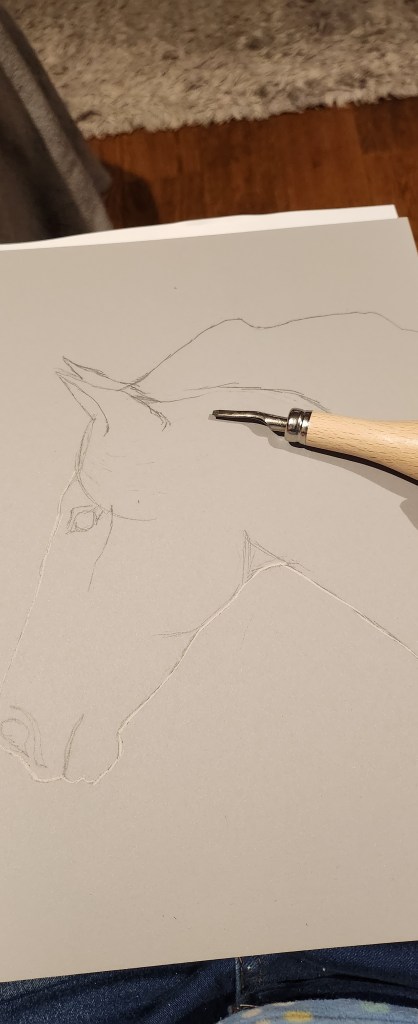
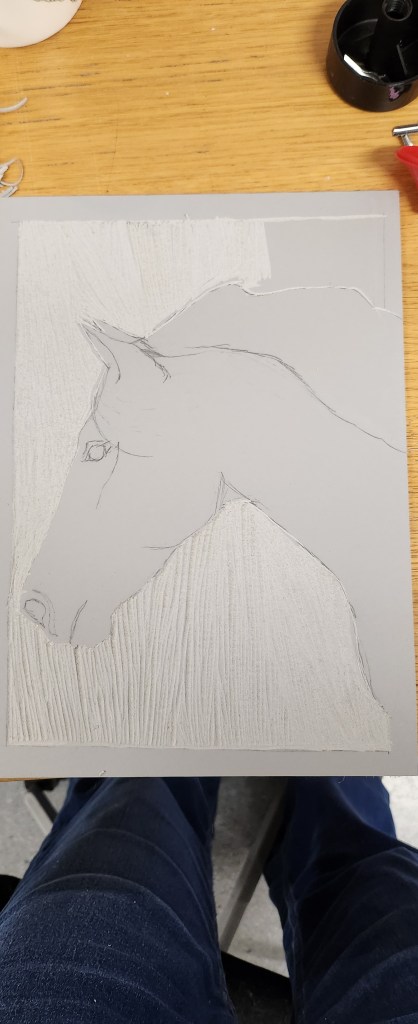

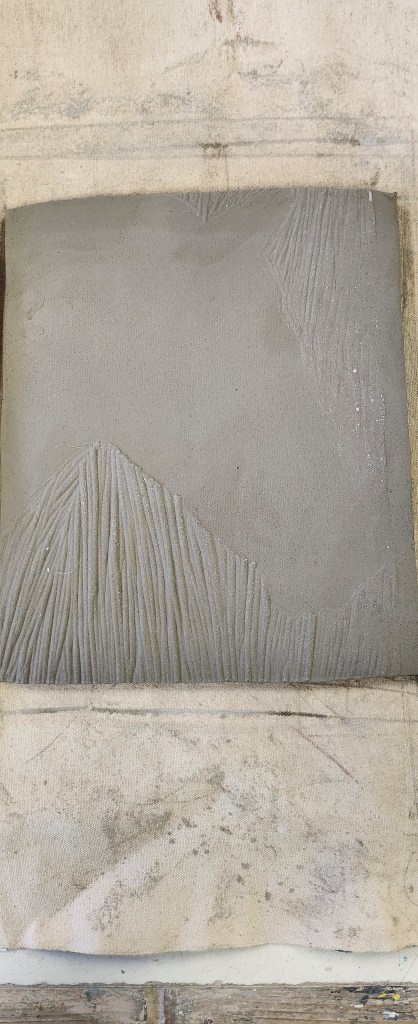
This is when I realised you had to cut into the lino quite deeply for the details to show in the clay.
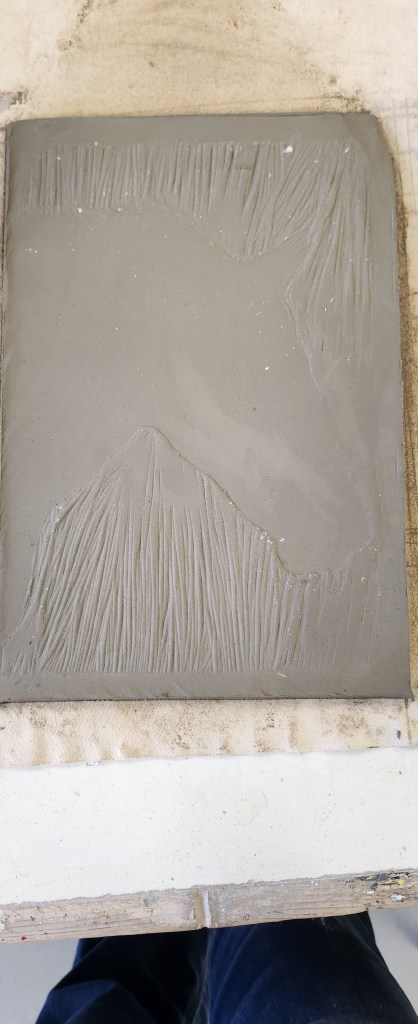

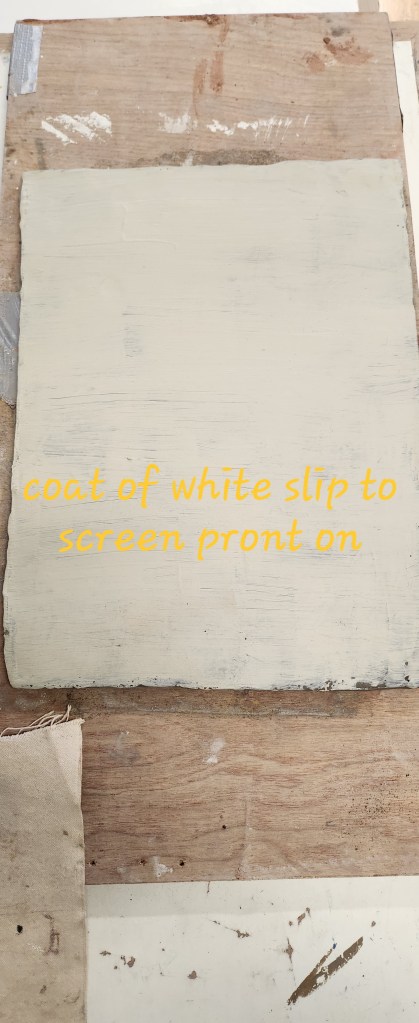
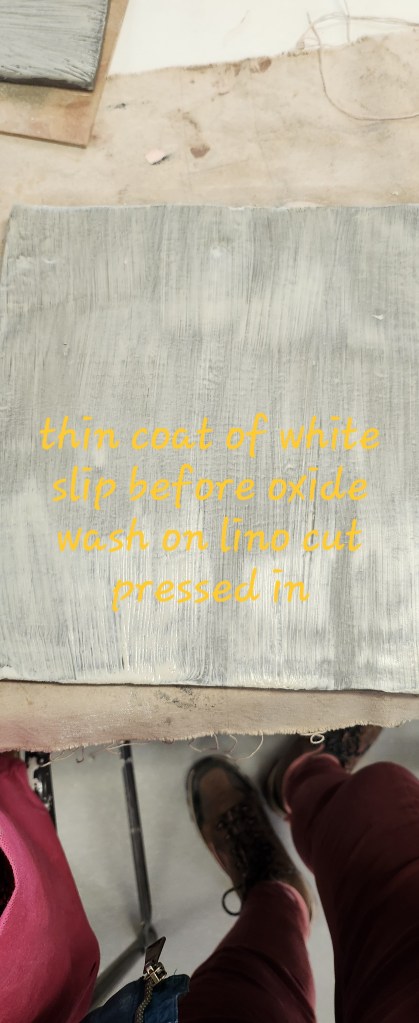
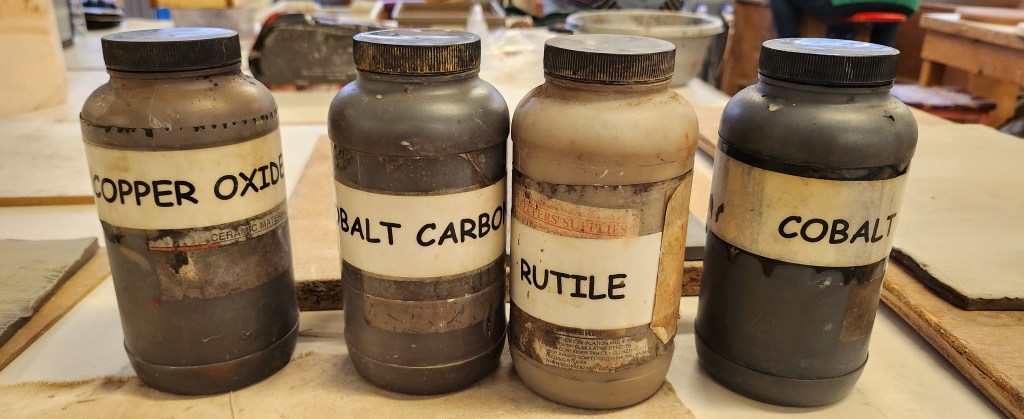
I had a couple of small tiles so on one I pressed the lino into the tile at white slip stage and added the oxides after, on the other I washed the oxides onto the lino and then pressed it into the slip for the oxides to transfer that way.
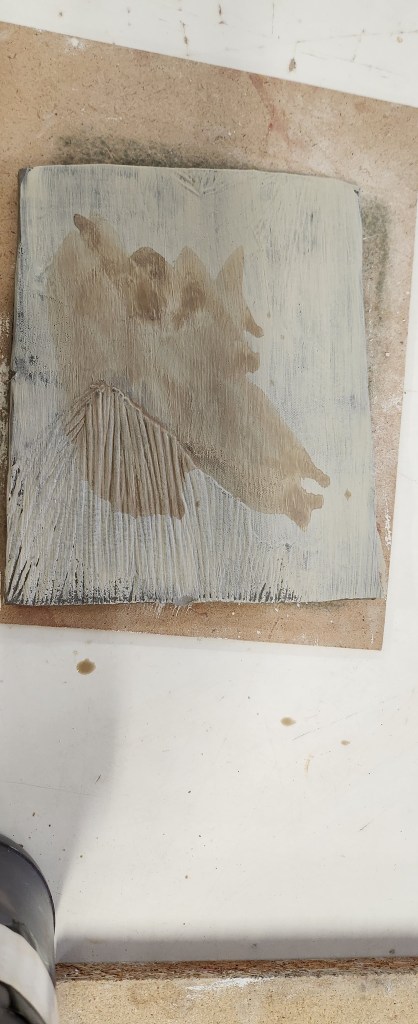
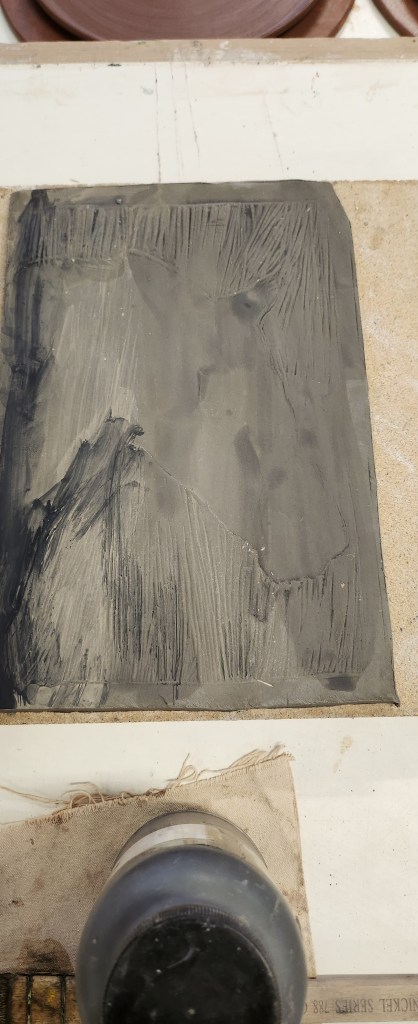
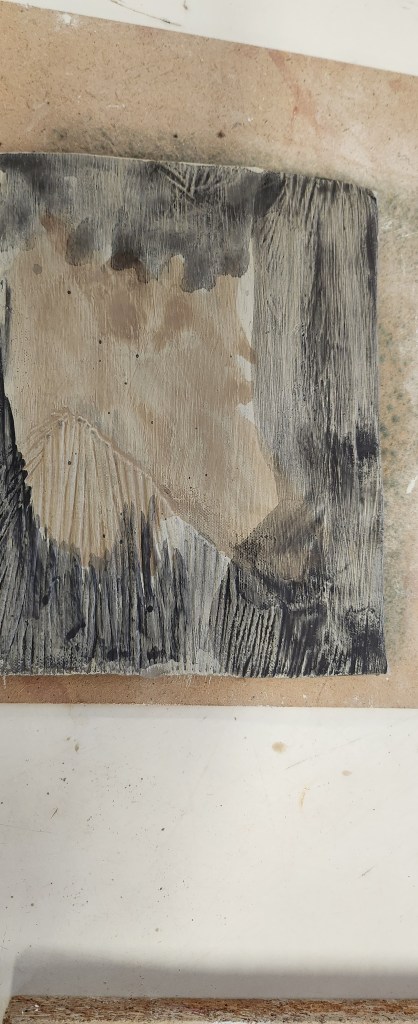

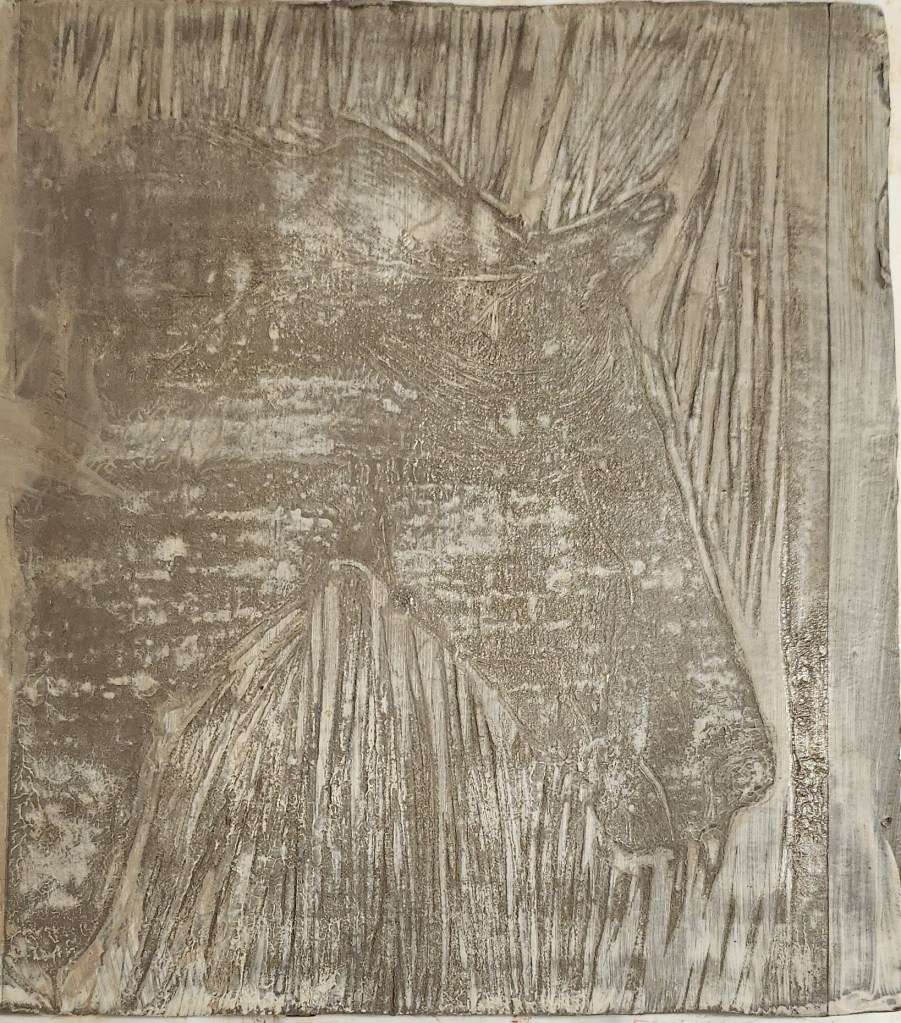
I prefer my second choice, where I washed the oxides onto the lino and pressed it into the clay. It removes some of the white slip with it and leaves a mottled effect.
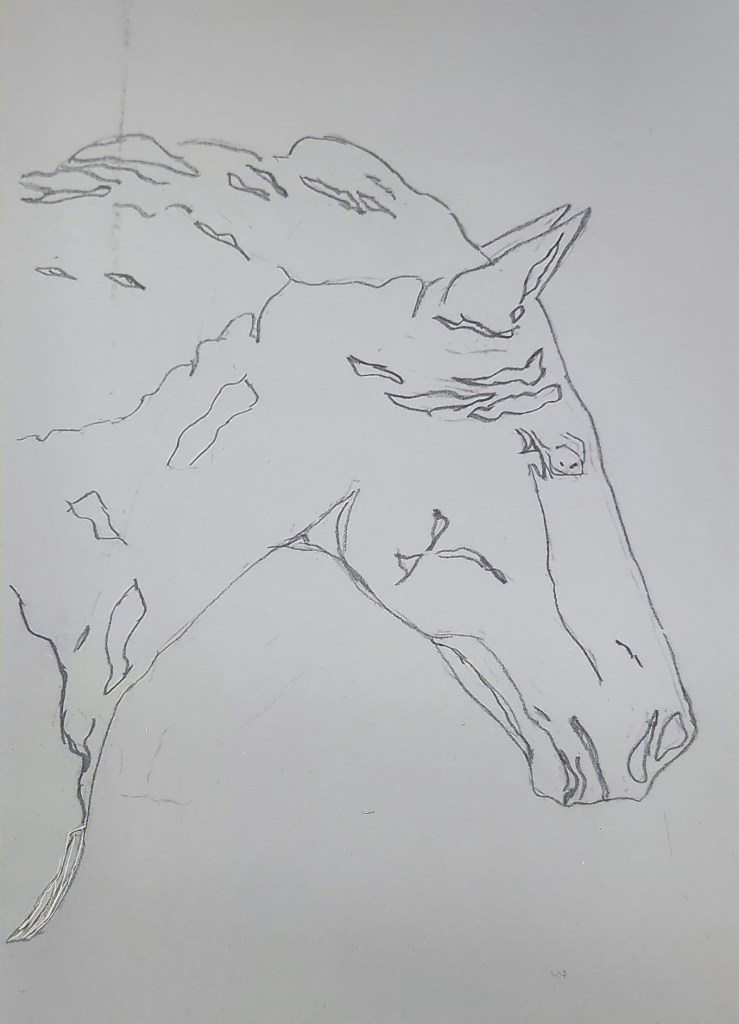
I then decided to do a slightly different trace design, but this time I cut it with the intention to just print on paper.
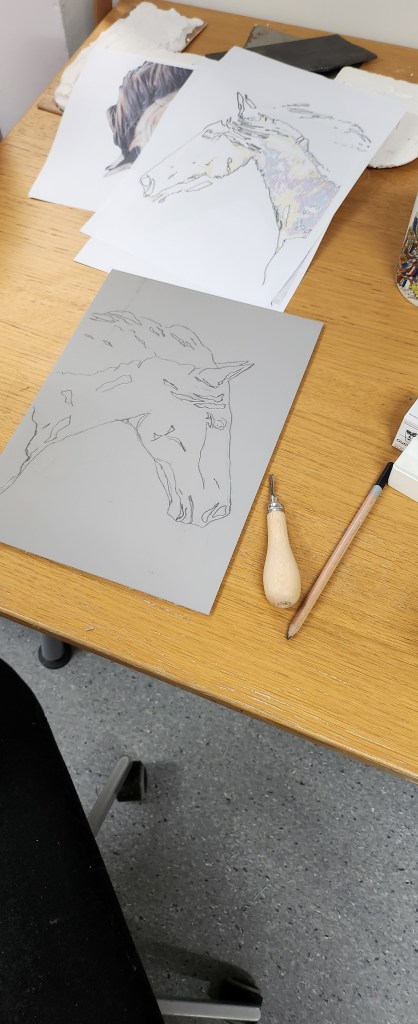
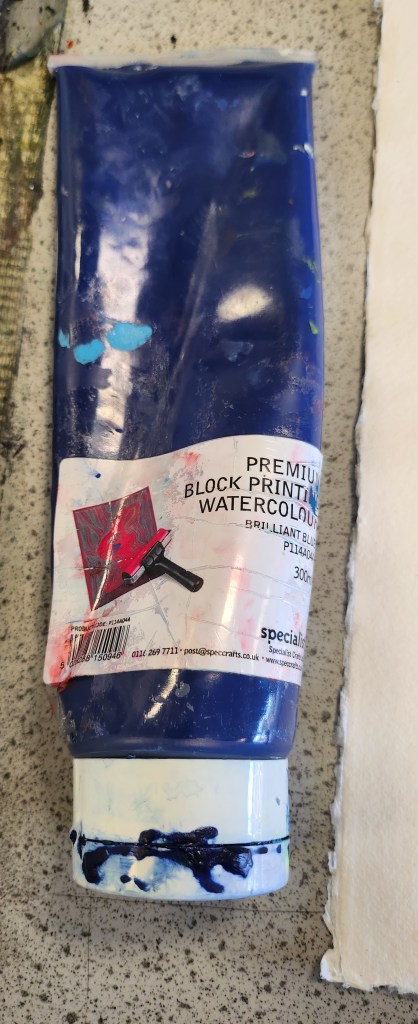
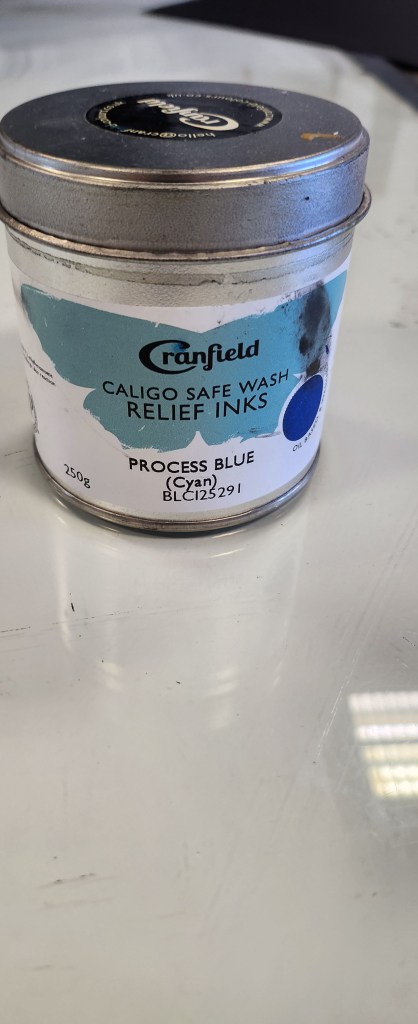
Because I am trying to stay true to being as sustainable as possible I tried using a water colour ink, and a safe wash oil based ink. I chose them both in the same colour so that I could do a comparison.
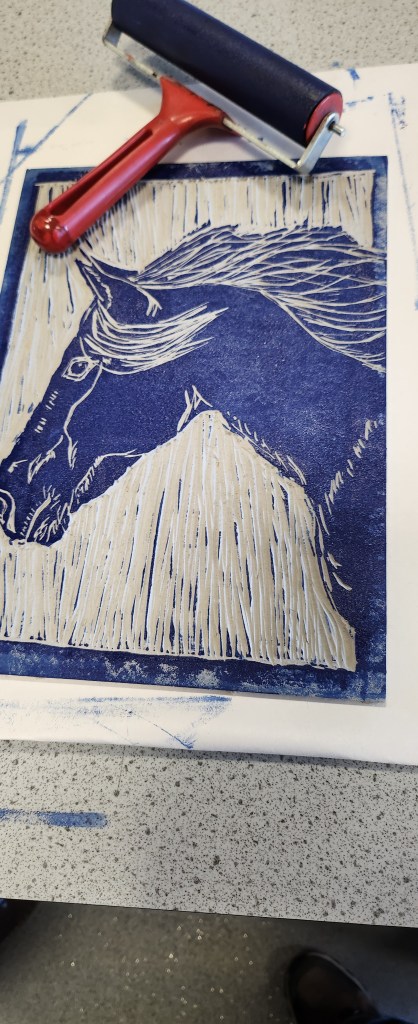
On application to the lino the waterbased ink dried a lot quicker, so you had to have your print roller and paper set up and ready go.
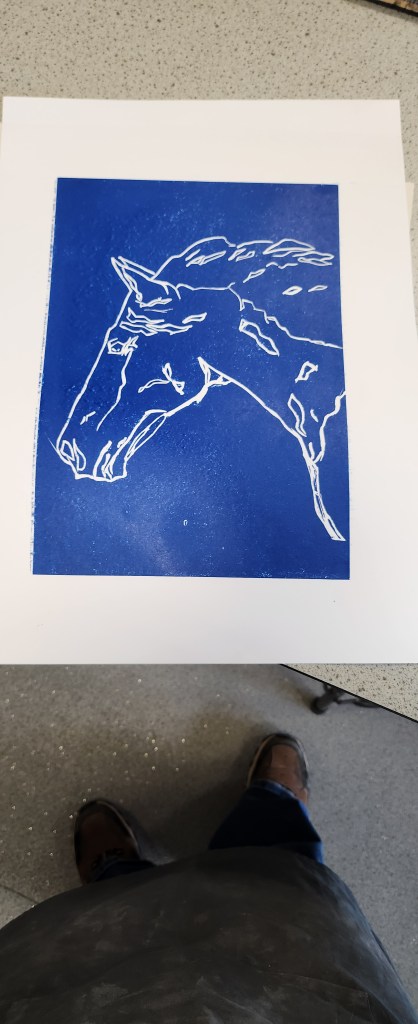

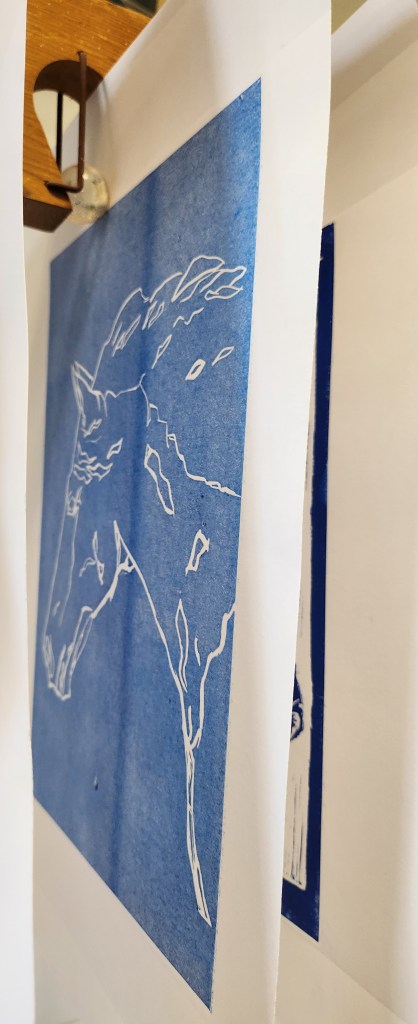
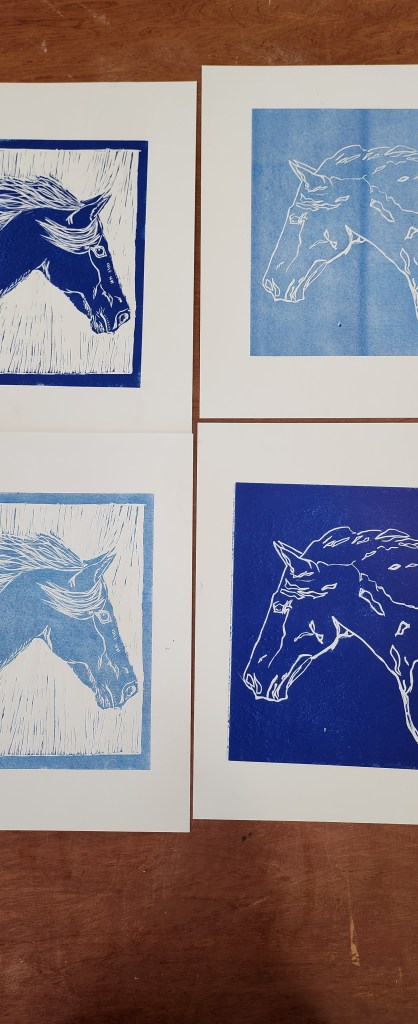
I really love the two images together, and I printed out on Khadi Cotton Rag Handmade paper. I use Khadi papers because they are ethical and sustainable, and support the local enviroment and communities in India and Nepal.
 Helen Louise Art