December 2023
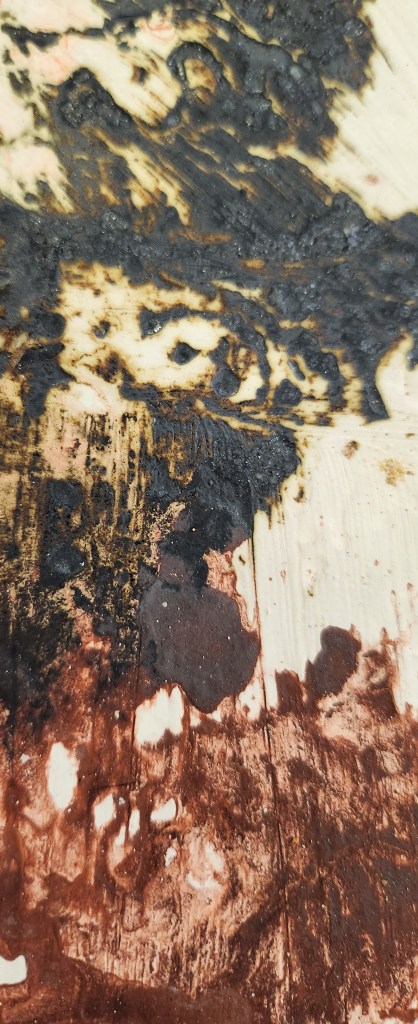
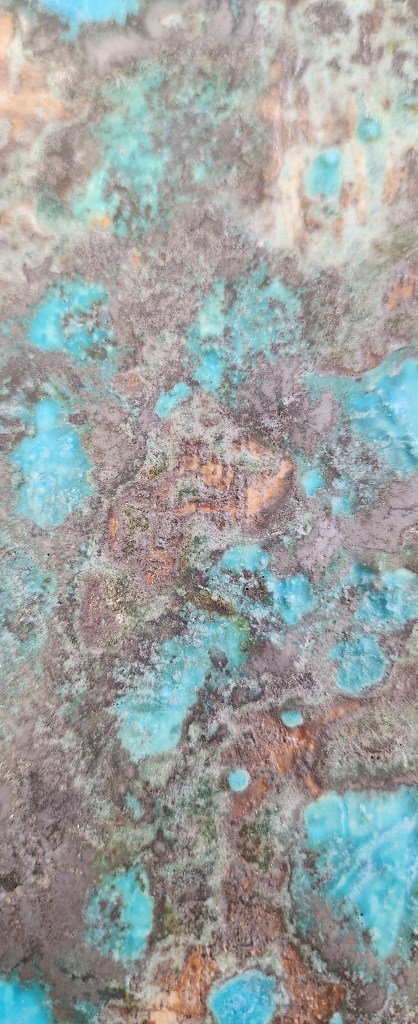
The original slabs are now ready to be glazed. I’ve zoomed in on some of the details it’s interesting how the oxides have highlighted the texture in some area, but in others they have got a bit lost.
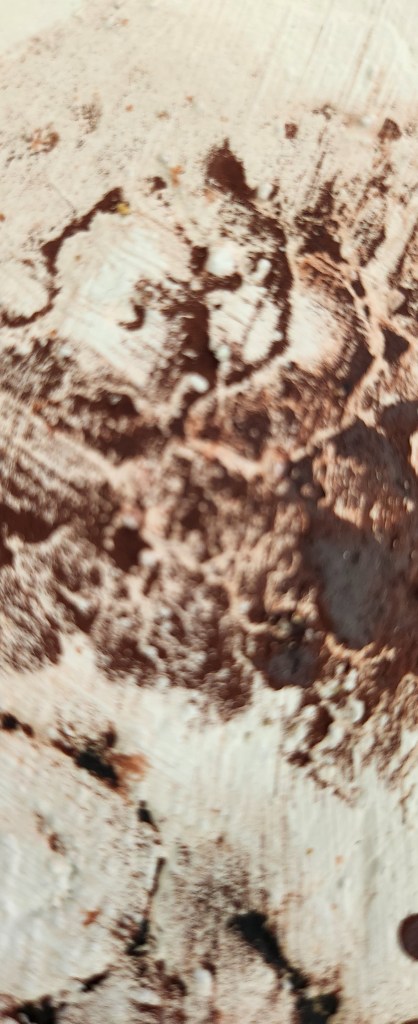
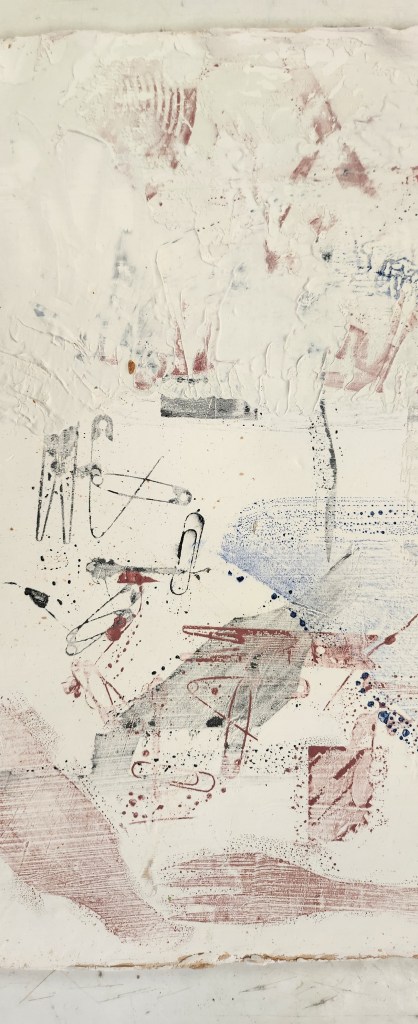
I like how the stains have come out with the image transfers. This has been a successfully experiment. I need to experiment a little with glazes so unfortunately some of this detail is likely to be lost. I found using the stains to do this kind of image transfer a good idea and I will park this for now and revisit it at a later date.
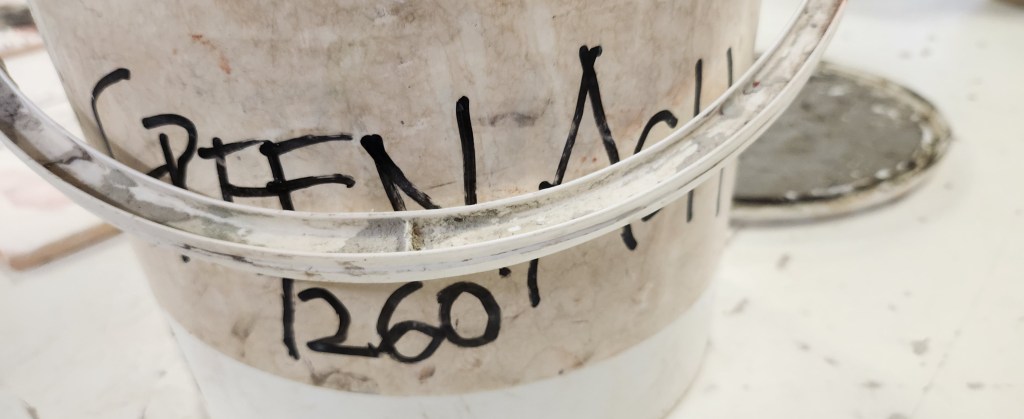
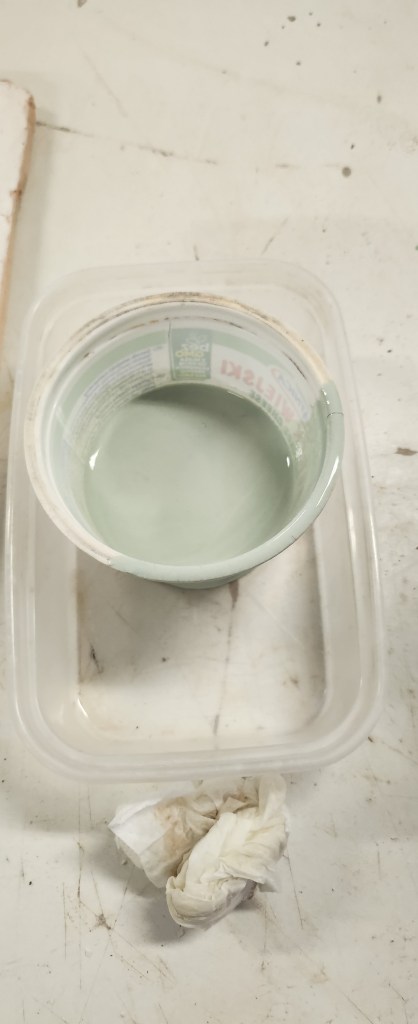
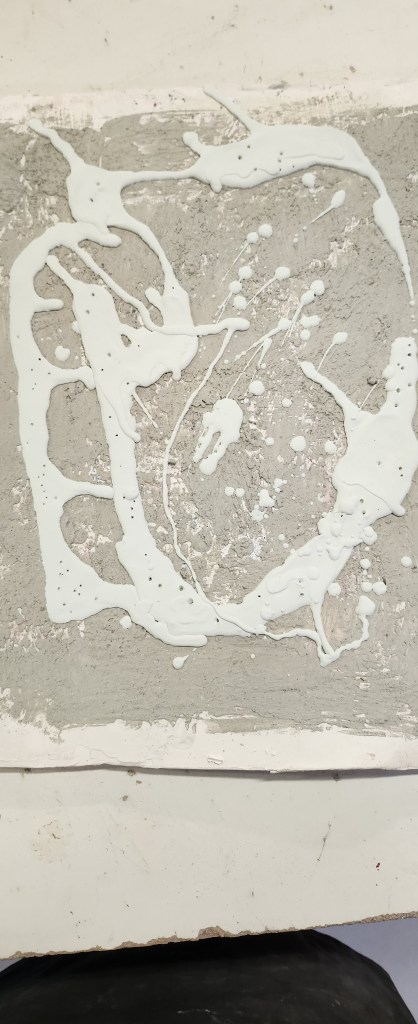
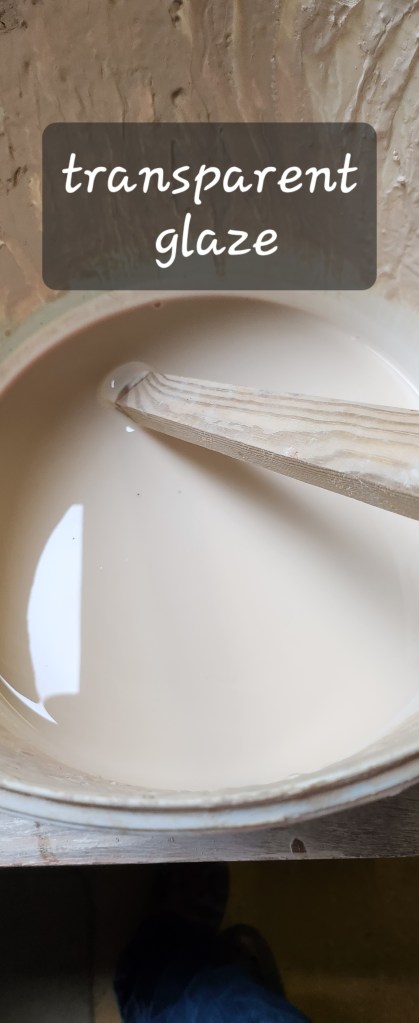
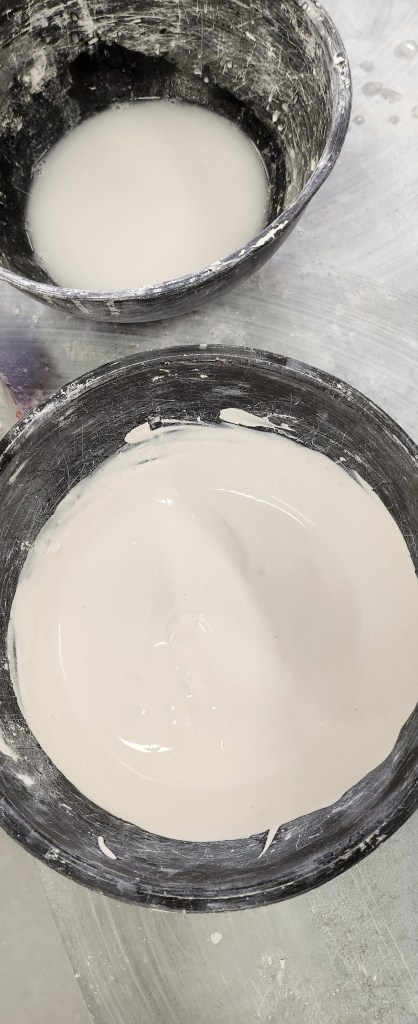
Choosing glazes, I’ve gone for a favourite of mine and two that I haven’t used before. In the interst of being loose and experimental – I just jmkind of splodges it on, didn’t worry about even pouring, or I brushed it over the slabs. The glazes have their own chemistry and can affect each other where they blend or are over each other. The also affect the oxides, and I struggle to remember if I need an earthenware or stoneware glaze to make them retain their vibrancy.
Gaps in my knowledge are the temperatures things need to be fired on – its not because I’m not told, my brain just struggles to retain the information.


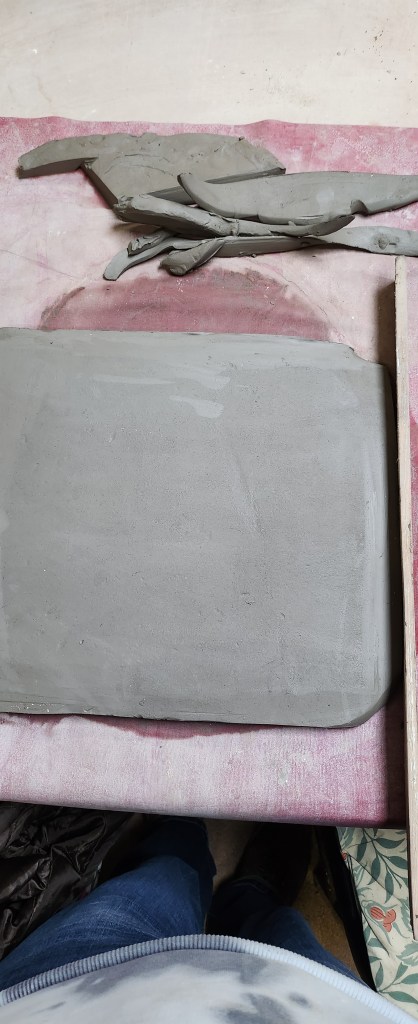
I ought to say my slab making is getting better, but it’s still a struggle to getting the thickness I want whilst keeping the surface as flat and even as possible.
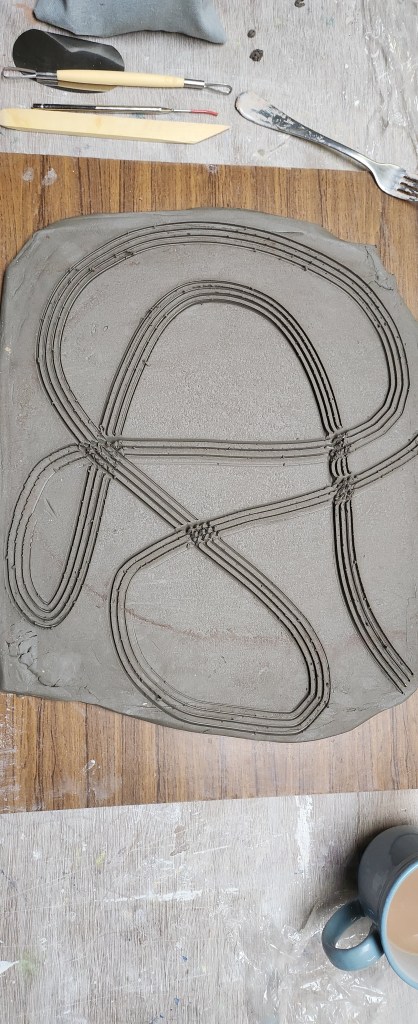
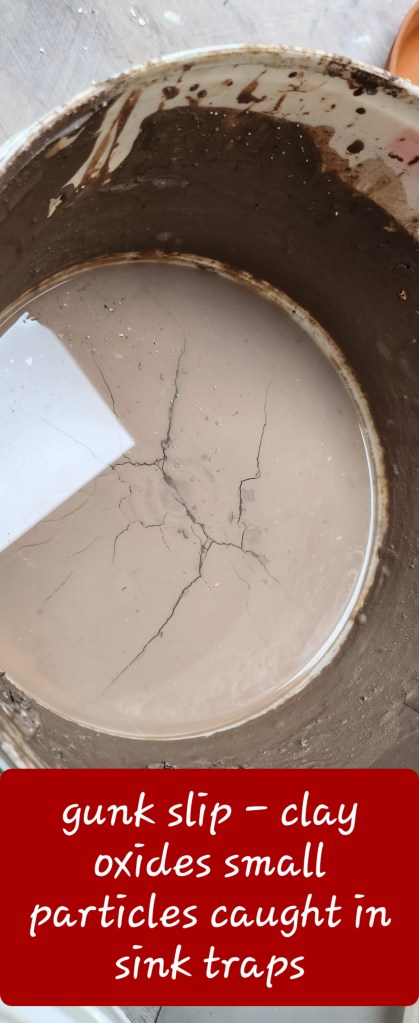
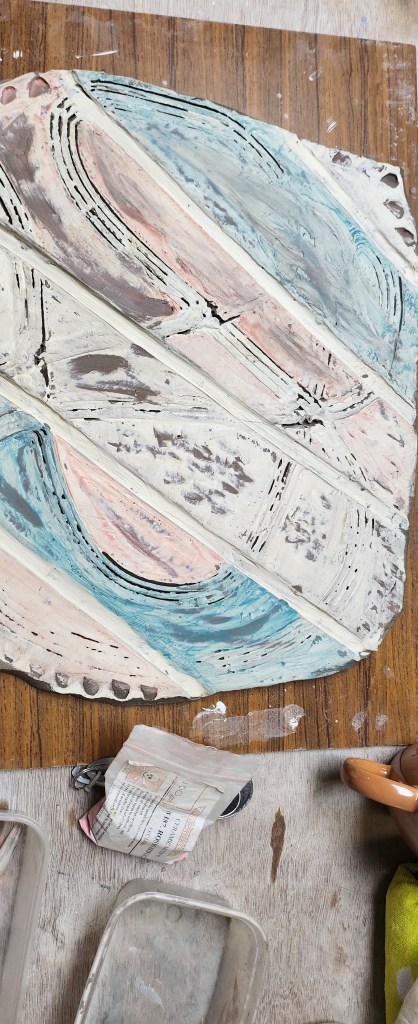
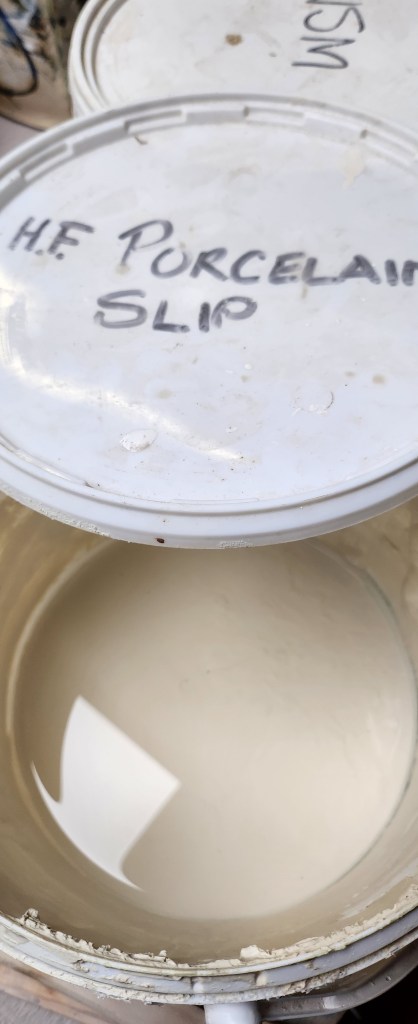
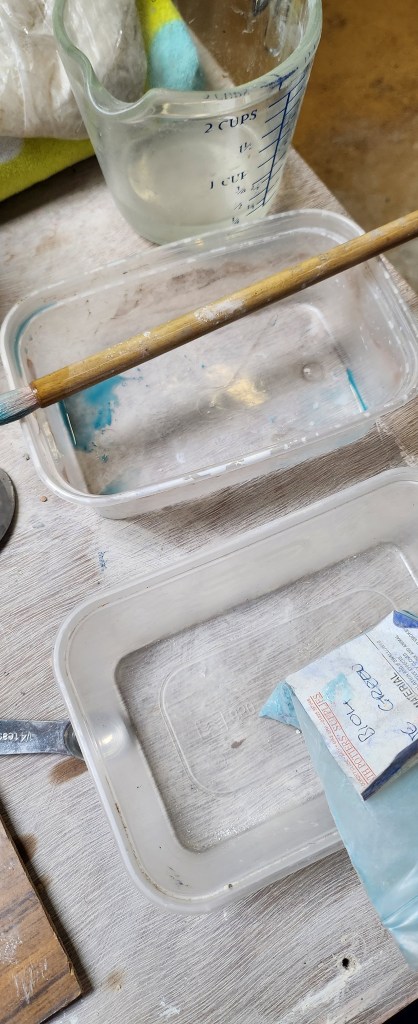
This time round, I decided to make textures by cutting into the slab with tools. I used the different quarters of the slab to use various slips and stains.
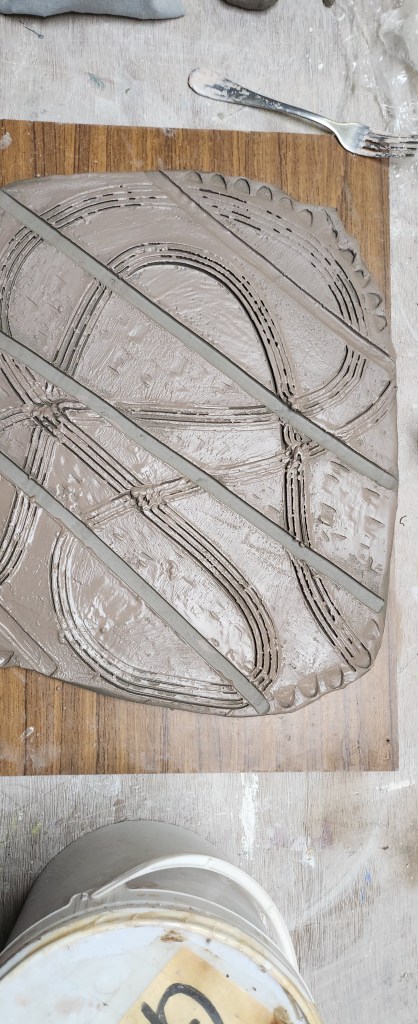
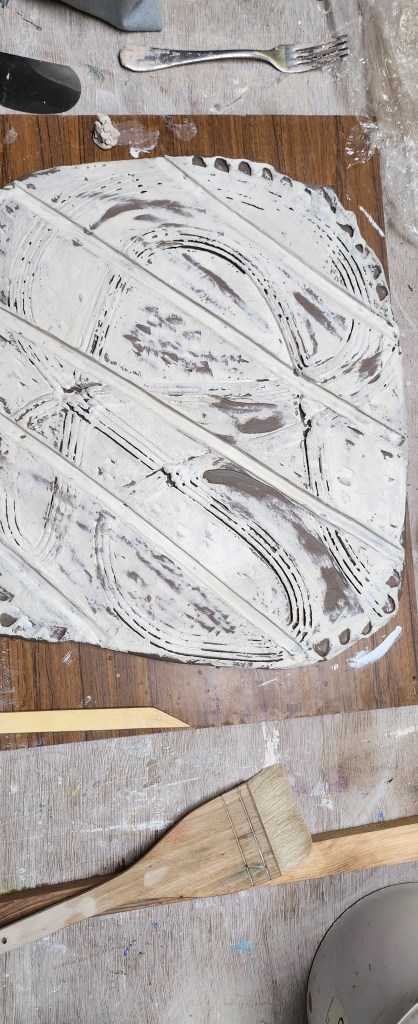
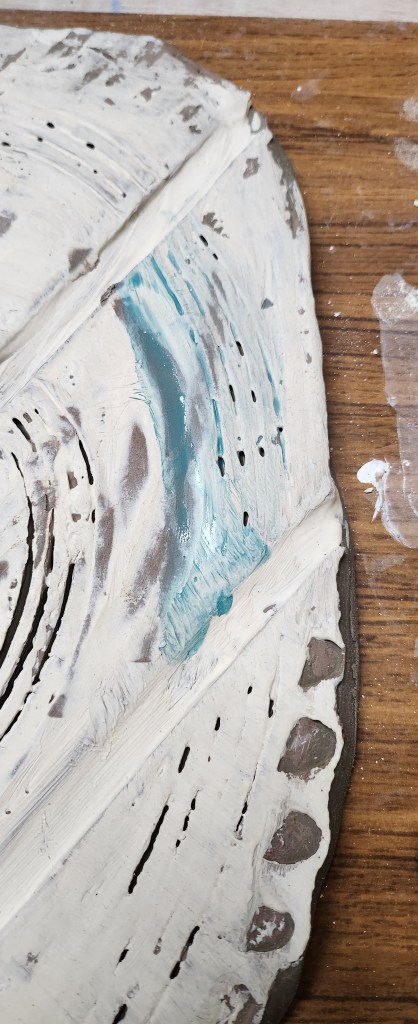
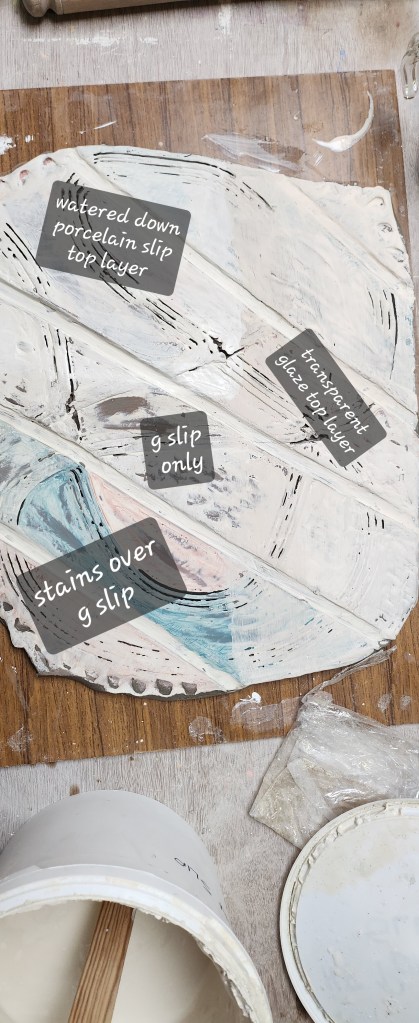
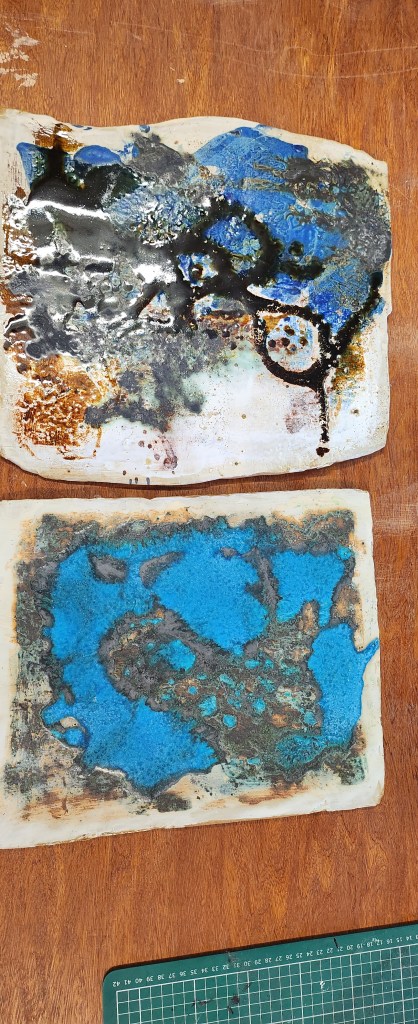
The other slab with the textures, I will use to carry on with my plaster experiments.
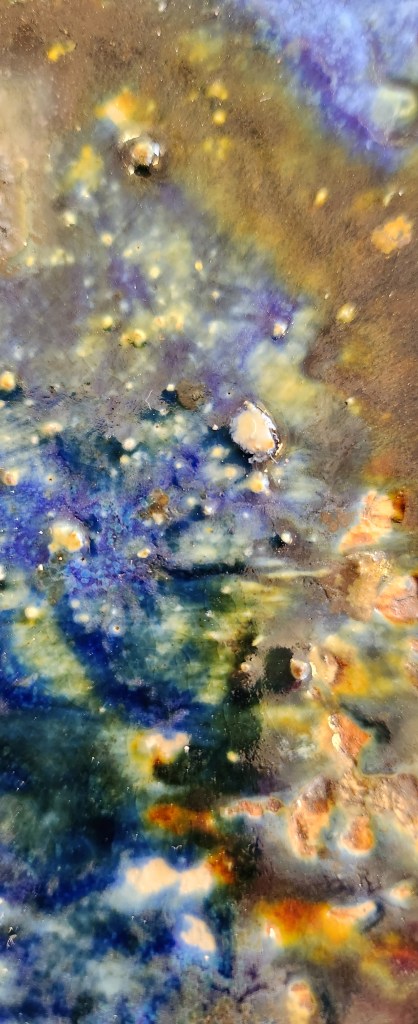

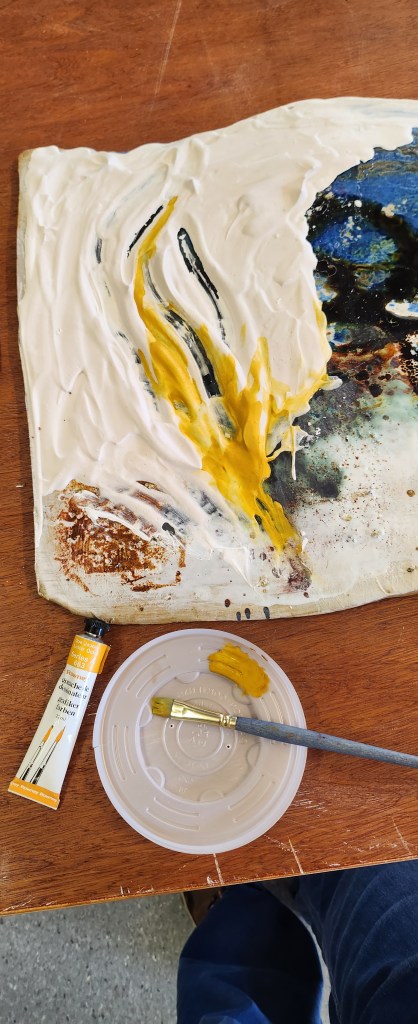
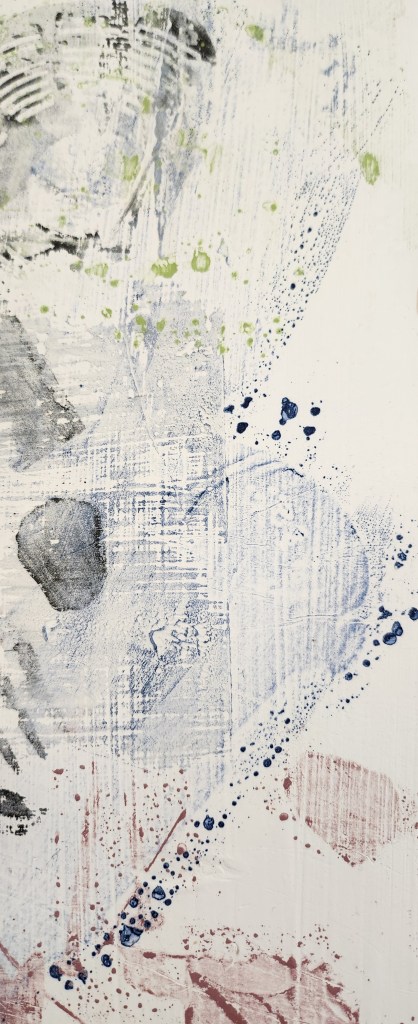
This time I decided to use water-based oil paints on the plaster, they were a lot more vibrant than the watercolours. In fact they ended up being slightly too bright. I muted them by sanding them down and using inks over the top, mainly nut brown.
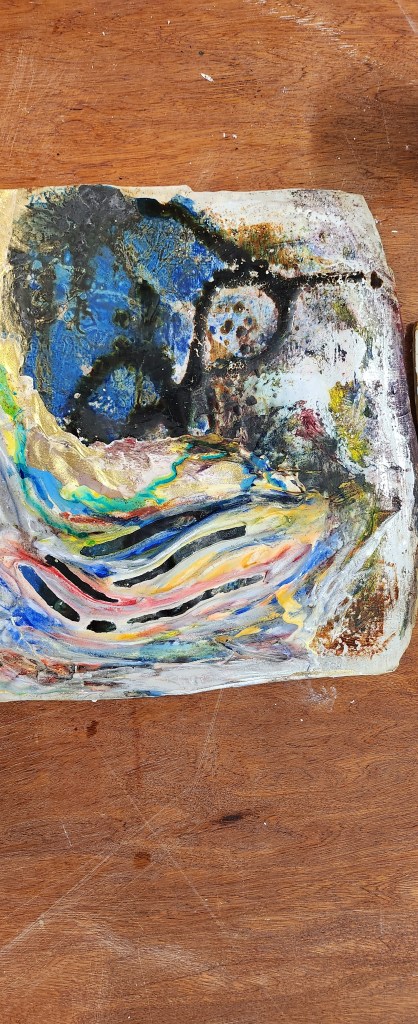
I also used a sponge and dabbed the oil paint over other parts of the tile, unless it had pva glue under it wiped of really easily. They may seem like obvious points to a lot of established ceramicists but the point is I need to be able to say why I won’t be using these techniques and what I have found by doing things in a slightly crazy order.
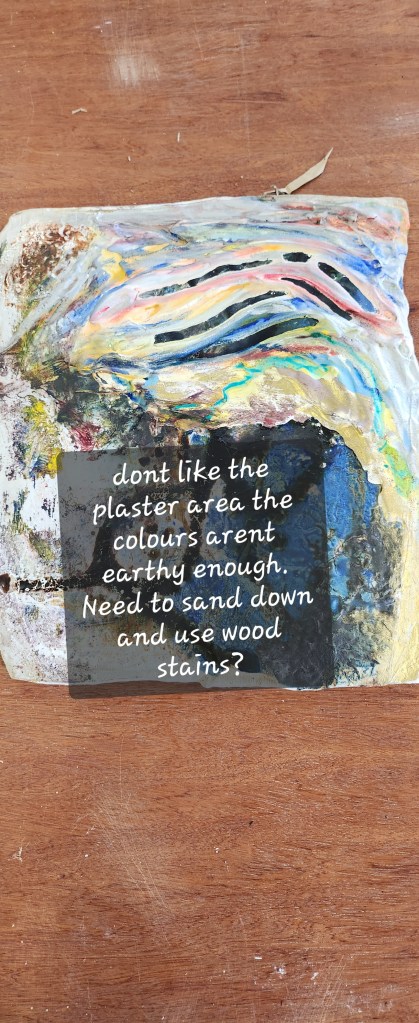
Looking at this I will probably remove the plaster area and take this back to the original glaze tile, because I liked the way the oxides and textures worked together.
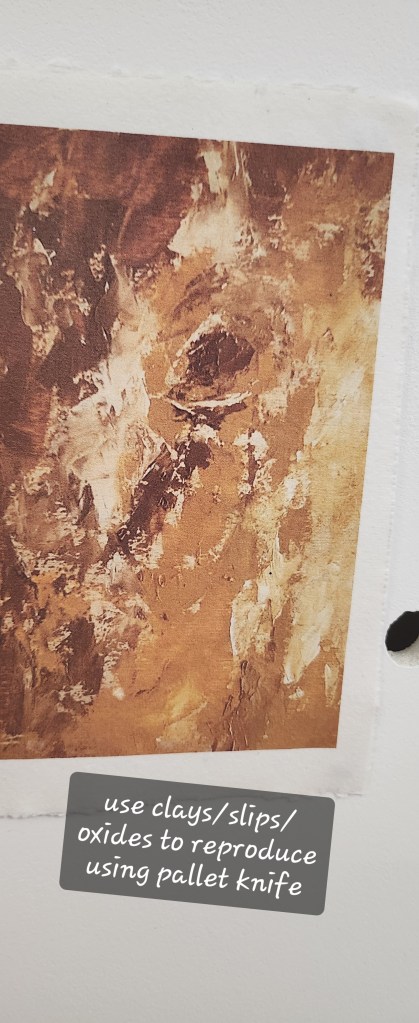
This is something I did last year. I would like to reproduce this loose feel using clay slips and oxides. I think this image is definitely what is becoming known as my style and what I enjoy recreating.
 Helen Louise Art