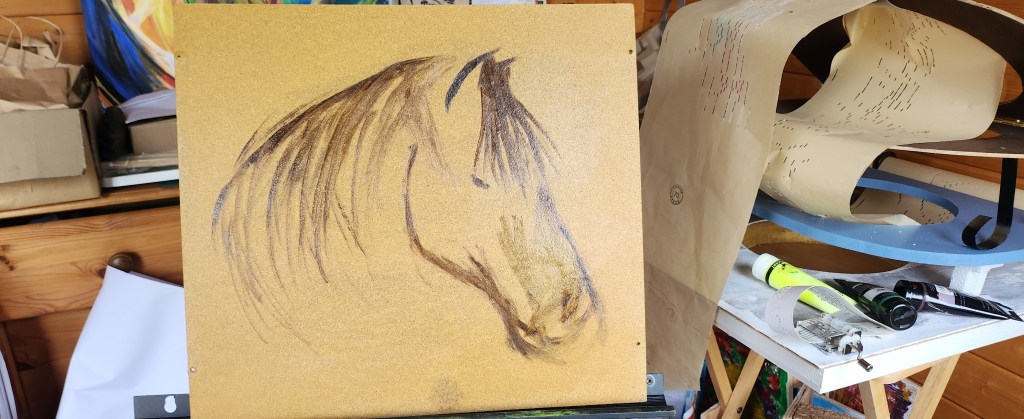
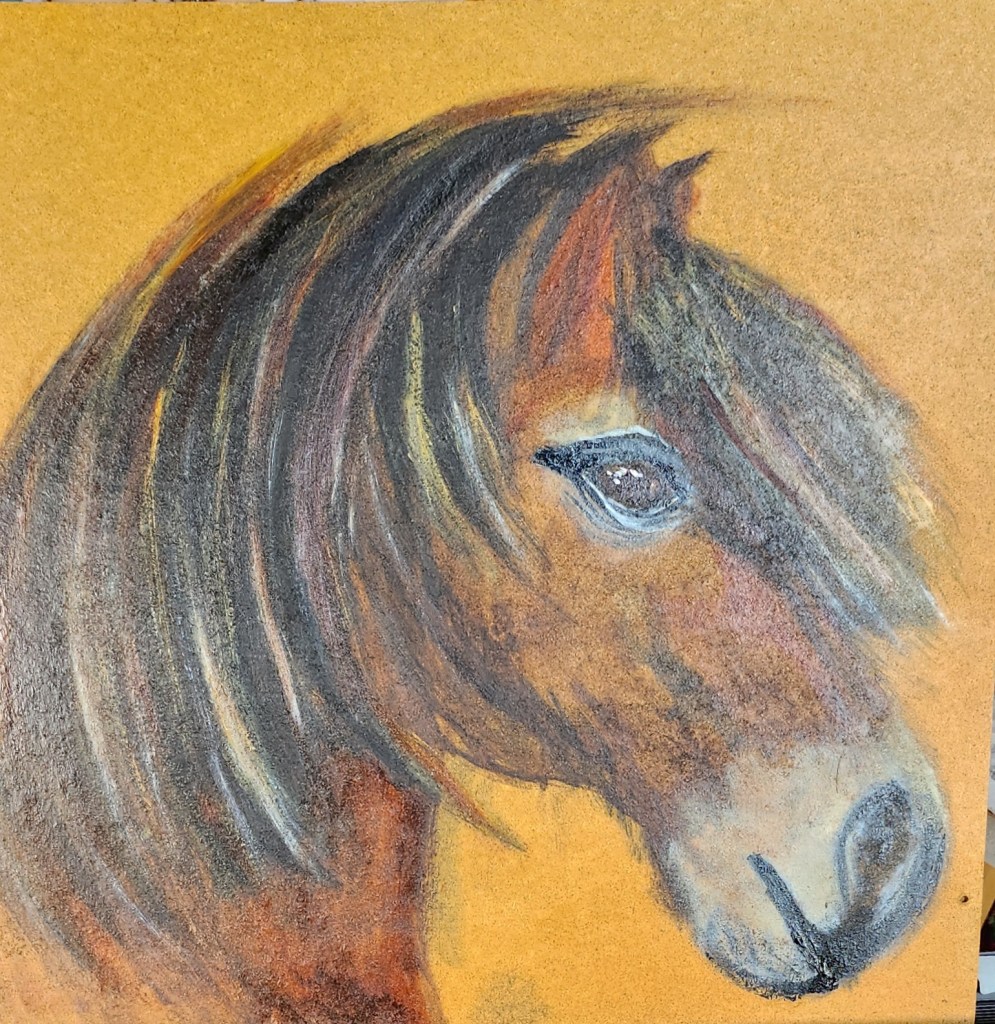
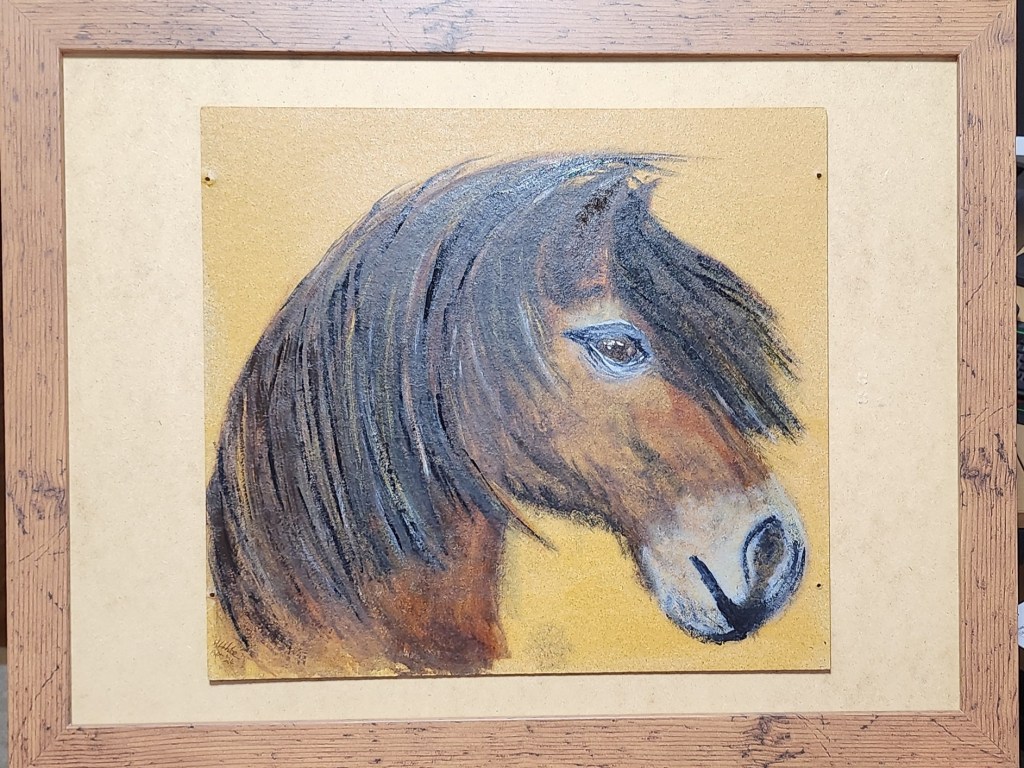
I had piece of hardboard, that was perfect for the sustain exhibition. I am going to run out of left overs from our DIY projects soon. I used water-based oil paints, mainly yellow ochre, raw umber, burnt sienna, red ochre for my pallette.
I hid myself away in the summer house and over the process of a few days managed to paint my Exmoor Pony. I chose the Exmoor Pony for various reasons, they are used in by Natural England in conservation projects and the are one of Britains Rare Native Breeds.
I took the perspex out of the picture frame and mounted using some number plate tape which was in the garage. The perspex will be used to replace broken glass in a couple of photo frames that have suffered minor falls.
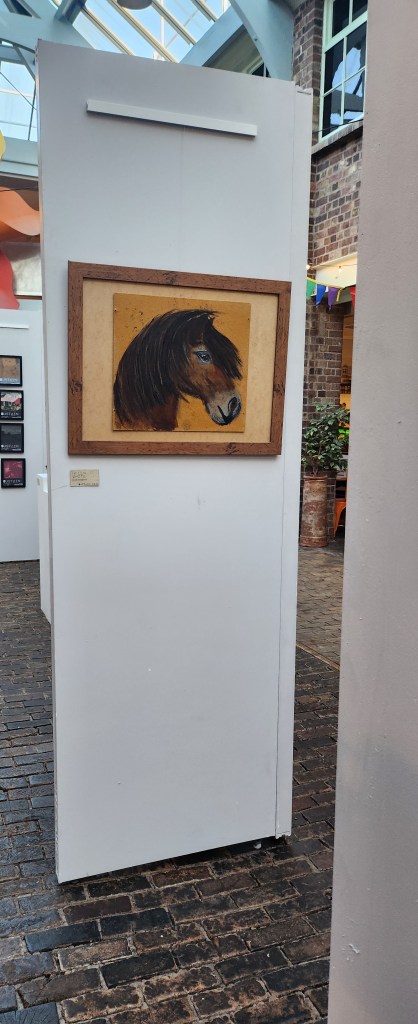
I loved working on this little picture, I completely lost the track of time when painting and I loved seeing it on display in a public place.
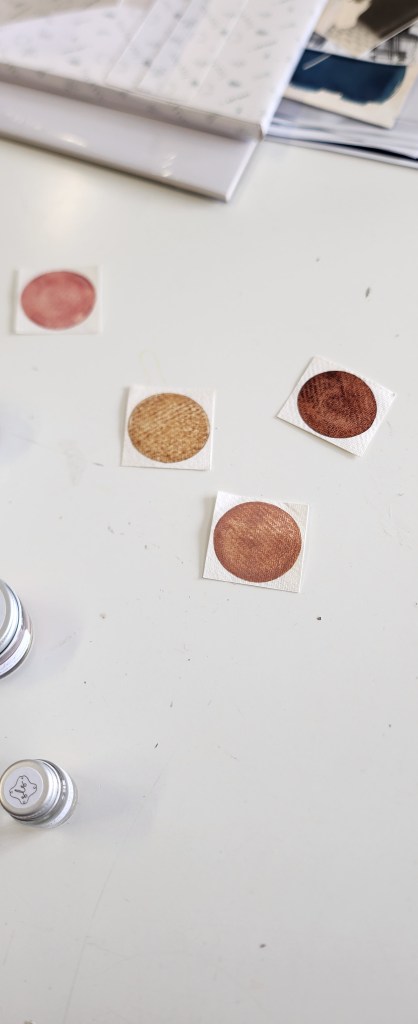
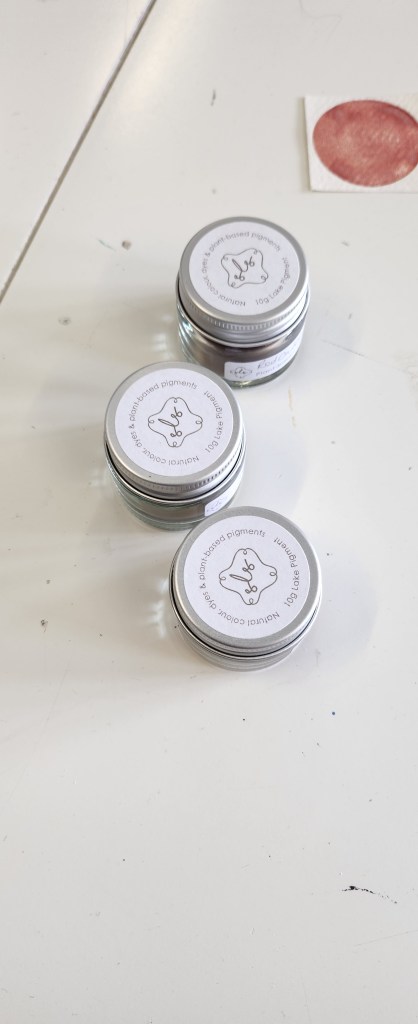
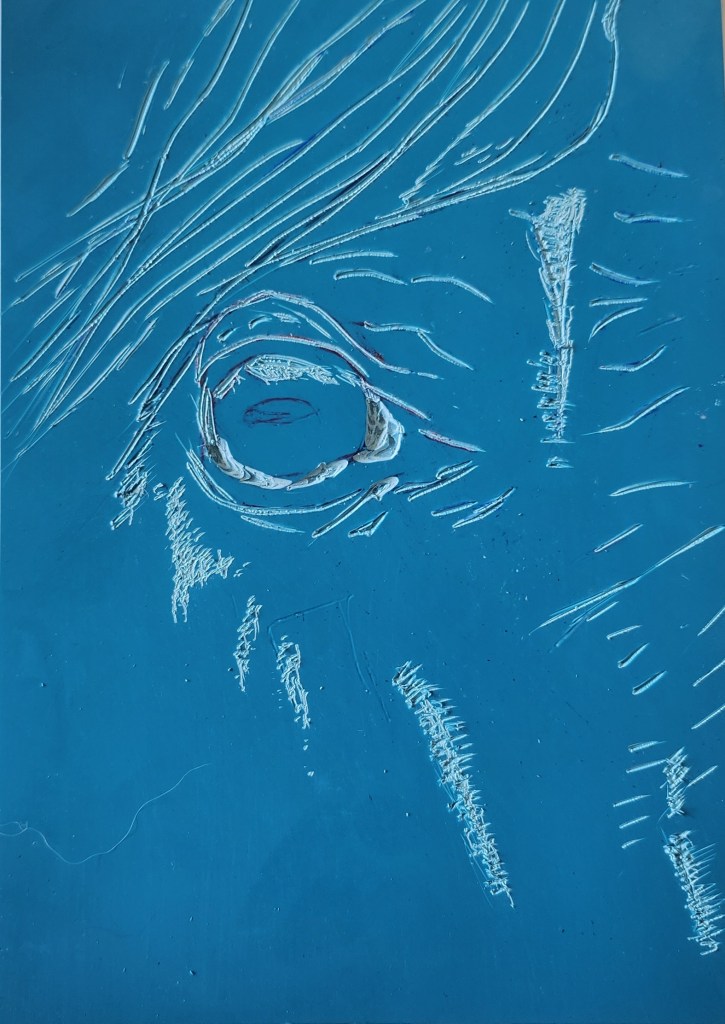
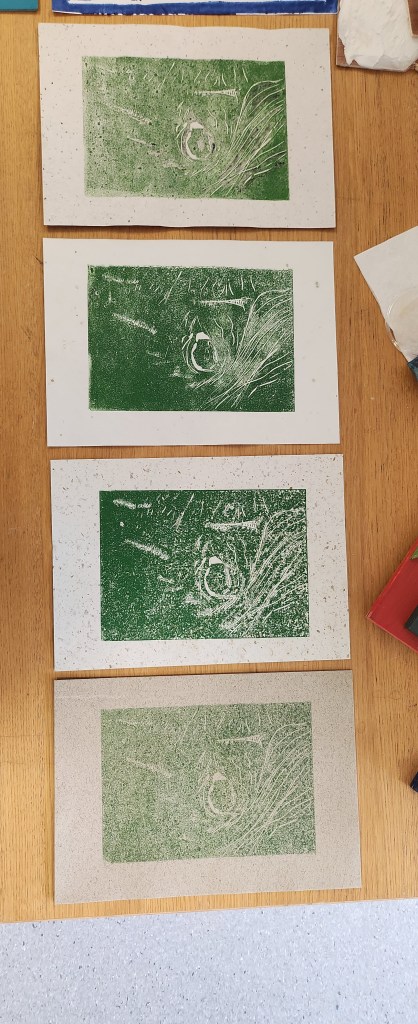
Pigments and paper made from coffee, tea, and mixed plants were purchased by out tutor. Whilst he mixed up the pigments into inks, we were left cutting a small lino print.
There was a small hiccup in preparing the ink from the pigments. They needed to be ground/mullered into finer granuals as they were a bit gritty. However, we carried on using the Safe Wash Cranford Oil Inks, which can be cleaned up without the need for solvents. Vegetable oil is very good for this. I tried printing on the different types of paper, and I really like how the texture came through. They add to the image.
Our tutor mentioned how expensive these materials were to buy and that we had to factor that into the cost of production. Say my hourly rate is £25 per hour, and it takes me 4 hours to make up the inks bought from the pigments, that’s £100. How long will the ink last when it’s made up? and how many prints could you use it in? I find that the small pots of pigment last a long time in their raw state but depending on how airtight the container is, it may not last that long when made into an ink. This is an area I still need to experiment. But my point being, I could buy the sustainable ink already made up, and just charge for the time to make the piece of artwork. And, still earn the £100 in my day job to pay the bills. This is why I feel there is no right or wrong way because it depends on individual life circumstances.
Be the best sustainable artist you can be withing your limitations.
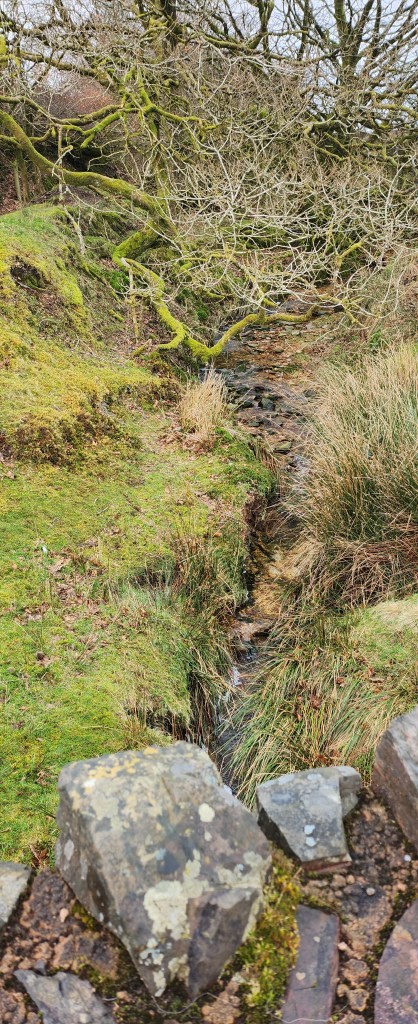
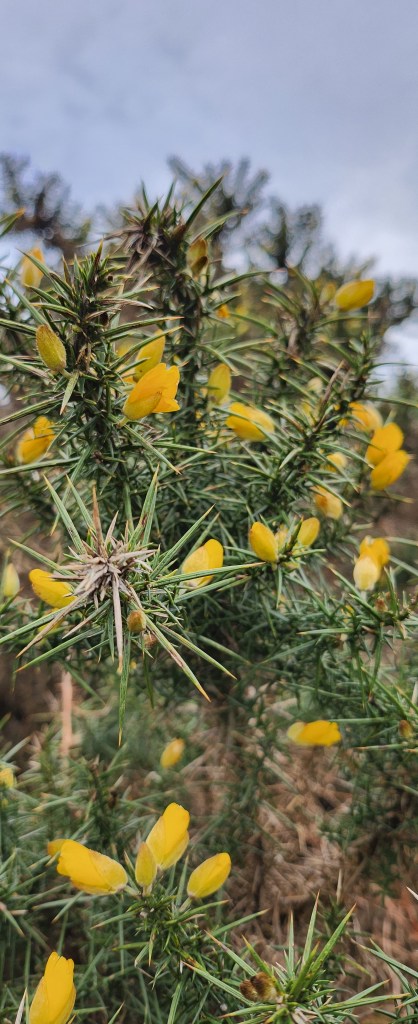
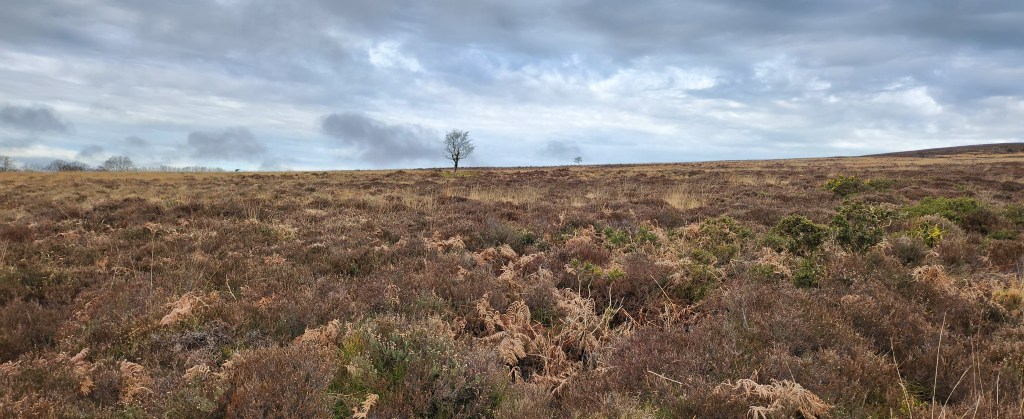
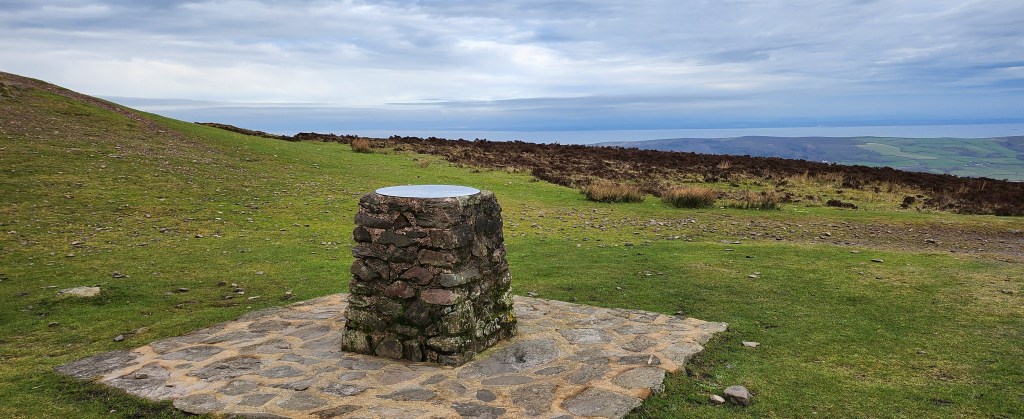
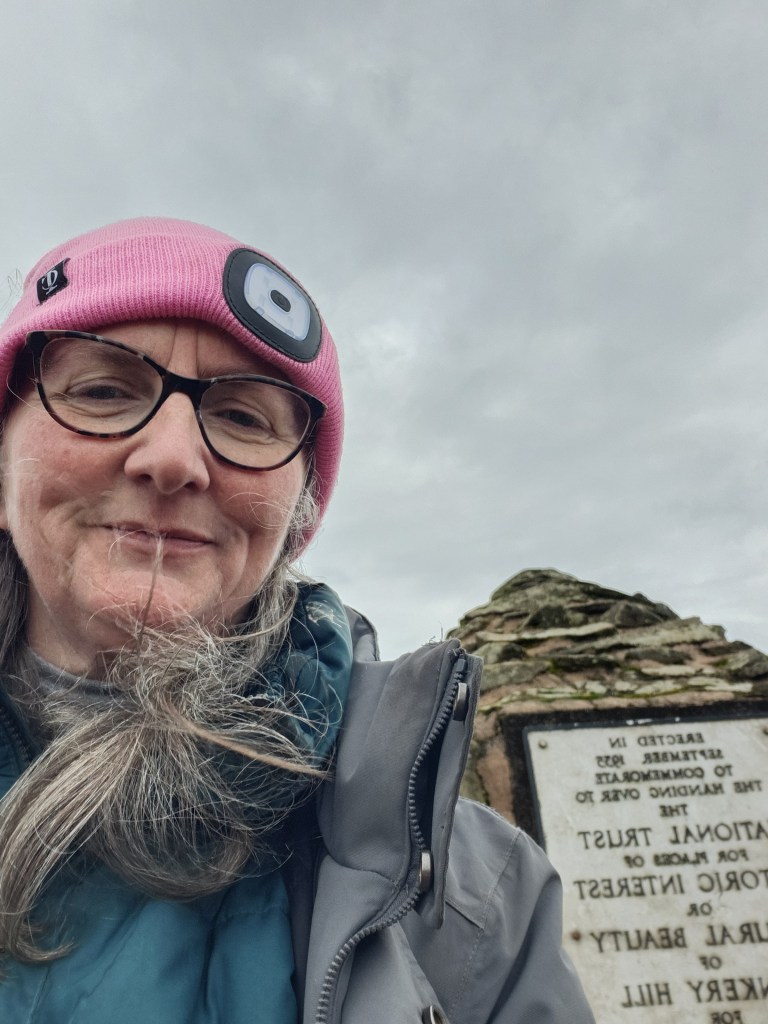
I absolutely loved today, being out in nature and in my element! I only saw exmoor ponies in the distance. However, when I did spot a couple moving off I admit my inner child came out and I squealed with delight and set off at an almost run to see if I could get a better view, photo opportunity.
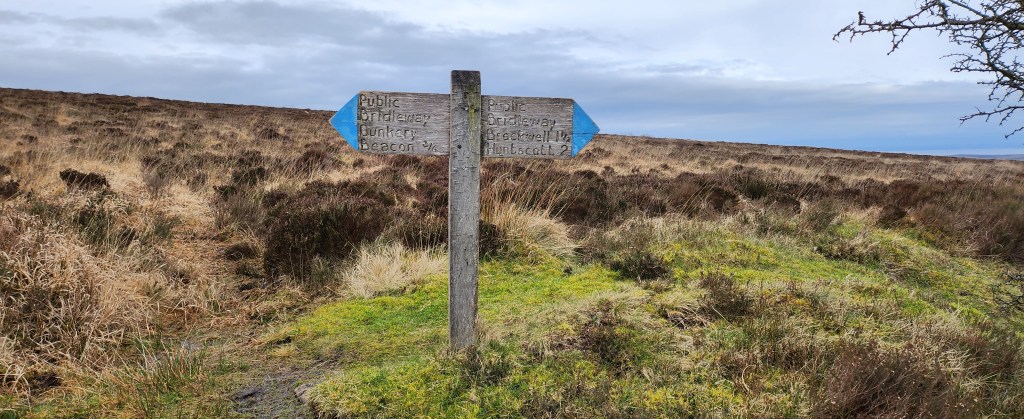
The landscape around Dunkery Beacon was full of muted colours, yet felt really vibrant to me. It was a really long hike and my legs are going to hurt! I forgot to put the battery in my DSLR camera, left it in the charger on my desk, thankfully we all carry mobile phones and the camera’s are good.
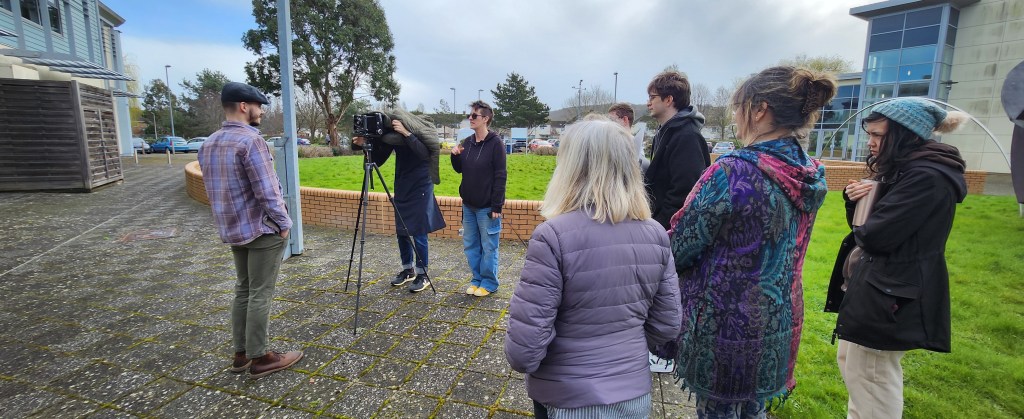
The idea was to feel the landscape and research ideas for the Sustain Exhibition being held in our local museum.
Nature provides us with so many different landscapes and textures and colours. It survives long after we do adapting and reclaiming any man made structures.
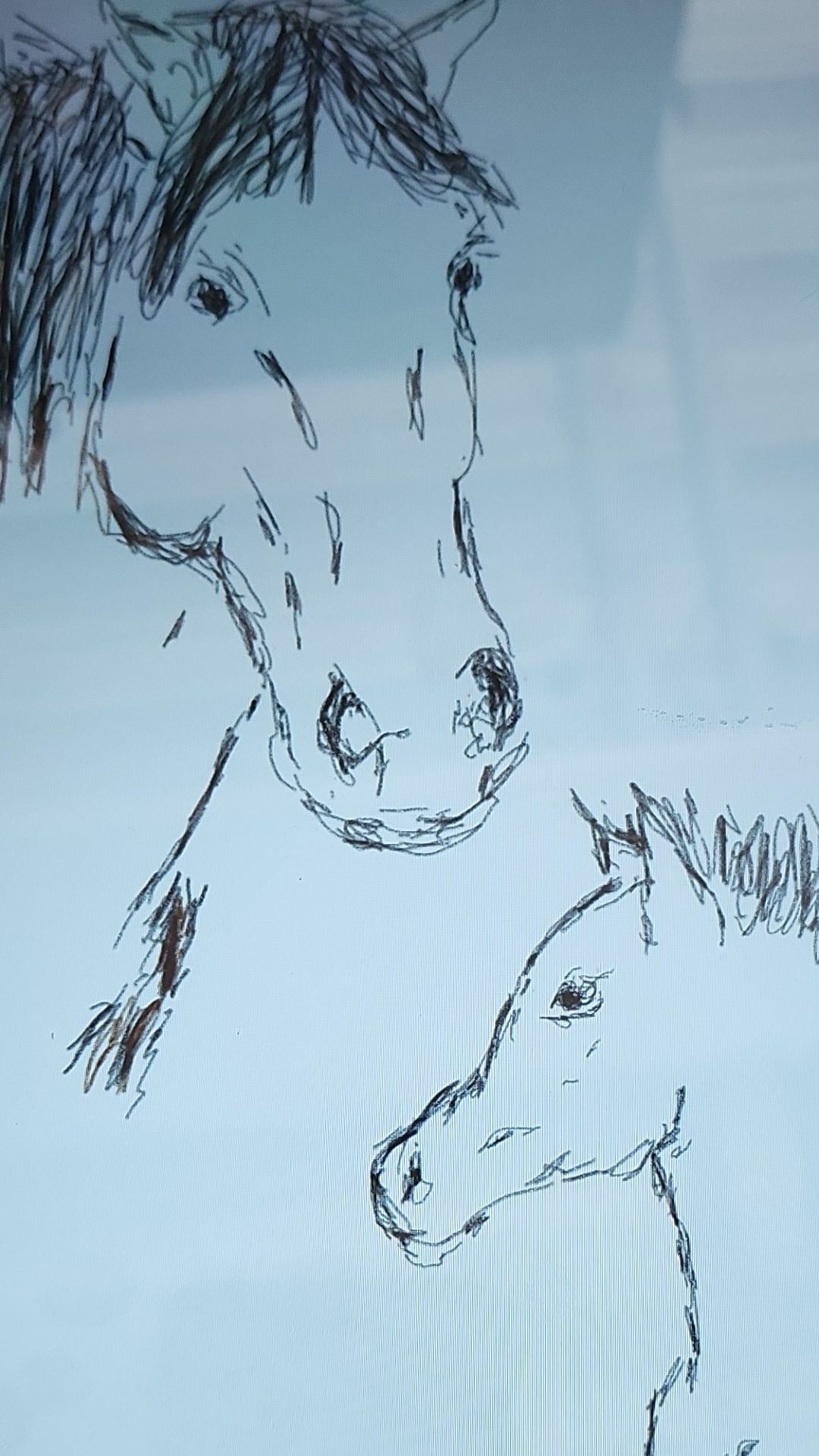
Here’s a hint as to what my subject matter will be for the exhibition. My first attempt at a digital drawing, more practice definitely needed.
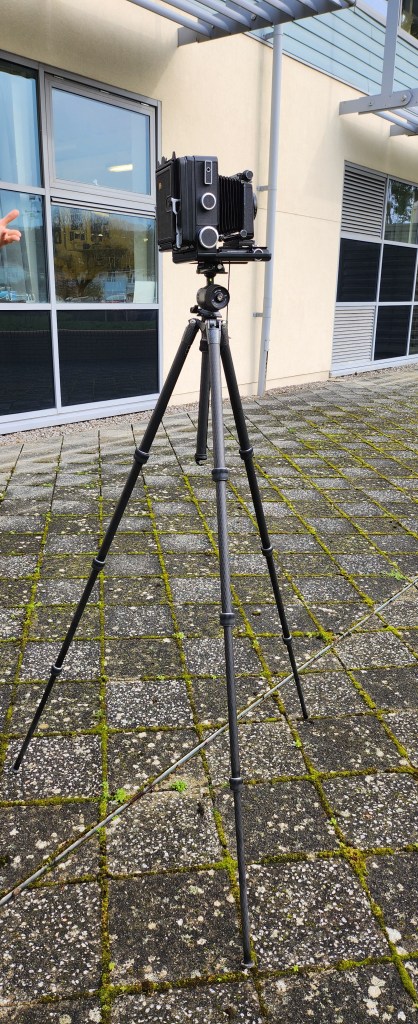
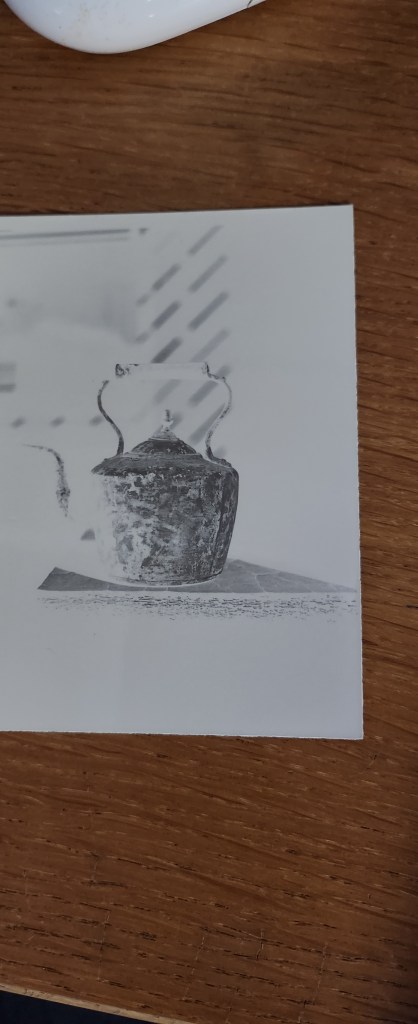
I have really enjoyed using the large format camera and developing print. It was because the image is in the negative and upside down and you develop from straight from the camera ‘plate’/photo paper. A downfall is you can’t move and the subject can’t move. Gives me a greater respect for the timed movement sequences that Eduard Muaybridge took of horses.
I used the environmentally friendly chemicals to develop the image of Sam, and used coffee to develop the image of the teapot. I really like the old sepia feel to the teapot. Something I can replicate at home without worrying about the disposal of harmful chemicals.
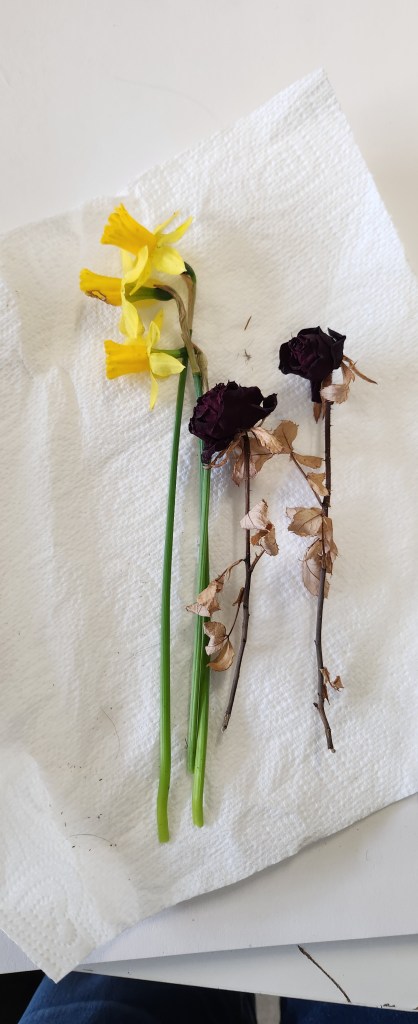
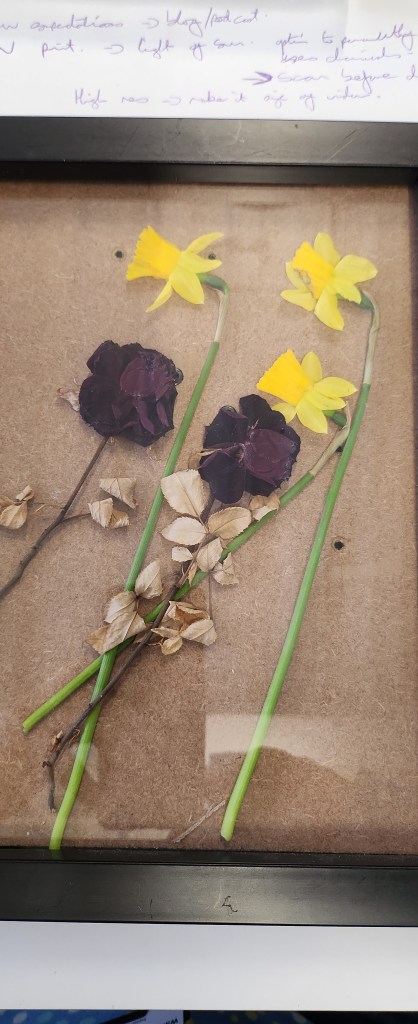
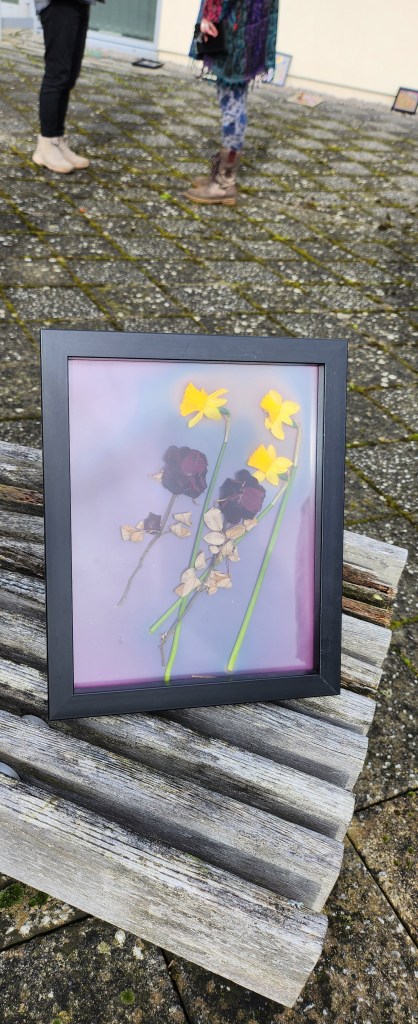
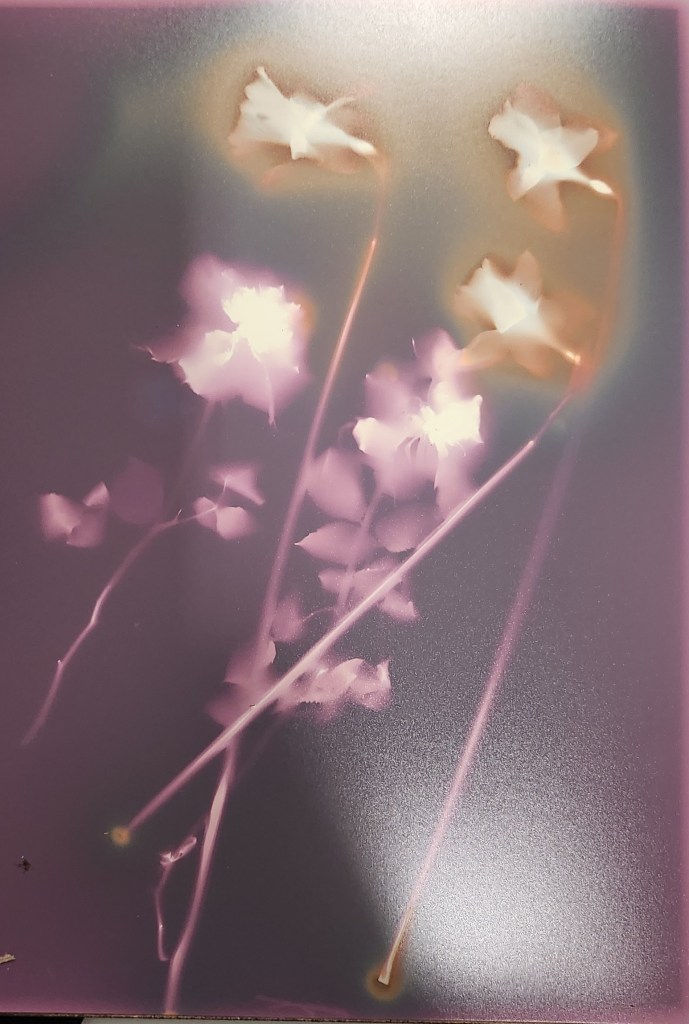
We also did some Lumen prints. I duly brought in some flowers from the garden. This is a great use for out of date photography paper. Happily made a little collage in a frame and stood them outside in the Sun. The issue with these are that they have a very limited life span so we needed to scan the images if we wanted to print them out again or fix them. However there are no guarantees how long a fixed image with chemicals will last.
My Lumen print is wrapped up in paper in a drawer, I will revisit it in 6 months and see how its doing.
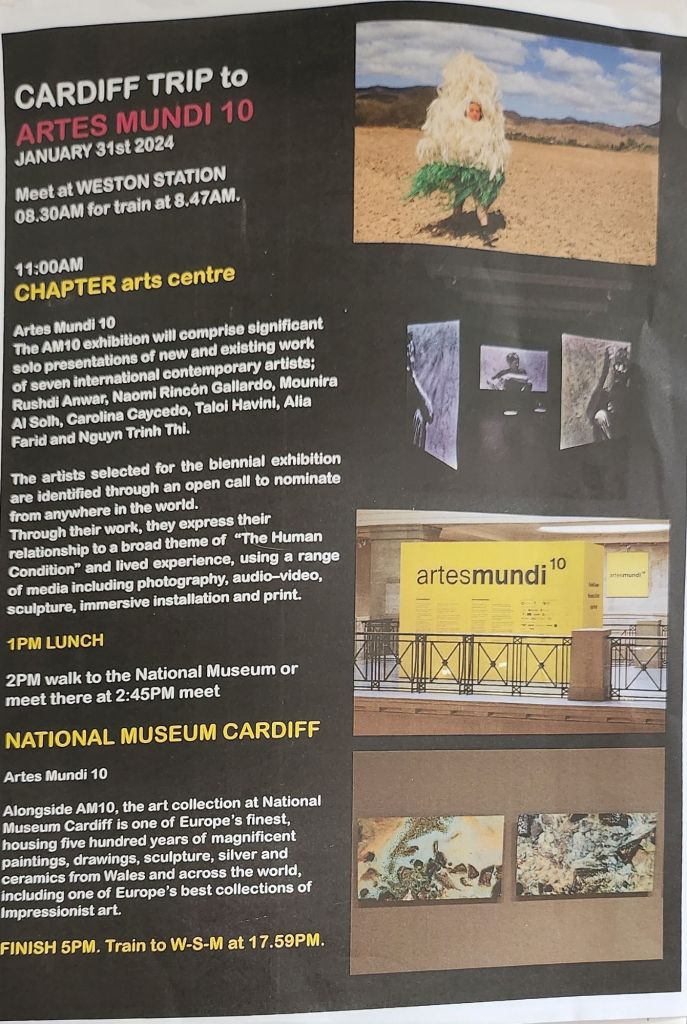
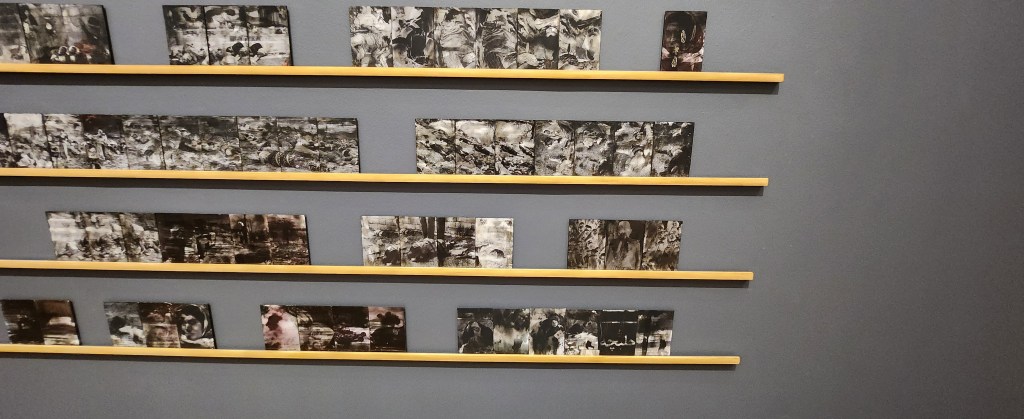
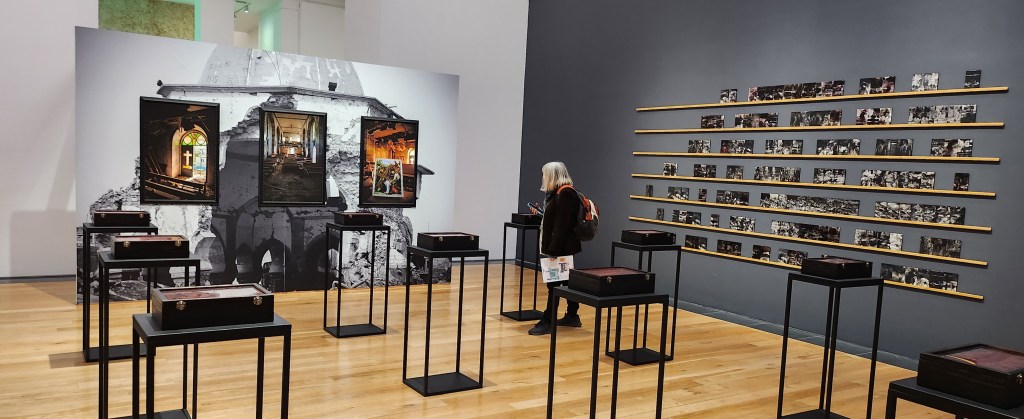
We went to Cardiff to the Artes Mundi 10 exhibition at the Chapter Arts Centre and Cardiff Museum. I appreciate the creativity and thought processes and messages conveyed in the films at the Chapter Arts Centre, but they were not really my thing. And that’s ok.
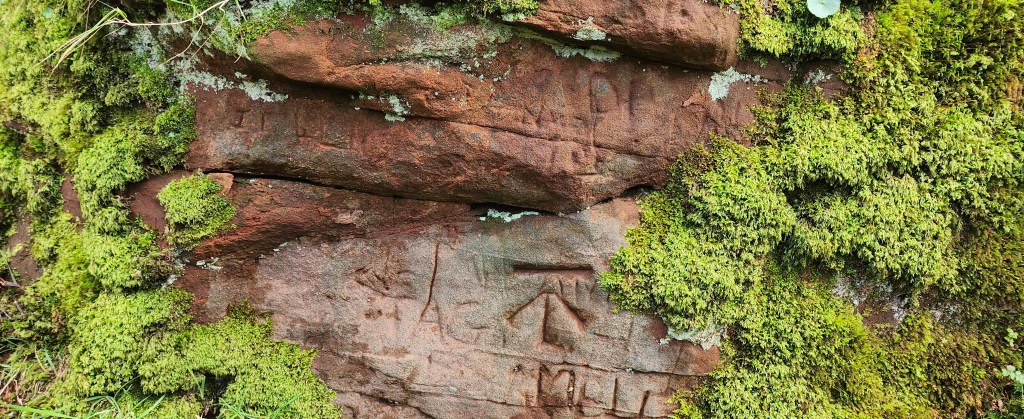
However, one exhibit from the Cardiff Museum really stook out for me and that was by Rushdi Anwar. Not just because of the materials used, but also because the aesthetics help convey the story of conflict and genocide. This was such a poignant exhibit, I think it will stay with me for a very long time.
Am I happy with the choices I make right now and are they flexible?
For me, I’m surprised at how much plastic is used in the packaging of our art materials. I purchased some water-based oil paints. The reason I bought rather than made is that as a busy mum, working part time and studying full time, my time is limited. Sourcing, and making your own pigments for paints and inks can be time consuming even though it is really therapeutic and satisfying for the soul.
The set of paints were in a cardboard box, with a clear plastic window, when you pull them out they are in a white plastic tray, held in place on the tray with a thin plastic wrap. The irony of a more environmentally friendly medium being wrapped in something that is harmful to the environment and not always recyclable. Even though our local plastic recycling has improved in recent years.
Photography Audit
Digital v Film
Film photography is more obvious with the chemicals used in developing the film and then exposing. However, digital photography has an impact, where are the large buildings that house the cloud servers? How are they powered as electricity is generated by using other fuels. They have to be kept in climate controlled dust free environments
How do I limit the harm done?
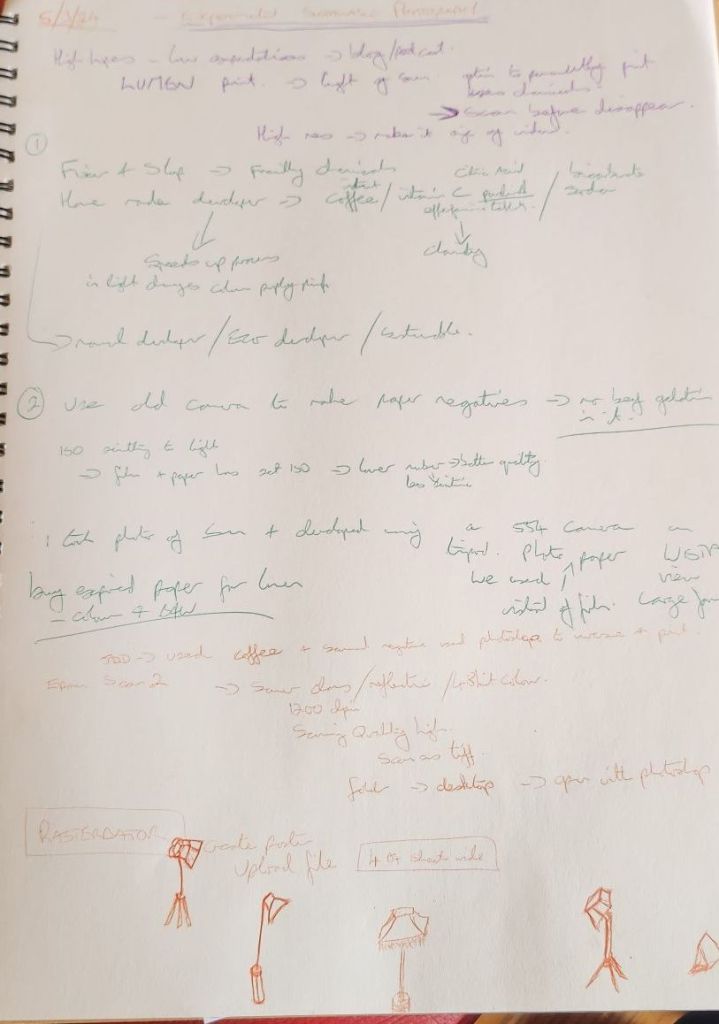
Reduce the use of harmful chemicals by sourcing environmentally friendly products or use household products like coffee, bicarbonate soda, vitamin C, to develop the film.
Scan the negatives and print using digital mediums, using water based inks and recycled paper ideally.
I store all my images on a hard drive at home, only recent files are backed up to cloud storage…. the risk is if the hard drive fails on either the backup or computer, I lose my work.
The thing is, we are not the first to have thought about these things and in my research I found an article in amateur photographer that has listed some great ideas and resources.
The good news is I am already using cotton rag paper and refillable inks in my printer at home.
If I outsource the development of film then my pledge is to ask the questions about waste management and environmental safeguards the company has.
Painting and Drawing Audit
Or should I call it fine art?
Anyway, last year I experimented with making my own watercolours, oil paints and using egg tempra. The only downside to this for me and my current work/study/create v family balance is time. Is it cheaper for me to source sustainable products and work in my day job, being able to pay the bills whilst I study or spend the time creating my own artist mediums?
The answer to that question fluctuates daily, but as long as I stay true to my ethics then I think any change no matter how small is good.
I also try and repurpose hardboard, wood, tents, and any other items that make a good canvas. Even painting over some old canvasses that I started but haven’t finished or don’t like!
I think a key thing here is to use up any old materials I have lying around, before I go and buy new. Even if they are not ideally sustainable, because wasting the products would be just if not more harmful. I’m also careful about disposal of any solvents and left over paint on my pallets.
Paper I use Khadi papers because they are cotton rag or plant based. As an organisation they use waste water to irrigate farms next to the paper mills and re forest and cut plant crops maximising regrowth. They have found ways to give back to the local communities.
Ceramics Audit
Can’t really get more natural than mud…. however I don’t make my own clay. I’m fairly new to ceramics and understanding the chemistry and make up of glazes, oxides and stains.
However, I know its possible to forage my own materials like red ochre and yellow ochre. I just need to learn a little more to creat my own materials. In the meantime I can pledge to source local and sustainable products where possible.
Whilst at Uni, my pieces are fired along with other students work and it may have restrictions on when firings happen. However, need to factor in that this will reduce the carbon footprint of cost of electricity used to fore the kiln.
If I had a kiln at home in the future it would be worth looking at green energy ie, solar powered.
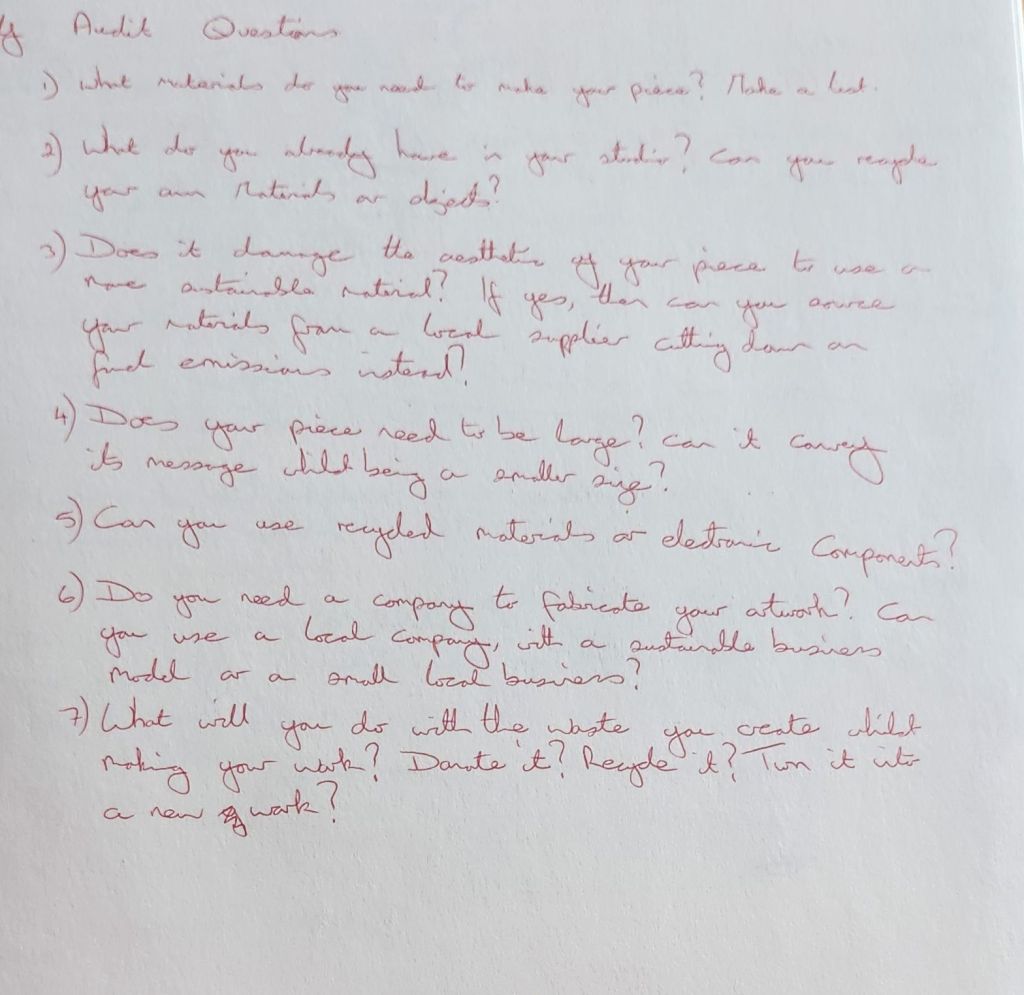
Wow! Lots to think about. I’m sure when I go to the studio and tidy up the workspace I’ll find lots of things to consider regarding my environmental impact.
For me, I started thinking about all of this last year and researched how to make my own paints and sourcing pigments and other materials.
What is my practice? I’m not 100% sure how to define myself as an artist/creative. I know I love painting and drawing, photography and ceramics. I also know that I am inspired by nature and love being outdoors, even more so since I’ve been a tinnitus sufferer. It’s one of the few places the tinnitus subsides into the background and I have a small respite. When I’m indoors it echoes.
My lifelong passion is horses. Over the decades as a rider and owner, I’ve noticed how the changes to lifestyles and environments around them have impacted their care and changed how we look after them. Nice quiet roads and sprawling countryside are difficult to find as our population grows and the urban areas spread. The ripple effect on our environment is barely perceptible day to day but on reflection over decades are easy to see.
I used to hack for miles on roads to reach off road riding, now those roads aren’t as safe so we load the horses onto the lorry or trailer, and we drive 10 minutes to the beach or safe off road riding. Chicken and egg situation, to enjoy the beauty of nature we do something that has a negative impact on nature.
It’s the same with art, we wish to recreate beauty in some way and share it with others, whilst following practices that are harmful to the environment that inspires us.
Being aware of our how we practice as creatives and the wider impact.
Reduce waste in my own practice
Recycle materials and other items where I can
Repurpose found items
Buy from sources that follow the same ethics with regards to sustainability where possible.







 Helen Louise Art