Ceramic Relief Painting cont…

13th January 2025

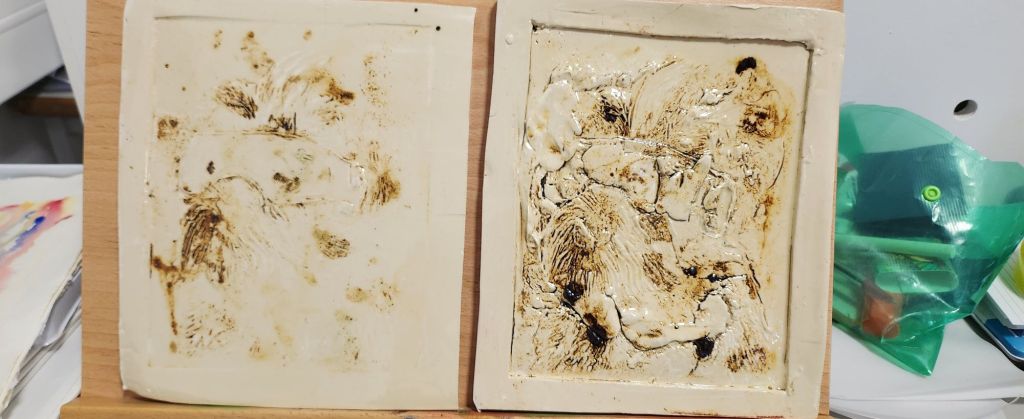
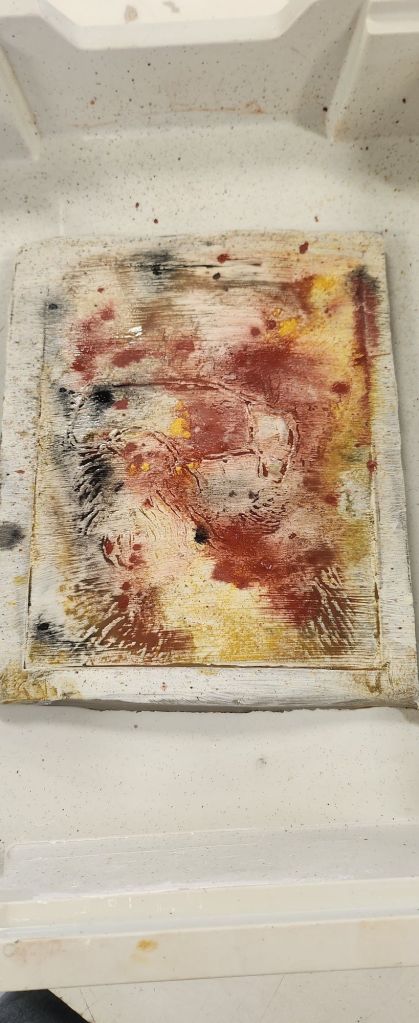
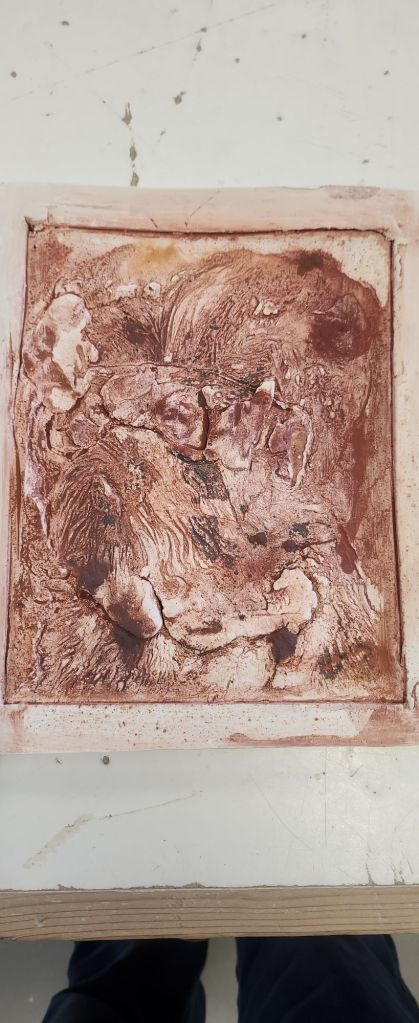
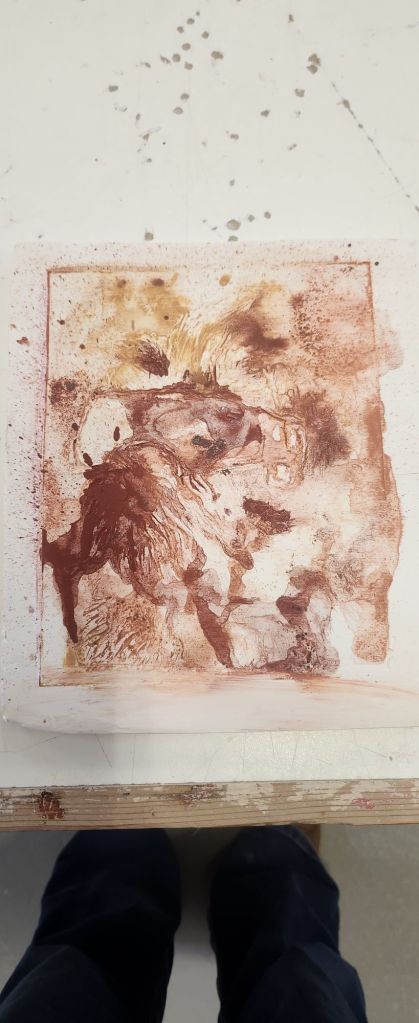
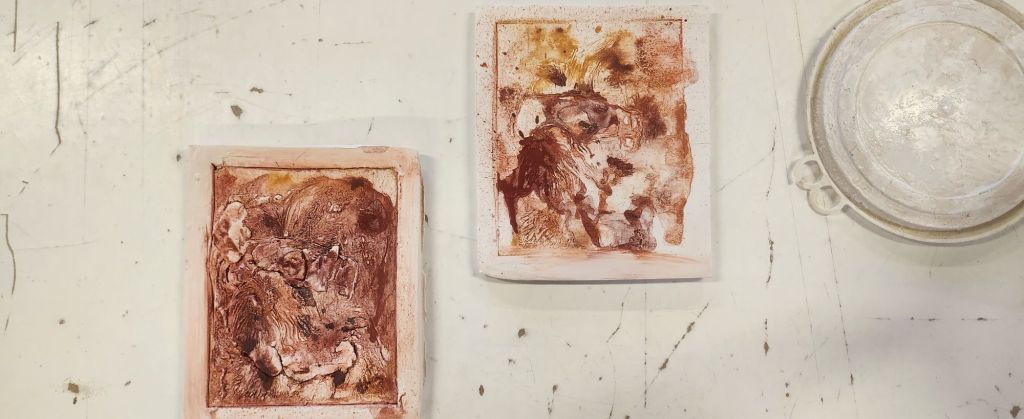
With the one on the left, I hadn’t wiped off enough of the glaze. With both of them I hadn’t applied the oxides strongly enough, although they have come through better in the one on the right.

I am trying to work out a process that is going to work, especially if this is part of my range of work I wish to offer customers in the future. There are so many variables that I have no control of in the firing processes that I need to ensure the preparation and how the materials are applied is as consistent as possible.

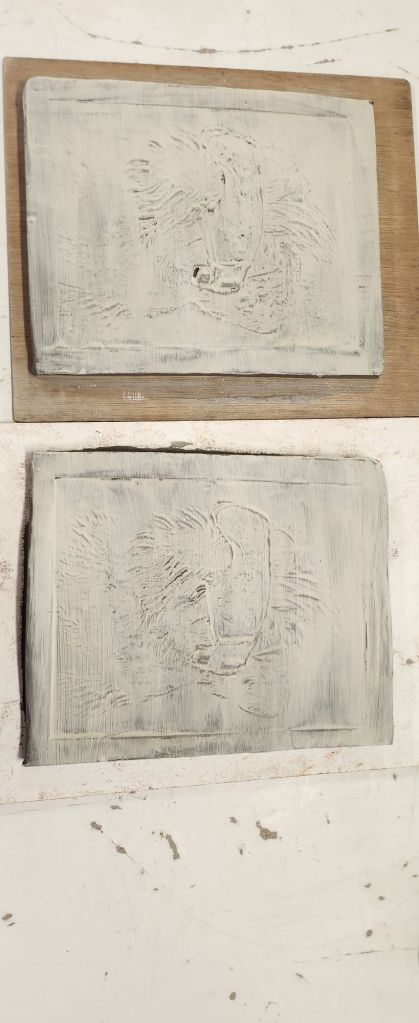
this time I used porcelain slip rather than white slip and applied the oxides more thickly and tried to ensure that the two tiles had the same colour coordination, or as similar as I could get them.

The tiles were then bisque fired.

Ceramic Relief Painting

7th January 2025

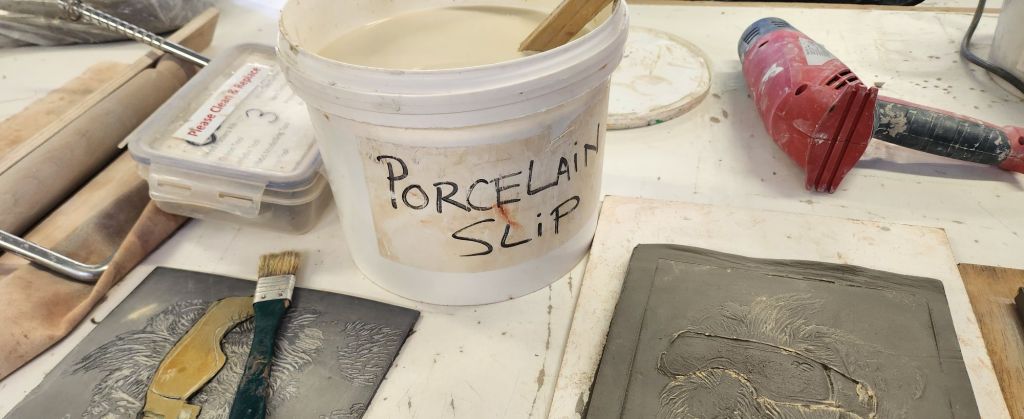
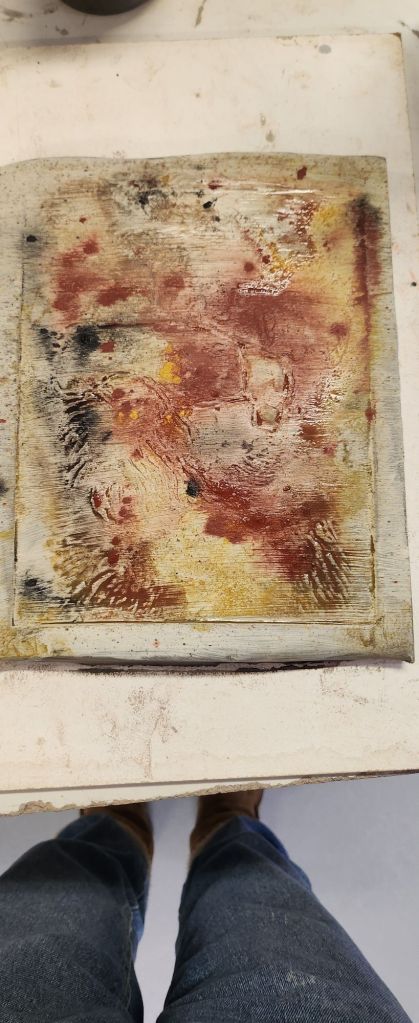
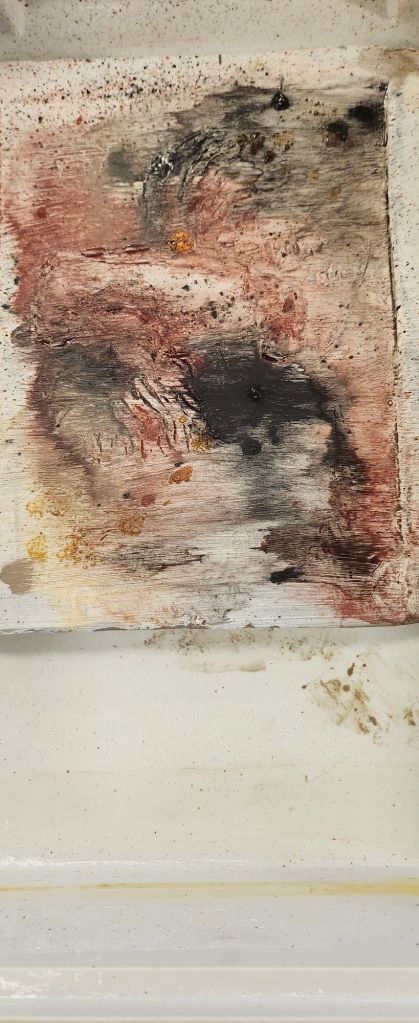
I’ve missed a post on one of the process steps, the tiles pictured below are after I had used white slip on the tiles and used oxides. The ones I use are ruttle, yellow ochre, red ochre, red iron oxide, and black iron oxide.

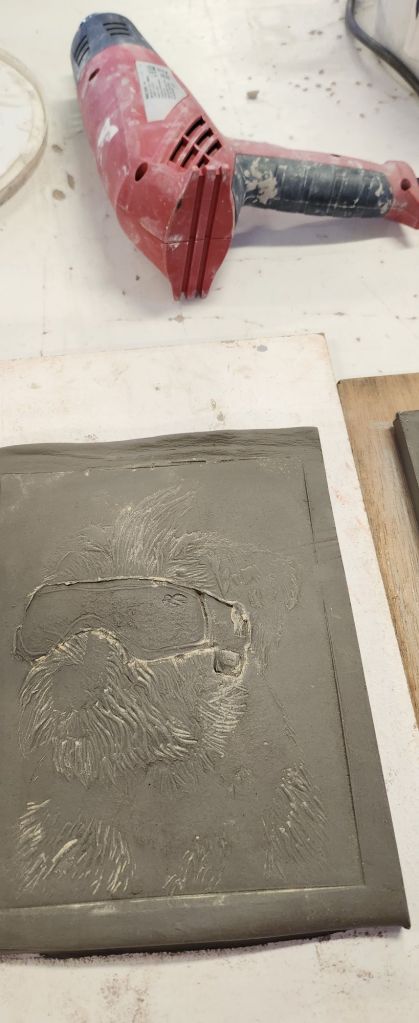
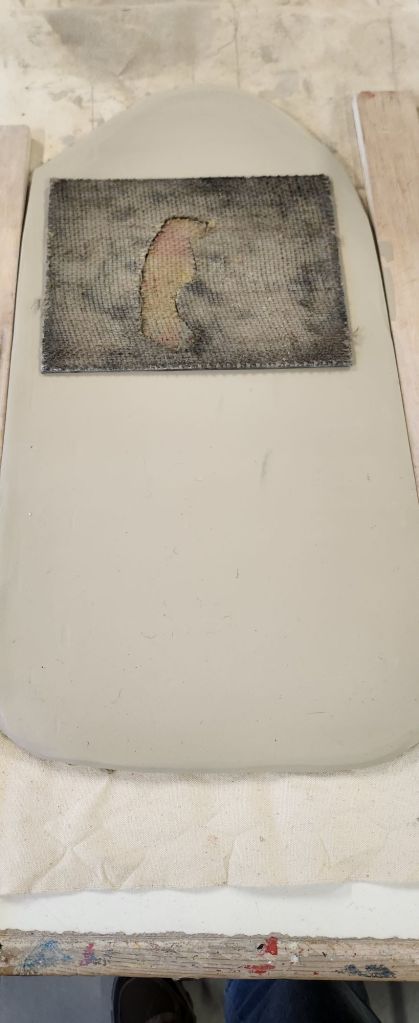
When I removed the lino from the tile above, I realised that I had forgotten to dust it with powder to stop it sticking and the didn’t dry the clay out enough before I pressed the lino in it.

The second press was better as I remembered the steps mentioned above. I then glazed them with earthenware transparent glaze. I wiped off a bit more on one than the other as part of the process.

Vision in Ceramics

9 December 2024

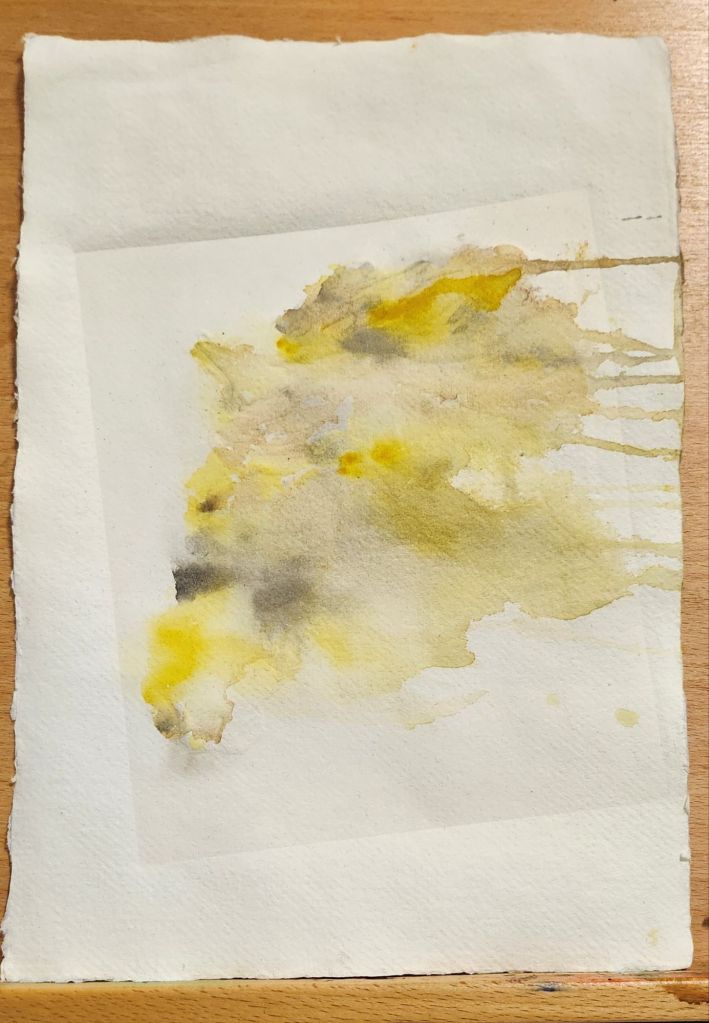
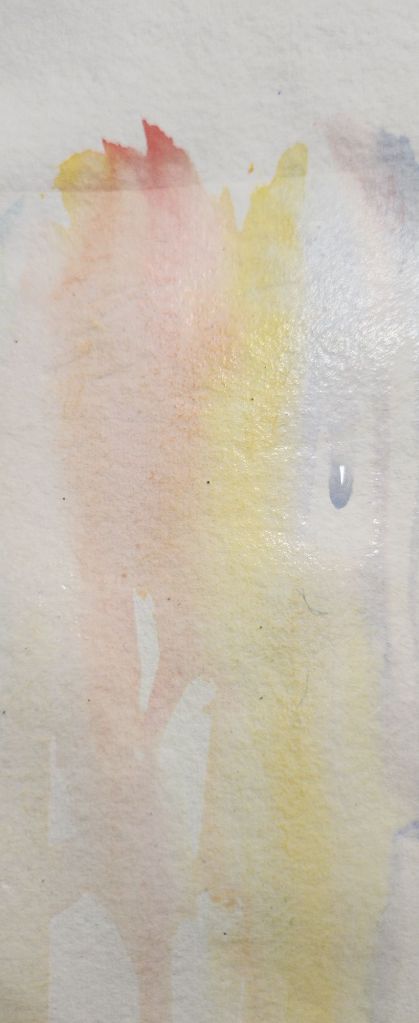
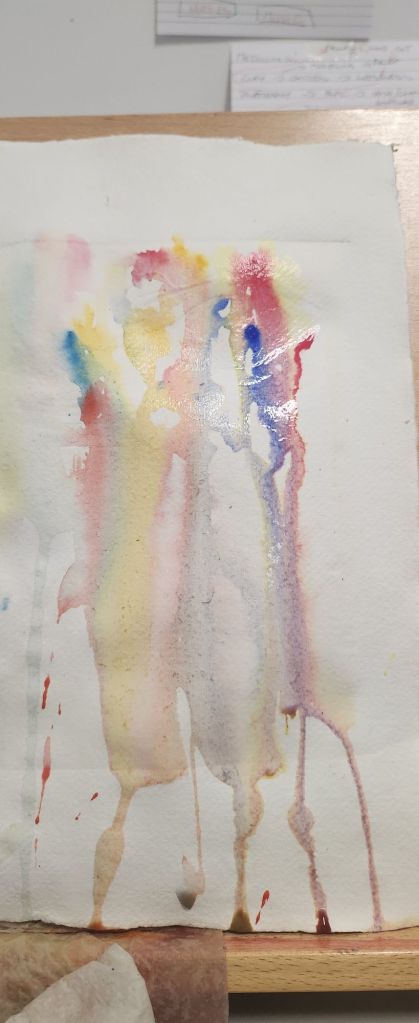
Before I started working in clay, I did another embossed paper image. This time I used more earthy colours, yellow ocher, burnt umber and raw sienna, with a little touch of black ink. I used a similar approach to how I applied oxides on my ceramic pieces last year and squirted water to direct the colour flow.

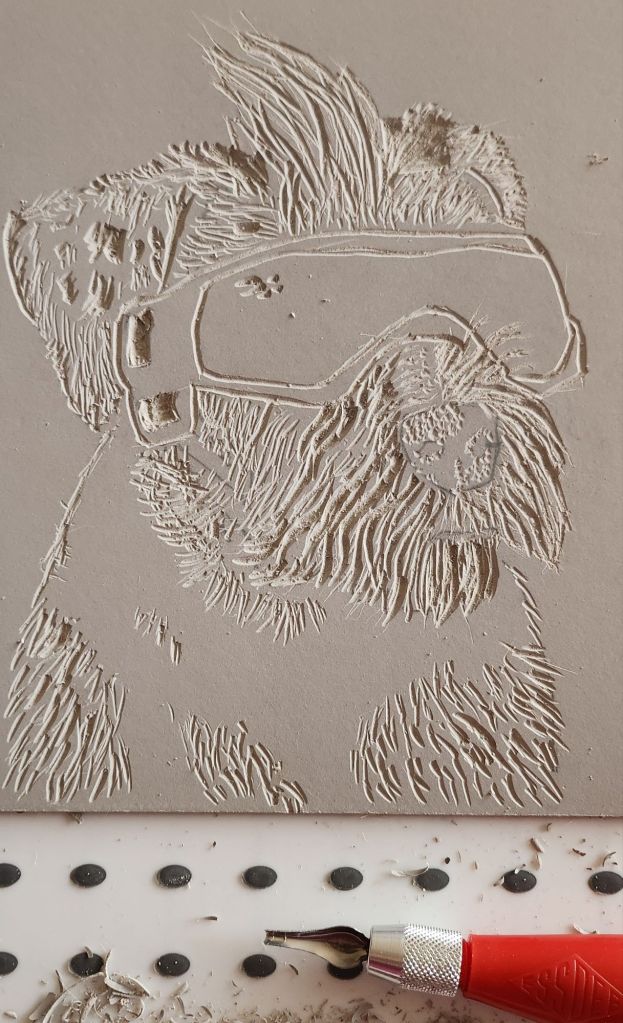
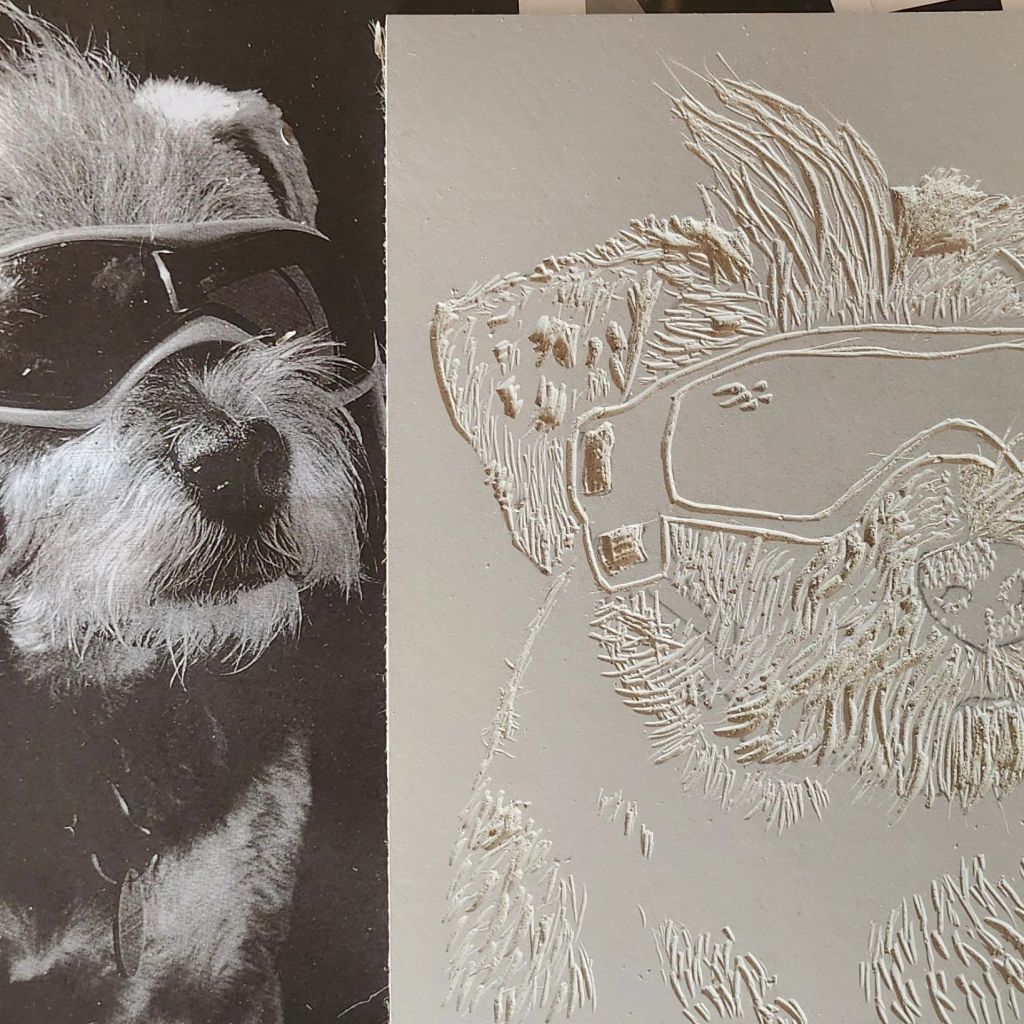
The process of producing work using lino is – print the images from it first, emboss any paper if I wish, and then use it for clay relief work. The clay is quite harsh on the lino.

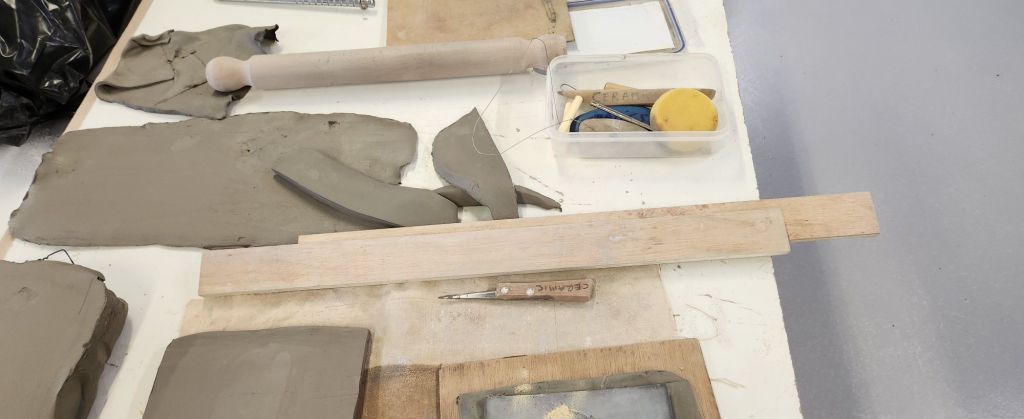
I rolled out a slab of clay, I can get two A5 images from one slab.

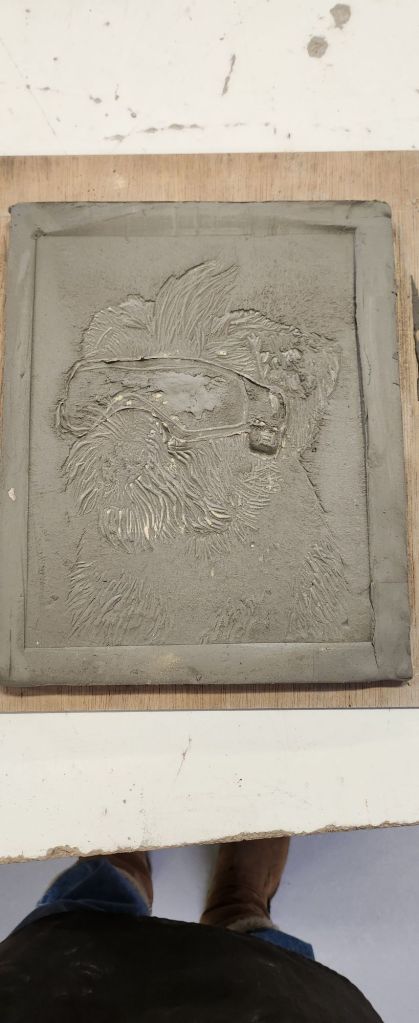
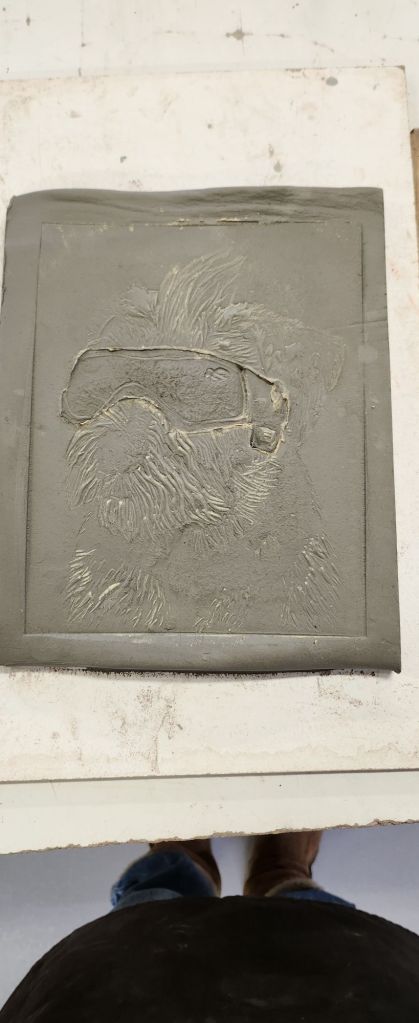
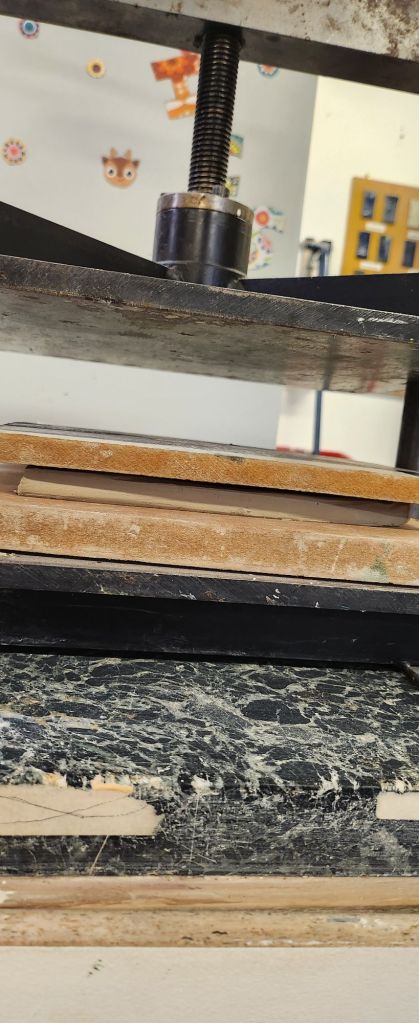
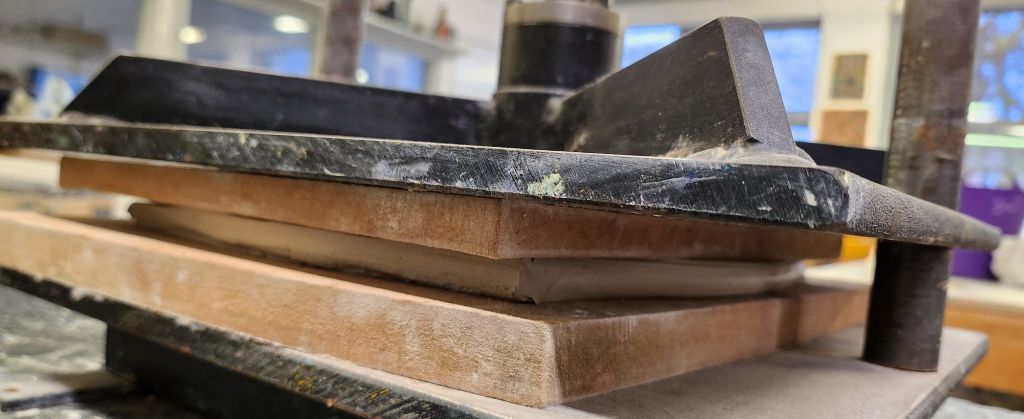
Instead of using a roller and pressing hard, I used the tile press as the clay tiles were small enough to fit into the press.

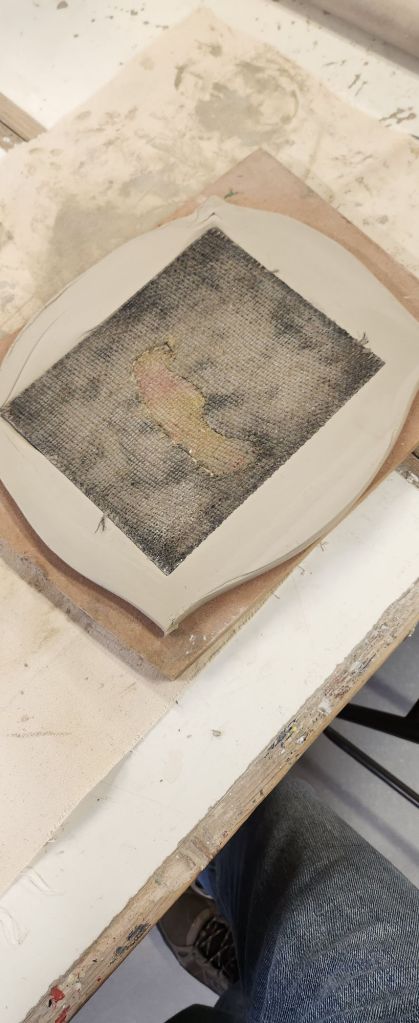
As you can see from the image above there is a little seepage around the edges and these needed straightening and tidying up to create a nice looking tile.

Vision in Plaster

2 December 2024

Last year I was experimenting with linocut pressed into clay. I decided to have a go at using making some plaster reliefs for the Vision Pop Up Shop.

To make the plaster reliefs I poured the plaster on the lino and the weight of the plaster as it settles sets into the crevices on the lino. I used a vaseline based gel over the lino so that I could pull it out of the plaster once it had set. The idea was for the portraits to be able to stand on a shelf without needing to be framed, make it more versatile and suitable for homes with not much hanging space on the walls. To enable them to do this I had to sand down the rough edges, level and smooth the edges and backs. This way they were able to be free standing but would also lie flat against a wall if someone wished to mount or hang them in some way.

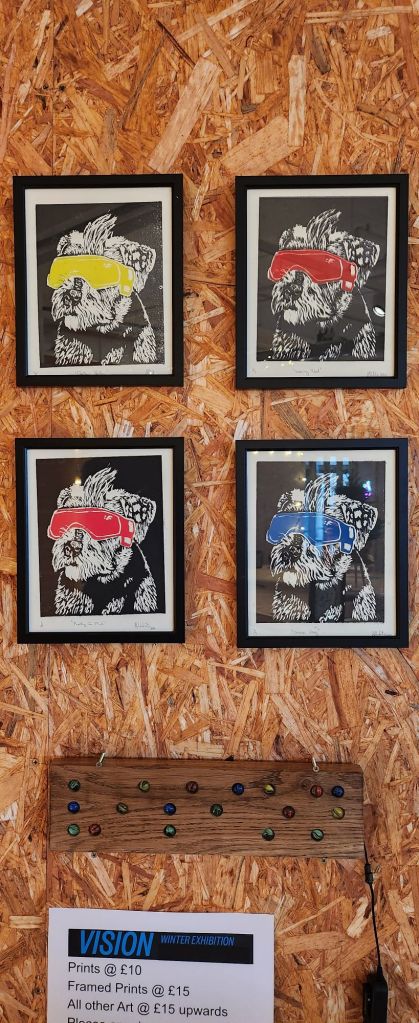
My work on display at the pop up shop. I’m really pleased with how they look and my four prints look just as I envisioned them when I thought about how to display them.

Paper Embossing

26th November 2024

I have been experimenting with other ways to make images, that hint at what’s there and make you want to look deeper. I used the lasercut horse head image from last year to emboss some paper. I used my handmade cotton rag paper from Khadi.

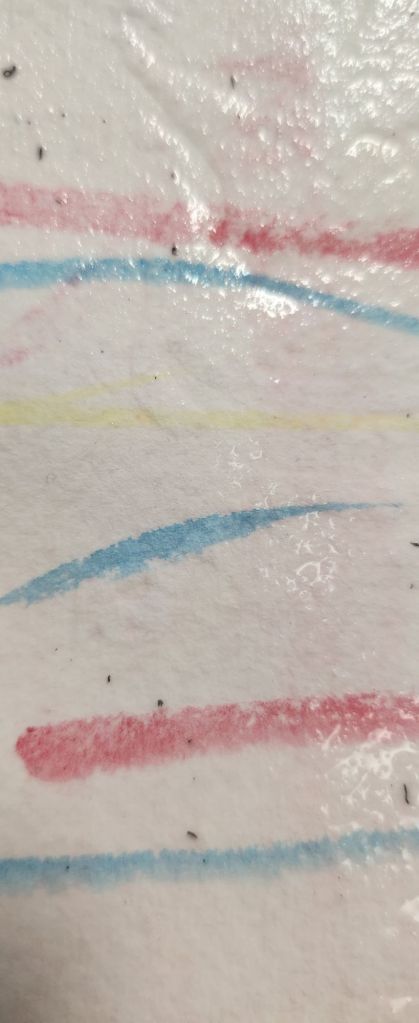
I then used water colours to add colour to the embossed paper and experimented with different ways to apply the paints.

The way that worked best was applying wet on wet and spritzing the water to help it flow into the embossed image and give it a sense of movement.

Vision – Pop Up Shop

19 November 2024

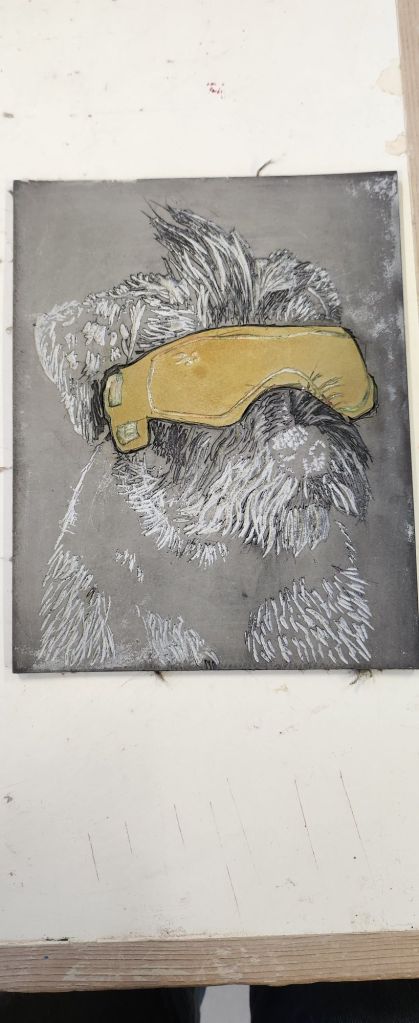
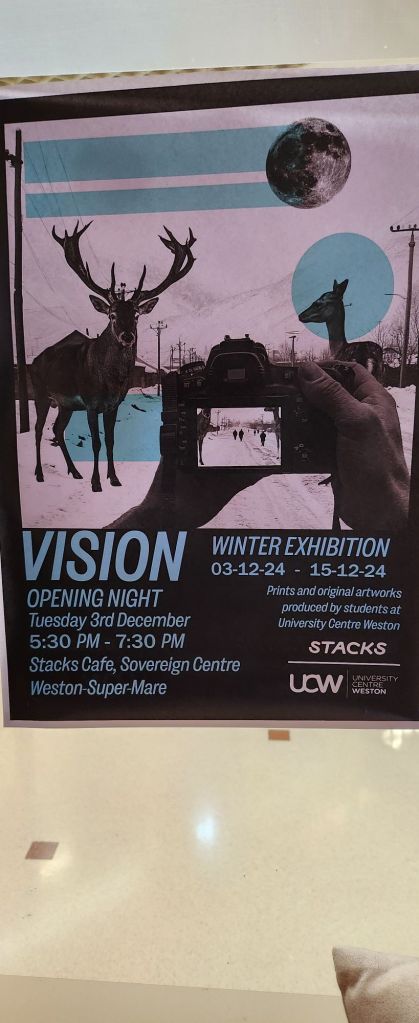
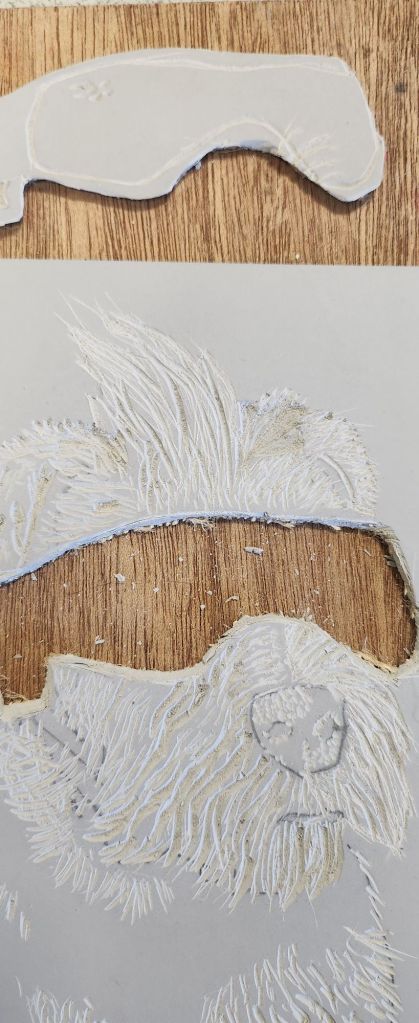
Every year the Art and Design students create work for a pop up shop. This years theme is Vision. I have really struggled to come up with something, trawling through my thousands of photographs of horses and friends at shows. I came across a photograph I had taken of my friends Border Terrier, Kauri. Kauri suffers from uveitis and has to wear special doggles to protect her eyes from sunlight. She has the most amazing pink pair and that’s how she’s ended up being my muse for Vision.

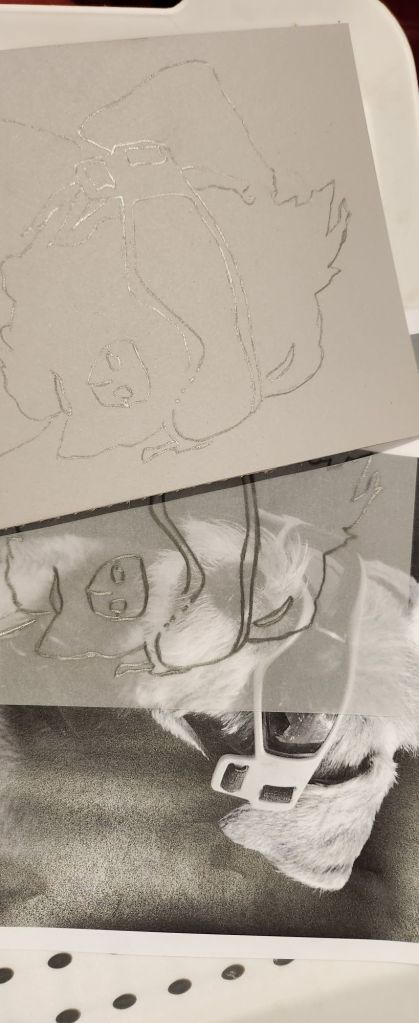
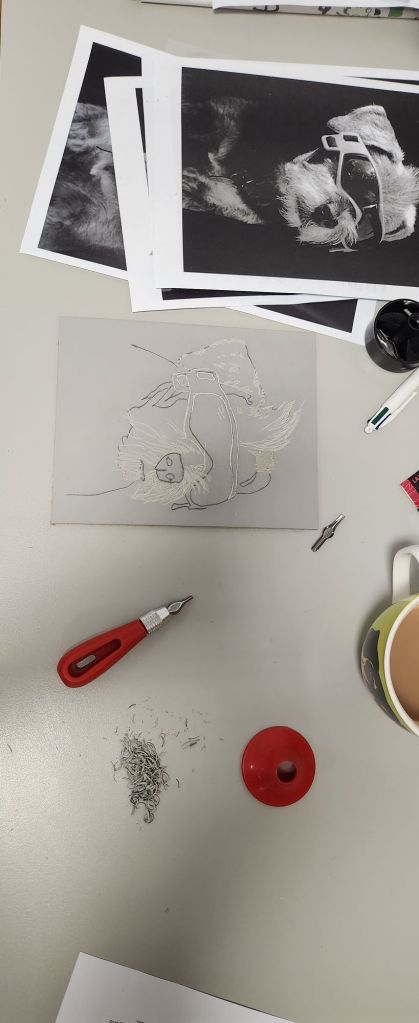
I have seen videos on instagram from other linocut printers that were in different colours using the jigsaw technique. I had the idea that the doggles would be a bright colour so I cut them out as a seperate piece of lino.

The test prints worked out very well. I had the idea to print them in four different colours and a limited run of each. I kind of have a pop art vision of them being displayed in a square on the wall.

Liska Llorca Artist

17 November 2024

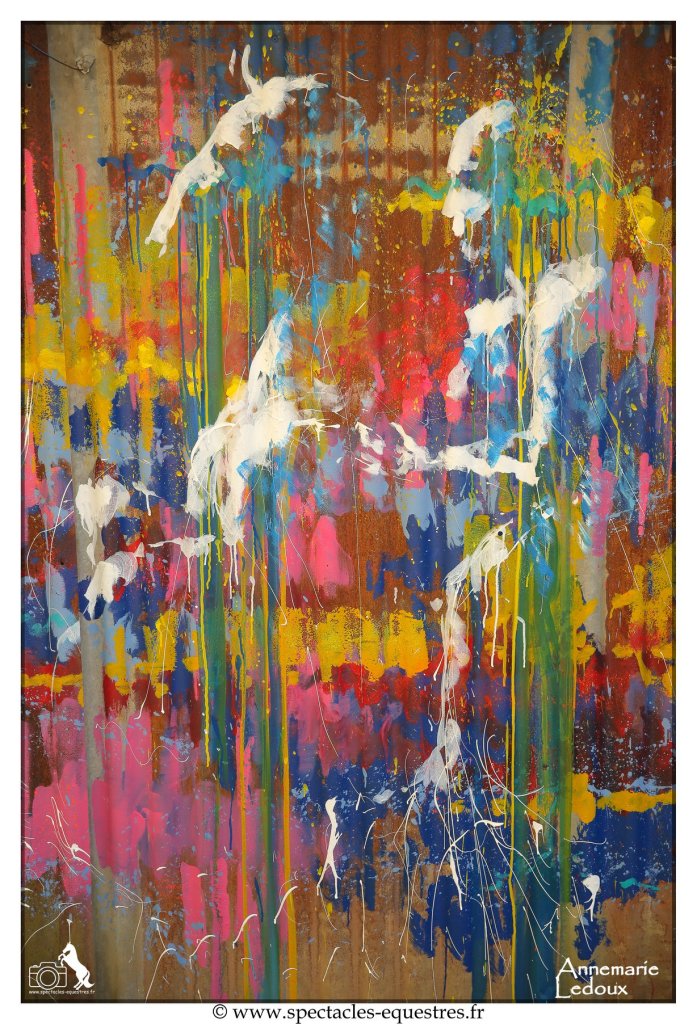
Bizarrely I came across Liska whilst on a horse facebook group I’m in. I don’t think I will ever turn my art into a performance like she does, basically because I cannot dance as well as her! Her equestrian art is amazing. I watched a video of her painting whilst, dancing, and also having a horse and rider performing at the same time. I’m just leaving this post here because I felt her art. https://www.liskallorca.fr/
I am following her on social media I just find her way of working, emotional and her work so beautiful.

Lisa Fricker Contemporary Artist

21 October 2024

I came across Lisa Fricker via facebook posts about women artists. https://lisafricker.com/SparkSite/the-artist.html

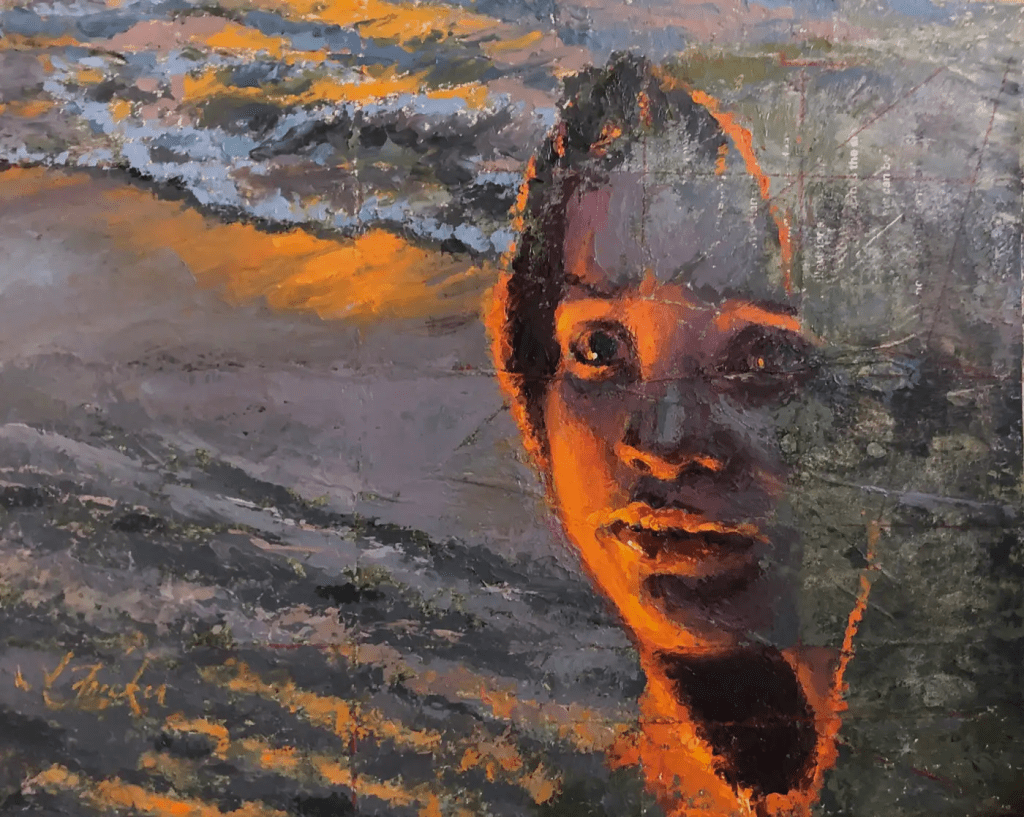
In her own words she likes to combine traditional depiction with painterly abstraction. She believes that the edges is where all the magic happens. Looking at her paintings on her instagram and website, I was drawn into the paintings and I would love to be as skilled as Lisa is at seemlessly melding the background into the portrait. I felt as though I was glimpsing something at the edge of my imagination trying to breakthrough.

Fireside” (2022) by Lisa Fricker,

Business Model and Financial Planning

As a mixed media artist I have a varied range of work, using ceramic, paint and print. I have thought about my business model and how it can be unique to myself and stay true to my brand and how authentic I want it to be. Because I also love photography it is relevant that I incorporate my photographic skills in how I produce my artistic creations. It also takes away an issue of copyright as I am the photographer and own the reference image.


My business model is based from photograph to finished piece. The idea is that for my more basic pieces I use photographs from my own library of images. However, for my more bespoke commissioned pieces I will spend some time with the owner and their horse, taking photographs for reference and then using these to form my final piece. This way I get to understand the horse and its personality, how it interacts with it’s owner and hopefully capture some candid moments that can be incorporated into my final piece. it will help me with the emotions I like to convey in my work.

My initial idea on sales prices for my products are:

Lino Prints A4 £10 (unframed)
Lino Prints A4 £20 (Framed)

Ceramic Lino Relief Slabs A5 £35

Sculpture Horse Head 12cm £80

Paintings A4 £80
Paintings A3 £120
Paintings A2 £180

Bespoke Commissions Price on Application £75 deposit fee which covers the photoshoot for reference images.

As previously mentioned, I already have other part time income that covers my share of our household expenses per month. My income is already taxed and takes up my tax free allowance so any income from my art business will be taxed at 20%. NIC on profits less than £6,725 will be paid voluntary Class 2 @ £3.45 per week profits between £12,750 and £50,720 will pay Class 4 NIC at 6%. I also have a student loan to repay and this will be approximately £360 per year and this will also come out of my other income so isn’t factored into my Artist Income and Expenditure.

Year 1 Sales per month by product      

Horse Head Lino Relief Slab Lino Print Unframed Painting based on A3

1 x £80   1 x £35 2 x £10 = £20 1 x £120

Total Ceramic Sales  £115.00 Total Print and Painting Sales £140    

£255.00 Total projected Sales     per month in year 1

Direct Costs Ceramics Total £92.00

  • Expenses Clay  £38.00
  • Kiln Hires 2 per month  £24.00 based on price lists for hiring kiln space per https://www.kilnshare.com
  • Oxides, slips & Glazes  £30.00

Other Mediums Direct Costs £137.75

  • consumables = paints & inks  £42.75
  • Use of Printworks Facilities 2 x pm  £50.00
  • Papers  £45.00

I have not factored in my labour cost recovery, simply because I want my art to be affordable and to sell, and also because I have other income that covers my household bills. If I were to cover my labour costs it would make some of the smaller pieces a lot more expensive and harder to sell. It is a very difficult thing to balance when just starting an enterprise. In my experience it is about 18 months before you really start to break even.

With regards to capital expenditure I have gone for the option to hire facilities as with the time I have available to create artwork, initially I will not be producing enough to make the minimum number of sales to warrant investing in my own kiln or intaglio printbed.

  • Bath Potters Kiln Rhode Ecotop 60 kiln £3244.15 inc vat
  • Clay Slab Roller Gladstone 3ft Slab roller £1800 inc vat
  • Printing Press Handprinted.co.uk ABIG Printing Press with geared Plate 50×90 £2,700 inc vat

With my predicted sales, keeping level of productivity the same as year 1, it won’t be until year 4 that i could consider purchasing any capital equipment outright and if I’m able to hire kiln space and printing facilities it actually make more business sense to continue doing so.

These are very simple projections and costings of my cash flow, I have more detailed spreadsheets with it all worked out and a 5 year plan. I will review these budget predictions every year, it will be nice to see how far off the mark I am and what happens when I get my website and online shop up and running.