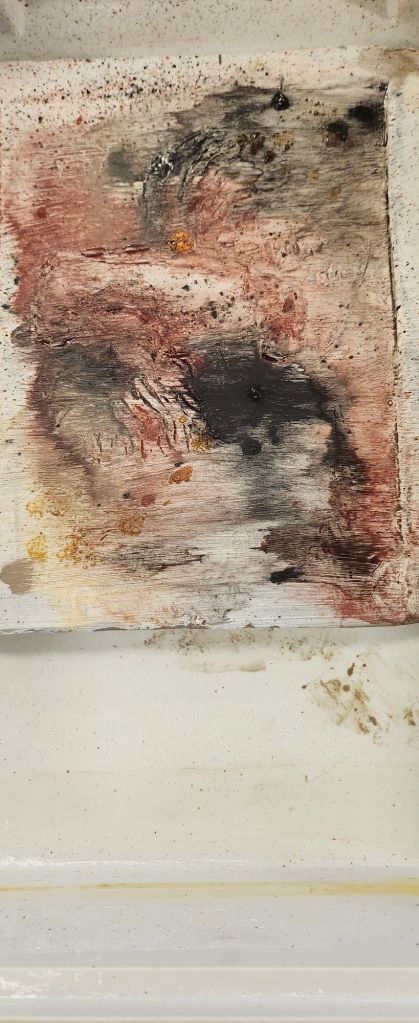
RWA Visit

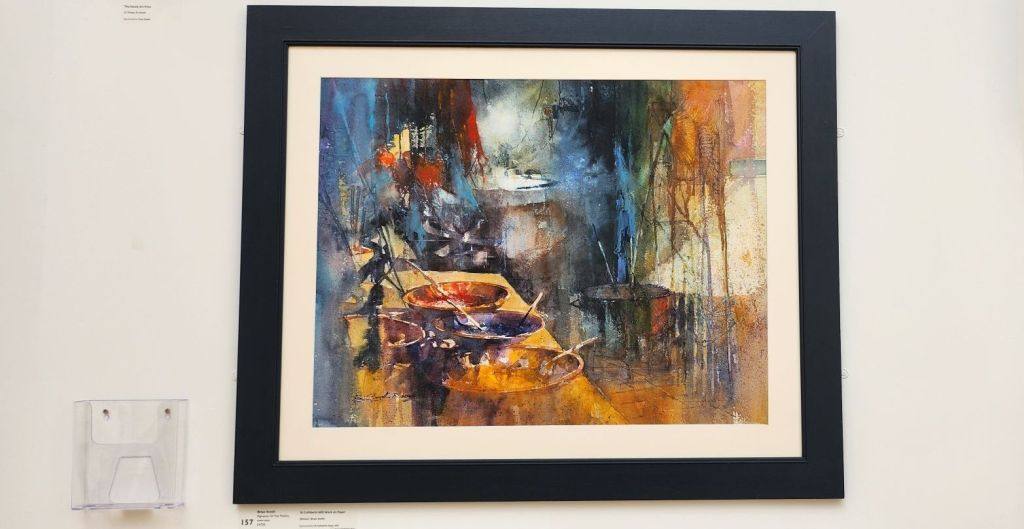
Sometimes when you visit a gallery or exhibition just one image really captivates you.  This year I kept coming back to this colourful watercolour by Brian Smith.  It’s called Pigments of the Medina.   I could almost picture myself in that room, mixing up colours to paint with.
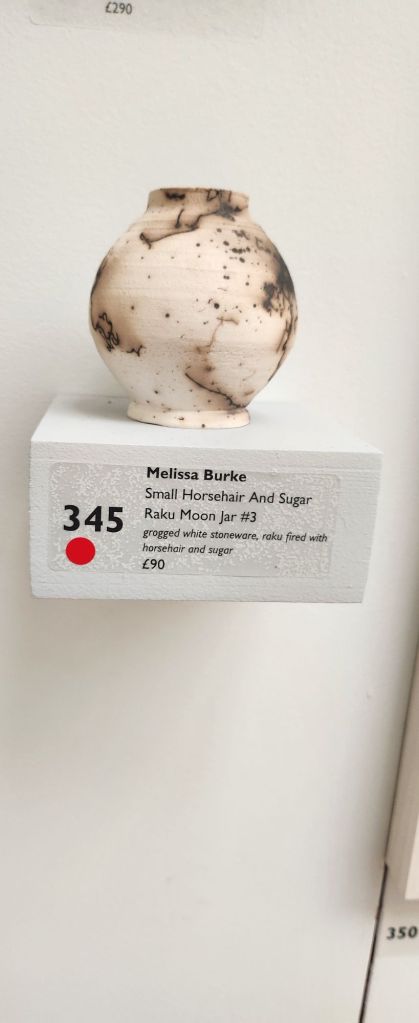
Another piece that caught my attention, tucked away in another room  at the RWA was this little raku fired pot.  It gave of this air of fragility and I particularly like the way the horse hair and sugar blended with the clay and made their own marks during the firing process.

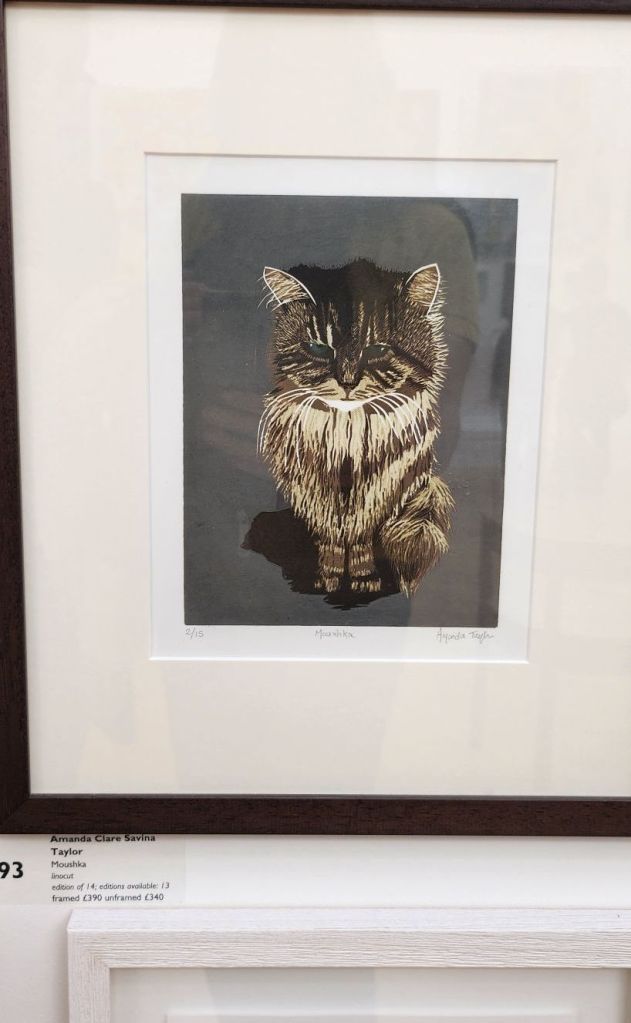
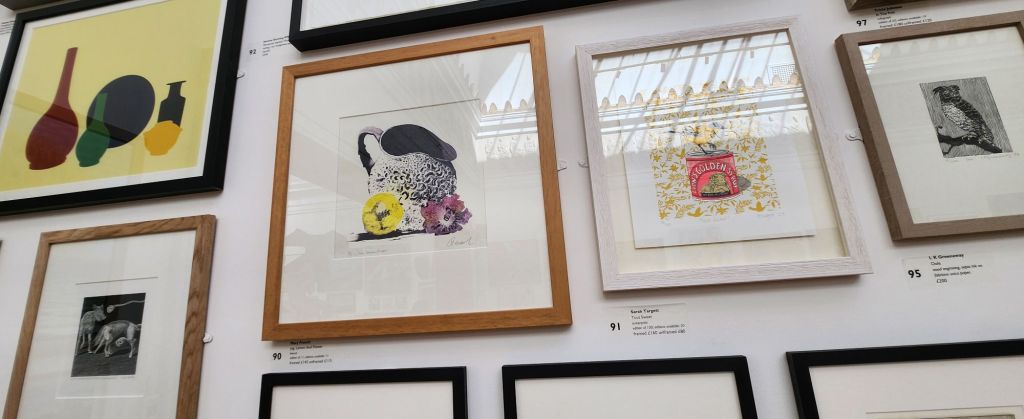
This year, there was an entire wall of images made from different printing processes.  I loved this as I enjoy printing and have used several different processes over the period of my degree studies.  It was really hard to single out just one that truly inspired me as each artist had their own way of presenting colour and detail. 
My takeaways from this years exhibition are to experiment a little more with printing and painting techniques and how I can blend these within my work.

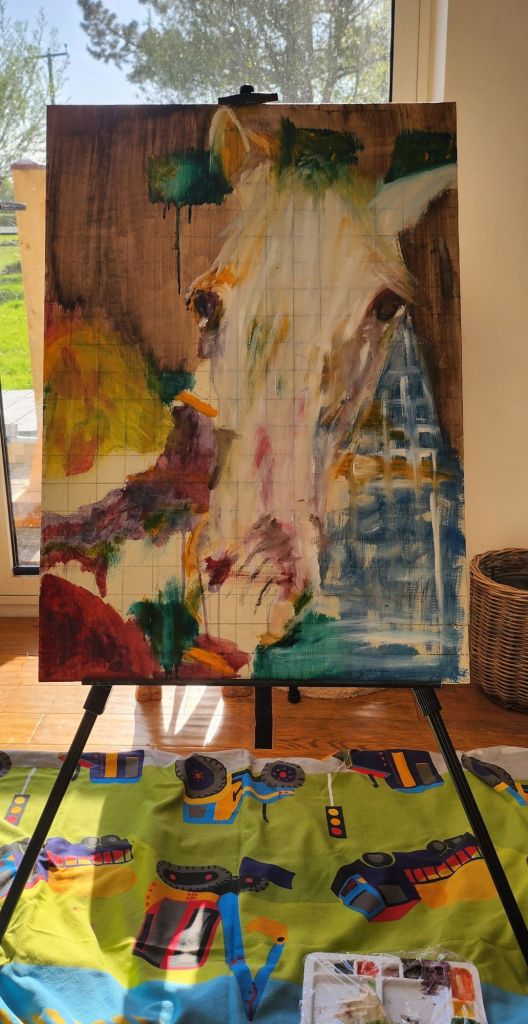
Just a boy who loves horses cont…

22nd April 2025

The messy phase – it can feel quite despondent and as if you are just making it all worse as you add the base layers and background colours. I’m not happy with the eyes and I’m trying to concentrate on doing other areas rather than keep going back and making them worse. The problem is trying to get the head tilt perpective when one side of the face is more abstract.

Just a boy who loves horses

8th April 2025

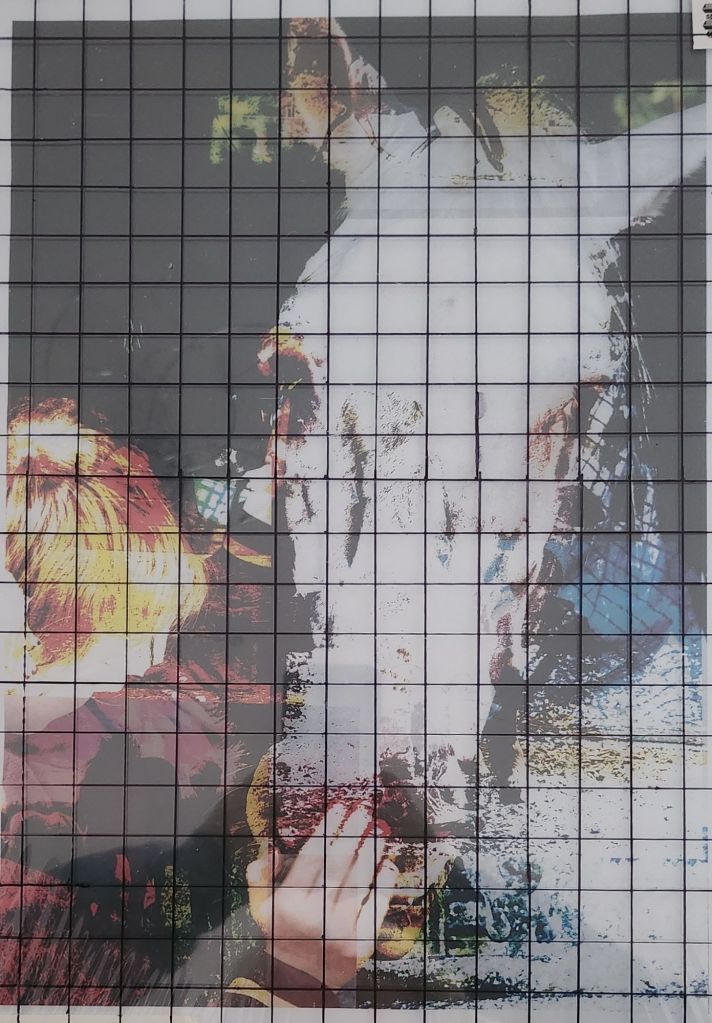
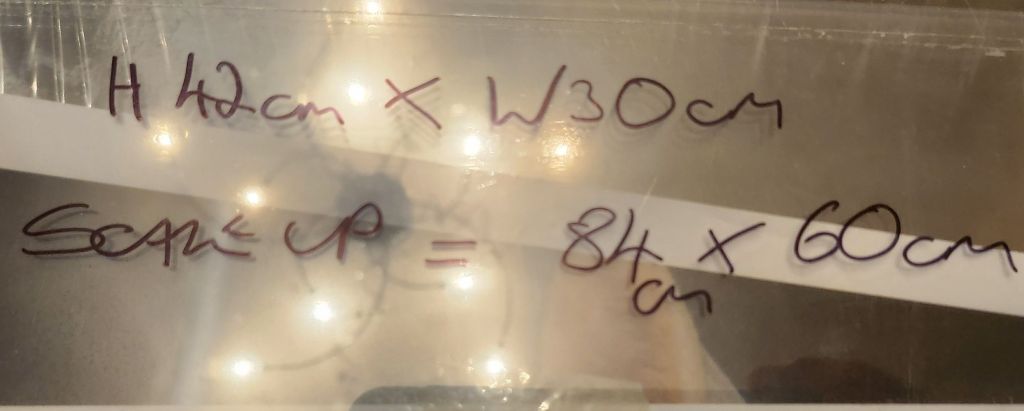
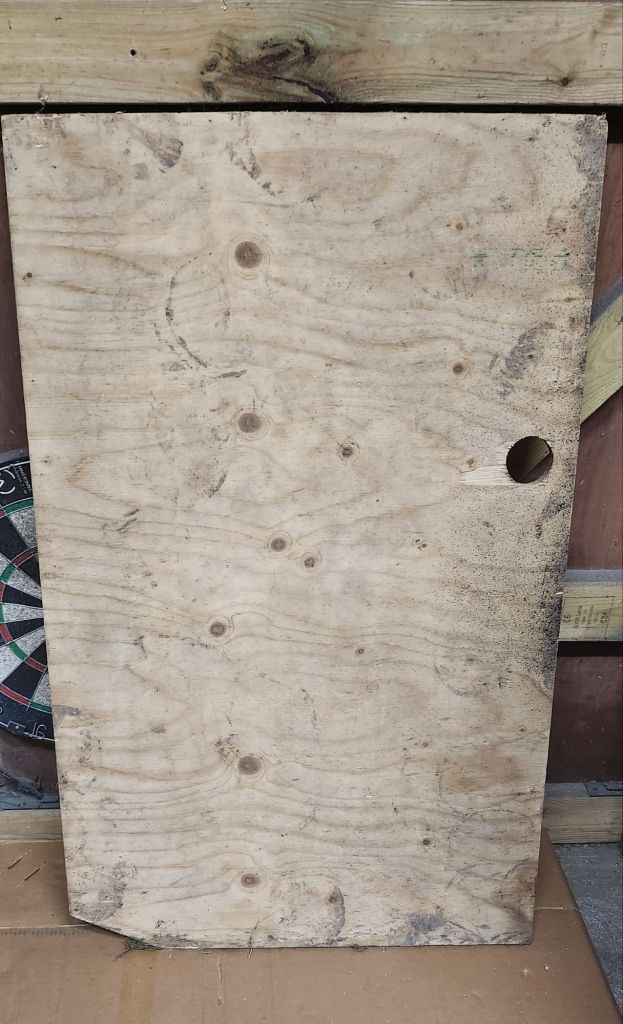
I had found a piece of hardboard that needed to be prepared for painting and worked the size of the printed image and calculated the scale needed to fit the wood. I had ordered a large glass table kitchen worktop protector for my hand printing at home as an easy clean surface. I drew my grid on the cellophane/thin plastic it was wrapped in and taped the picture to the back.

Sustain 24th March

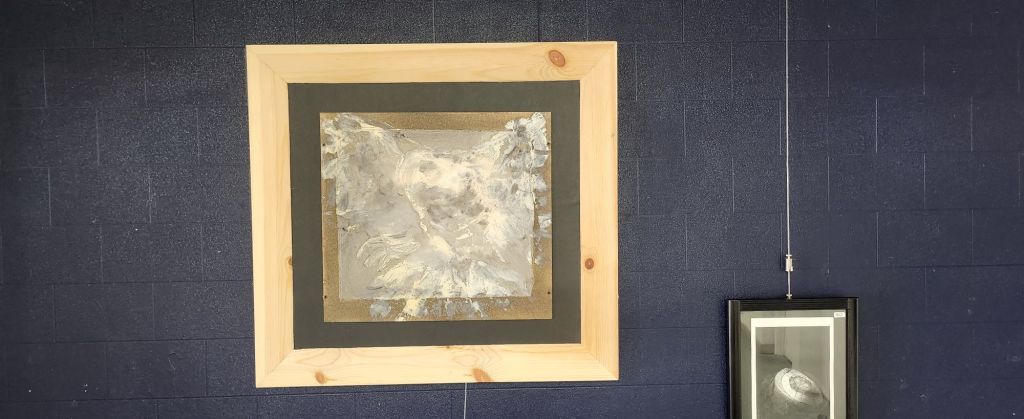
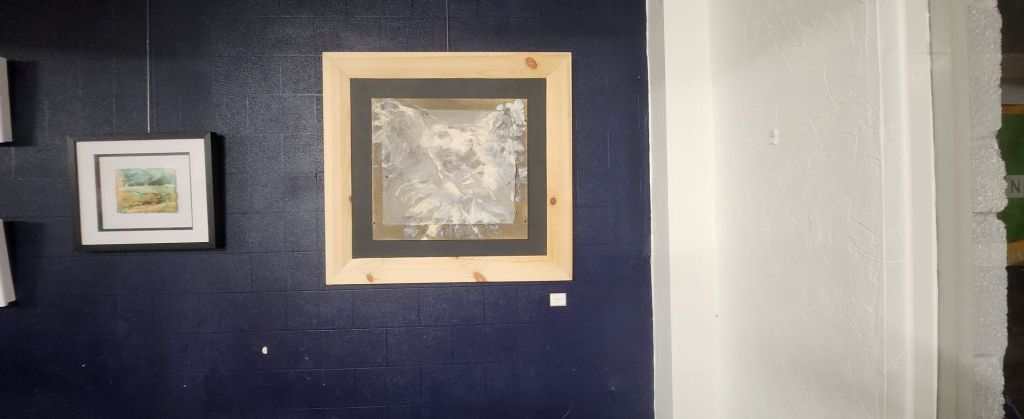
The second years were holding a “Sustain” exhibition at The Cheddar Arts Quarter. I didn’t have any new work specifically for this, so I exhibited “Ghost” the two tone Peregrine Falcon I did in year one. It fits the remit as it was painted using hand mail white oil paint, and used engine oil, on hand made cotton rag paper by Khadi papers on an offcut of hardboard.

Lino Production Line

17th March 2024

I have chosen 5 images, some will just be straight monotone prints, but there are a couple where I will print in multicolours like I did for vision.

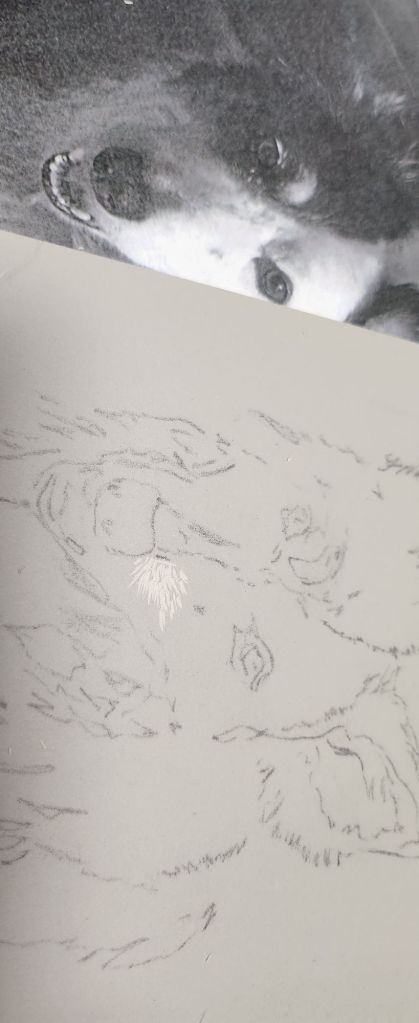
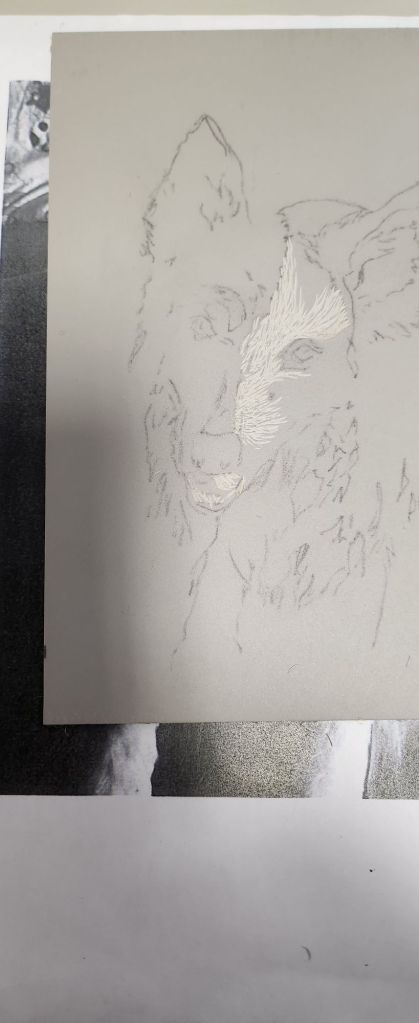
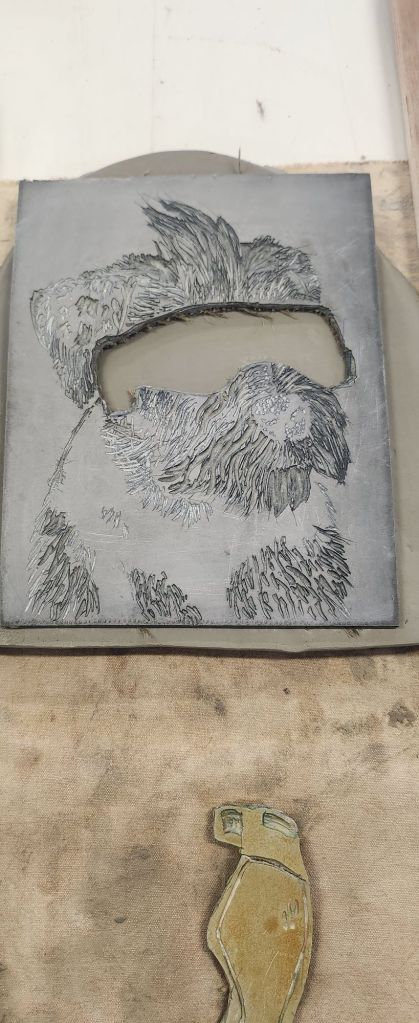
The hardest part when flipping and tracing the images for lino’s is remembering which way round the original image is so that you can cut out the correct area and use the negative spaces to create the print. This photo of my dog, I flipped the image when transferring to the lino. Her half white face will be on the opposite side when finally printed. However, as I was cutting into the lino I was close to doing it on the left side – I had to keep reminding myself it was flipped.

Frame Ideas and Prior

24 February 2025

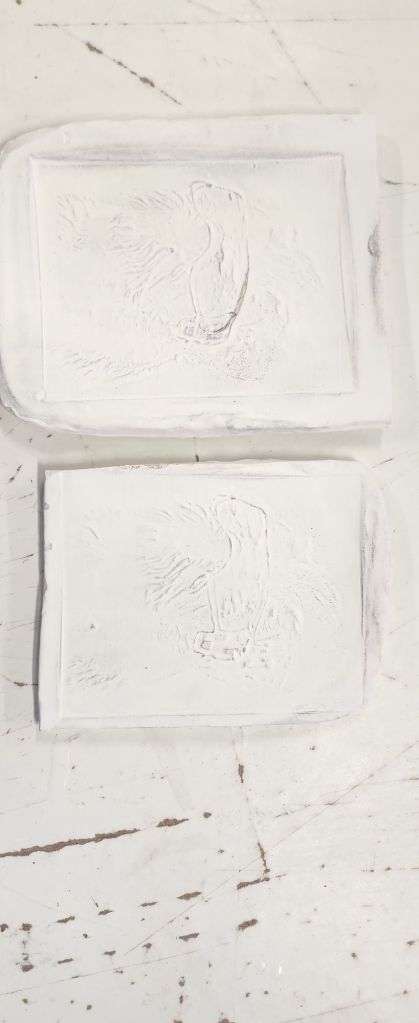
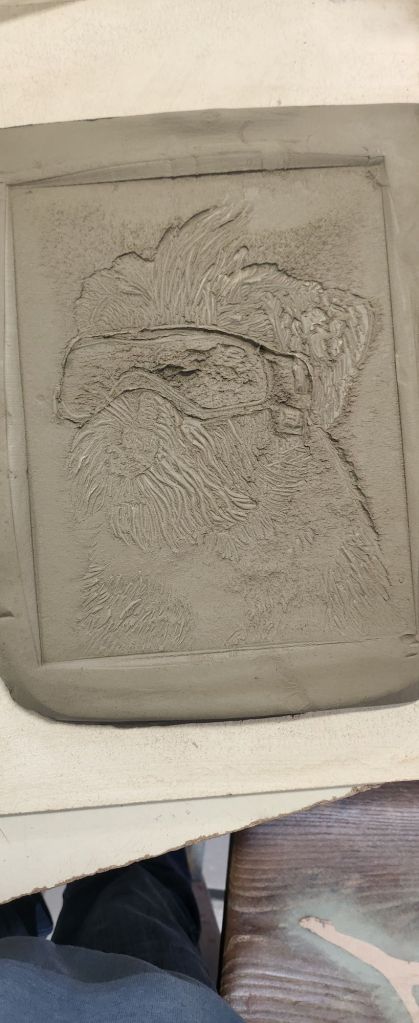
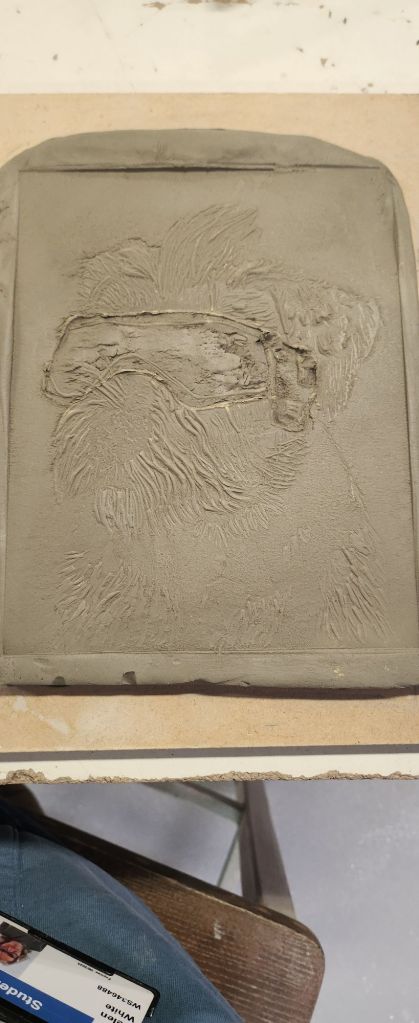
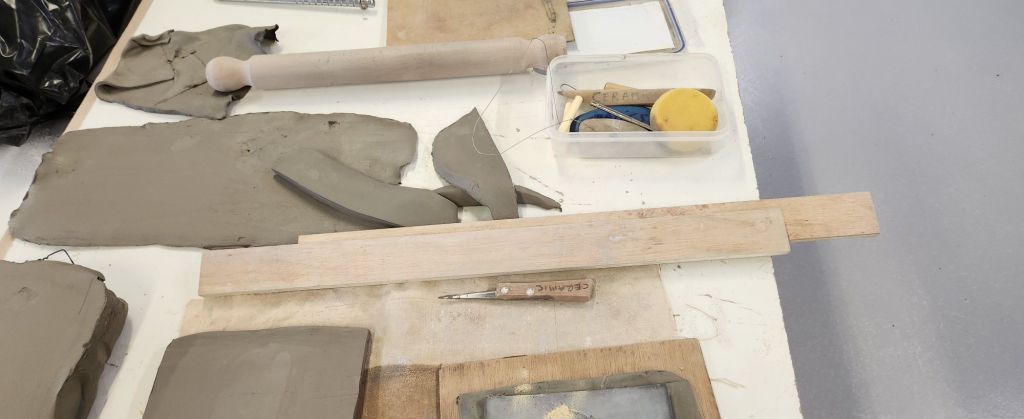
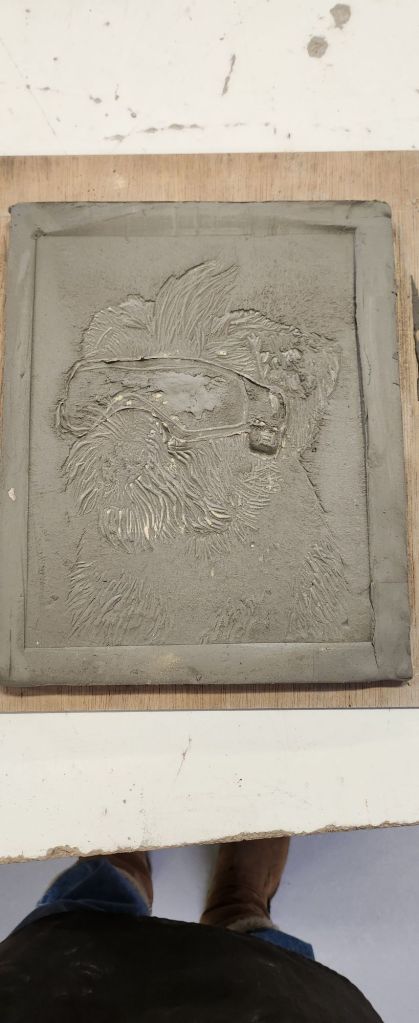
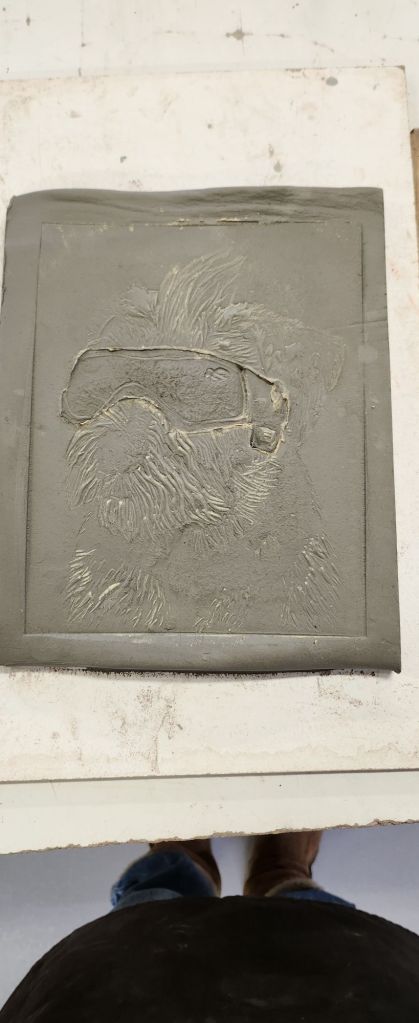
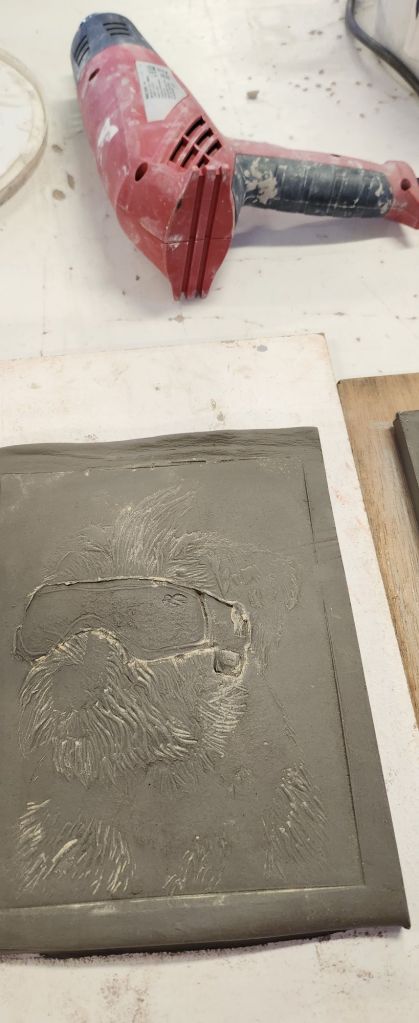
I had a wooden frame made to help keep the clay in shape whilst using the press to create the relief. It also gave me an idea of how I can make a sustainable frame for the clay tiles so that they can be displayed either free standing on a shelf, or hung on a wall.

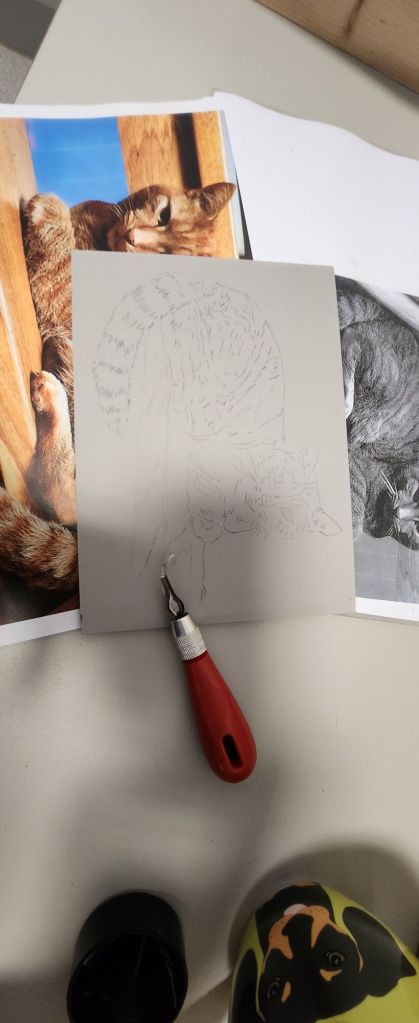
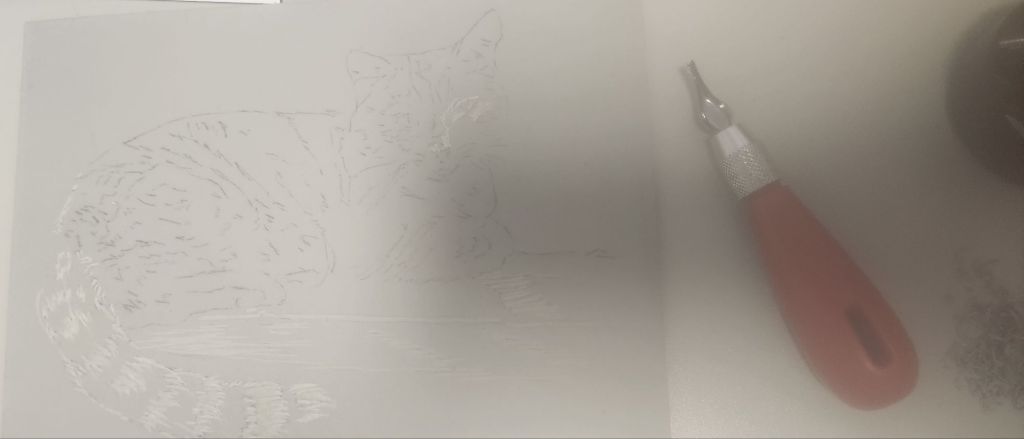
We are preparing for an exhibition at Prior shop and because my dog print was a success, I have decided to do some pet lino prints. Even though my main interests are in being an equine artist, there is merit in doing small prints that appeal to a wider audience.

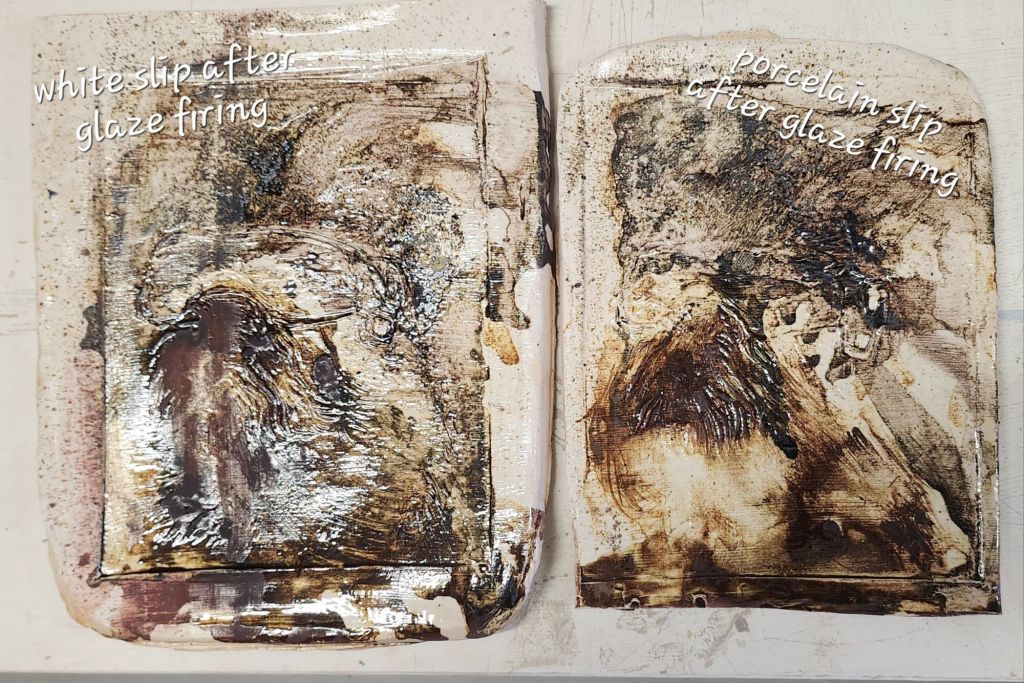
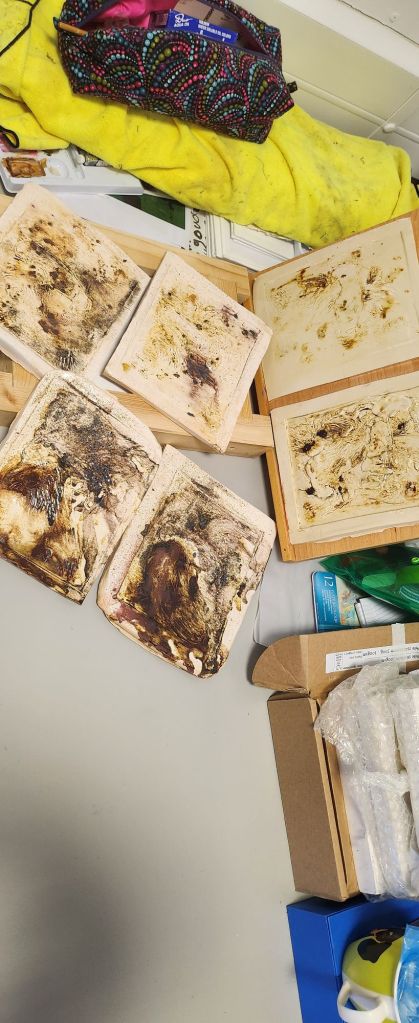
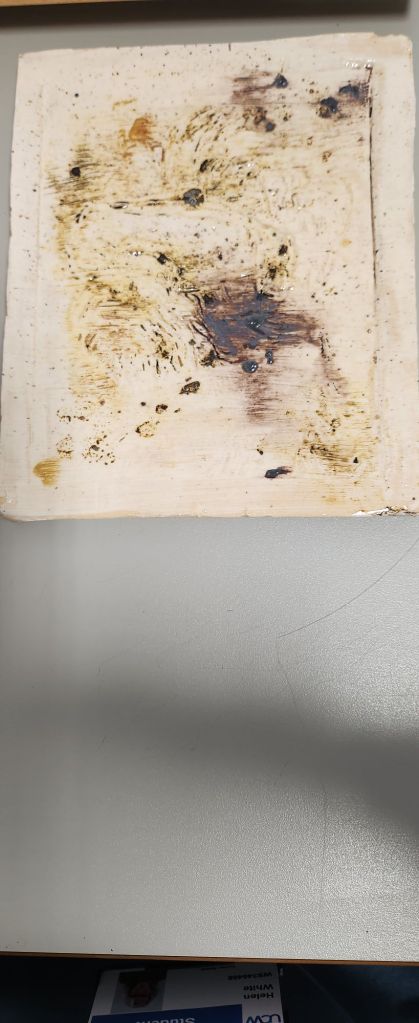
The last pair of ceramic tiles have been glaze fired and I like them both for different reasons. I had applied the oxides more heavily, diluted the glaze and then wiped half. I think both slips have merit in how the oxides react. I will definitely do a mix of the two to create more tones in the images I create. I had accidentally wiped of the oxides with glaze on the porcelain slip, however I like the tonal range in the red iron oxide and black iron oxide mix around the nose.

Comparing them all next to each other I need to spend a lot more time refining this process for it to be consistent enough to produce on a regular basis.

Ceramic Relief Painting Cont…

11th February 2025

I am trying to see which turns out better so am comparing all the ones I’ve done so far with each other and my final pieces from 2024.

Last year I used a mix of both slips on the bottom piece, just in the centre and applied the oxides more heavily.

For these two tiles I have decided to wipe off half on each to see how they turnout after the final firing. I also added Manganese Oxide to the ones used to add a different shadow tone.

Ceramic Relief Painting Cont….

27 January 2025

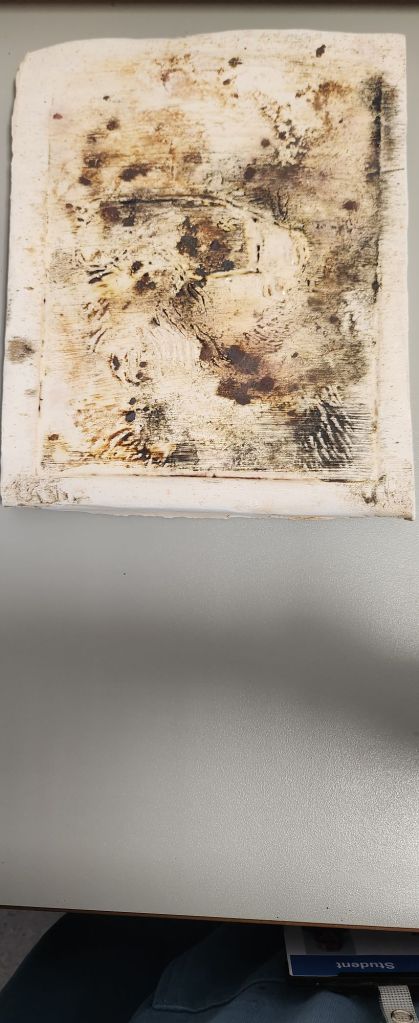
The oxides still need to be applied more thickly as they are burning off in the firing process. The tile that had the glaze wiped off has more colour, unfortunately some areas had no glaze at all. Next time I need to be more careful about how much I wipe off.

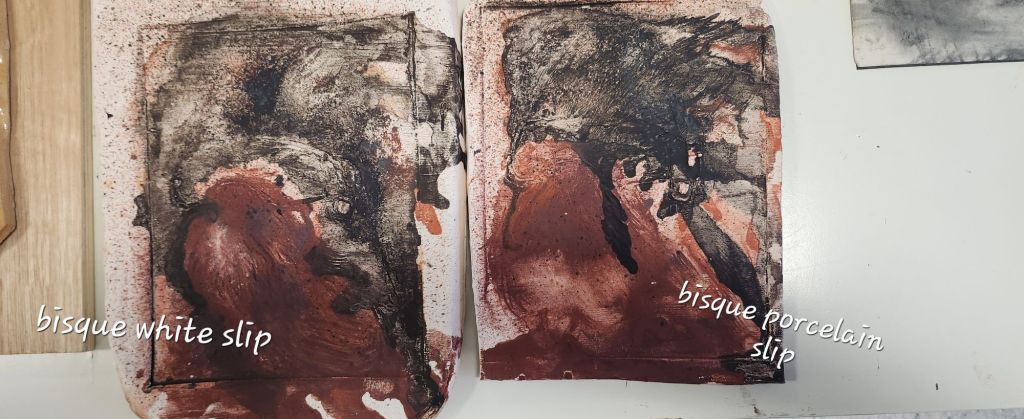
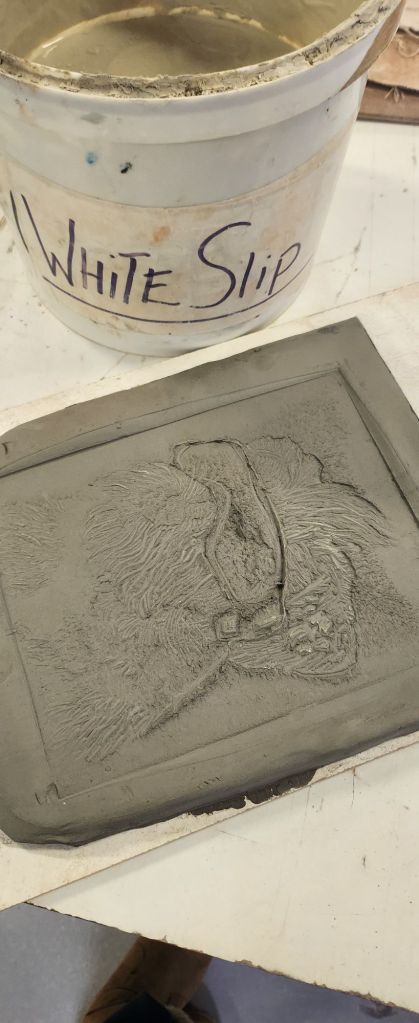
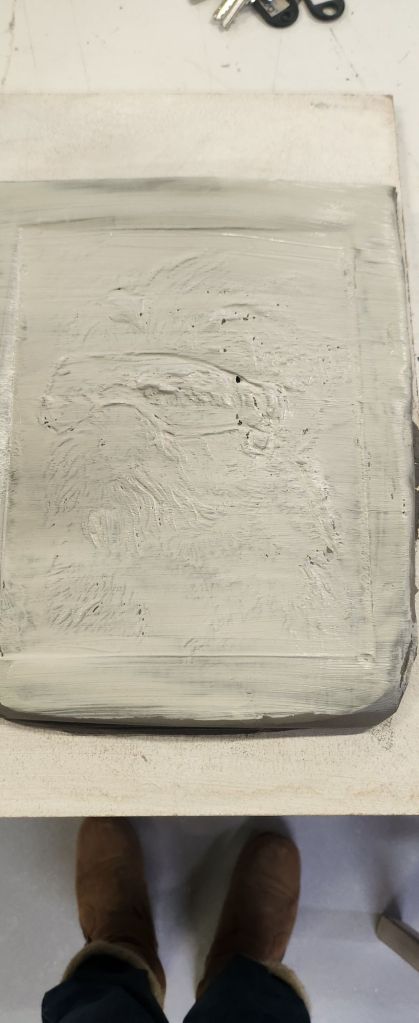
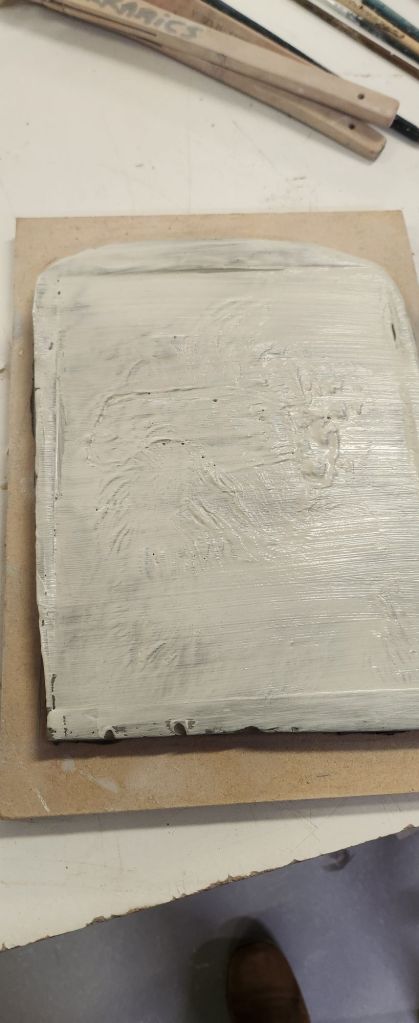
Third test set under way. This time I used a mix of white slip and porcelain slip. The idea being that the two different tones of the slips will react differently with the oxides for a more tonal effect.

Ceramic Relief Painting Cont….

20 January 2025

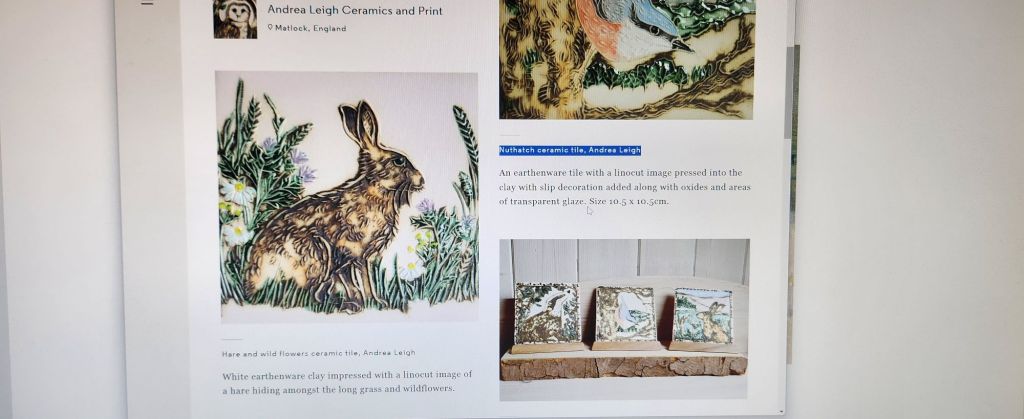
Trying to find ceramic relief artists is very difficult. Using stamps, or reliefs in creating pots and tableware etc, is a technique often used. I have only found one artist who paints the reliefs although Andrea Leigh paints the oxides on for a more detailed painting.

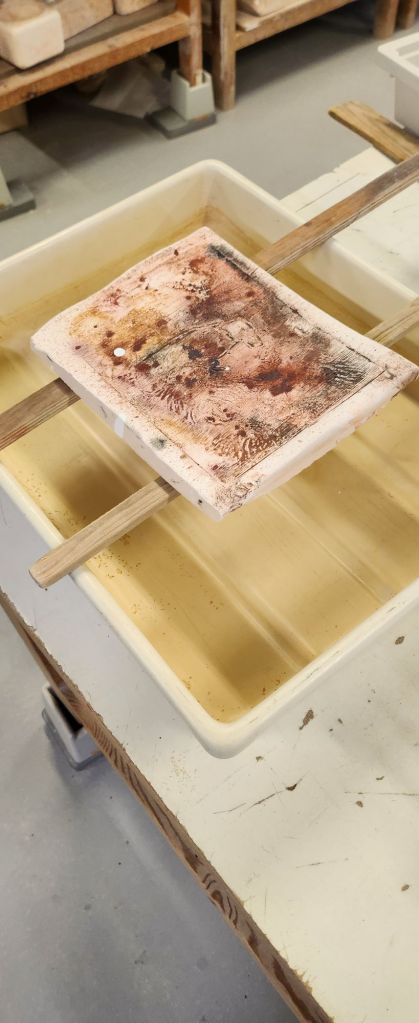
The tiles have been bisque fired and are ready for glazing. After talking things through with my tutor, I realised that last year I diluted the transparent glaze even more before I applied it to my relief work.
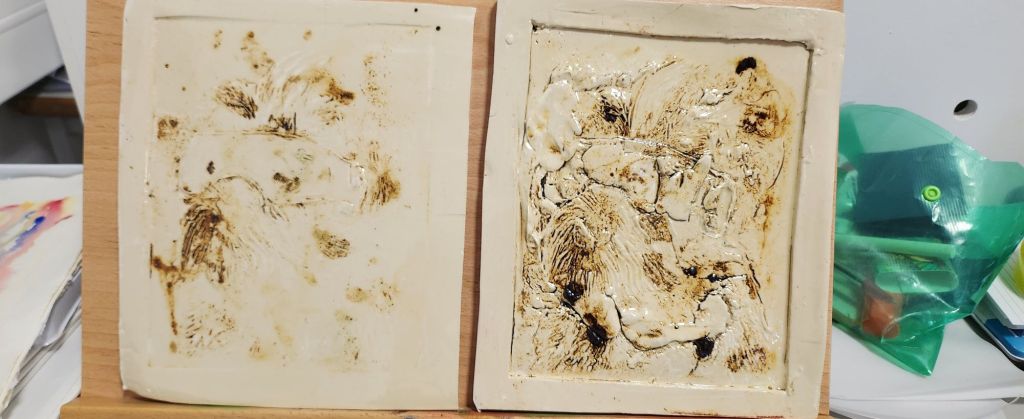
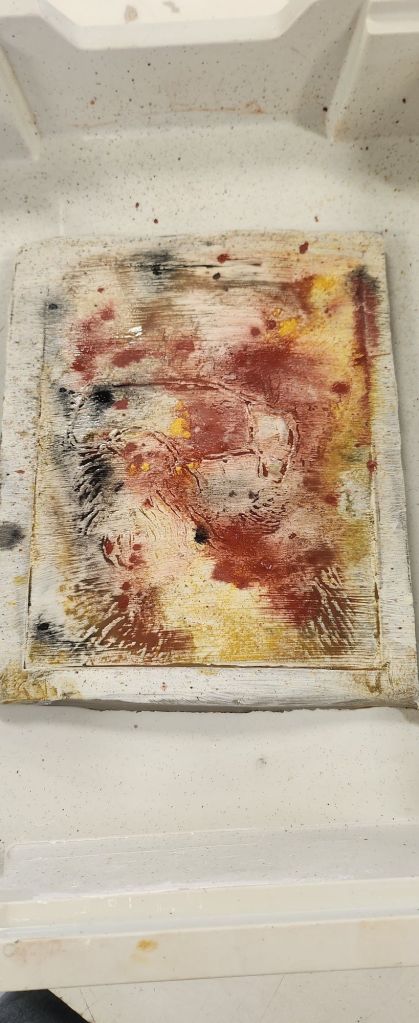
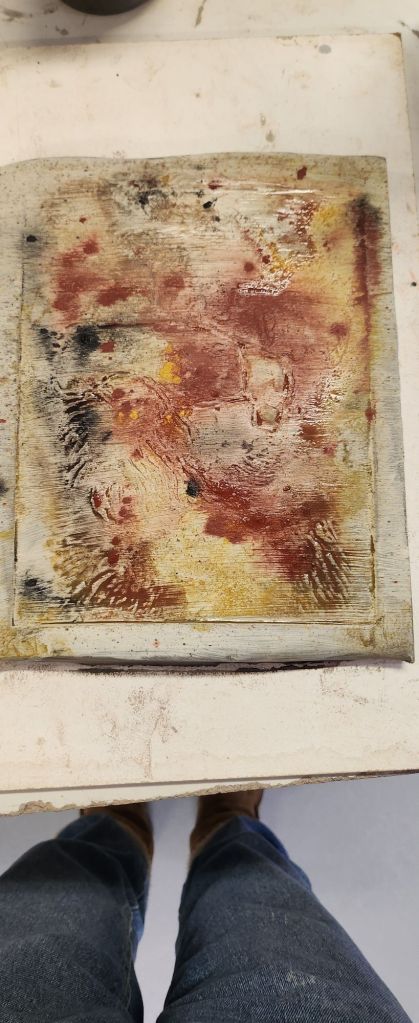
Even though I applied the oxides more uniformly on both tiles, they reacted differently on each tile during the firing process.
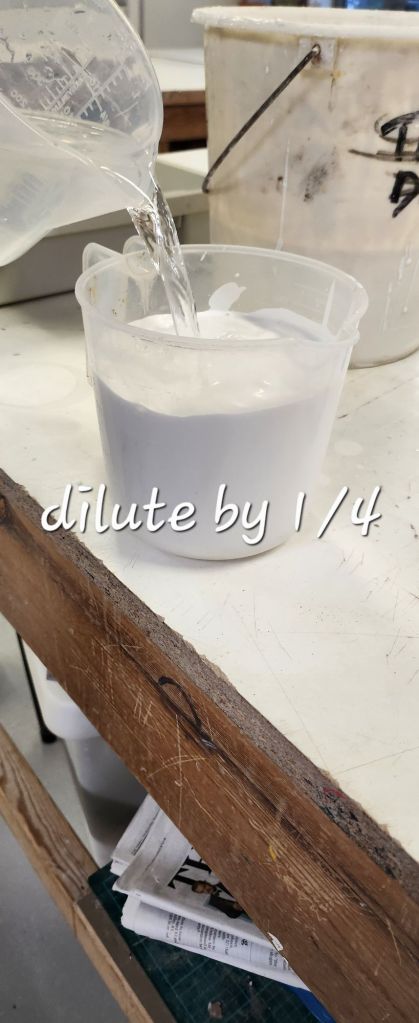
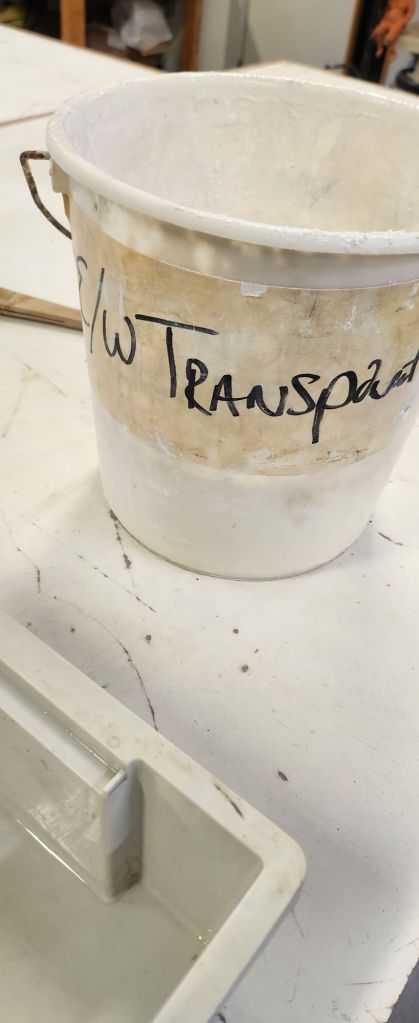
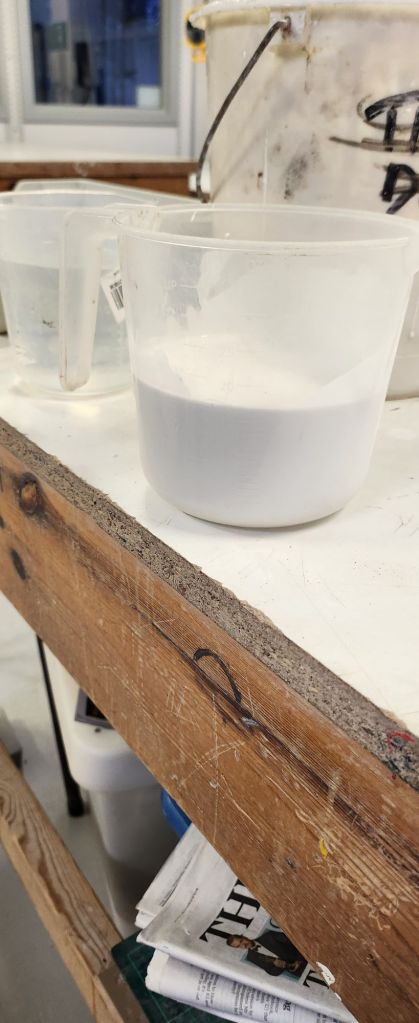
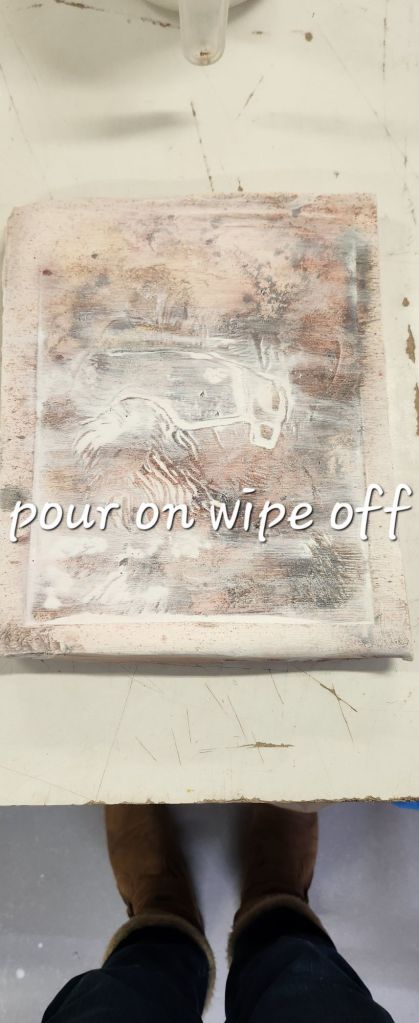
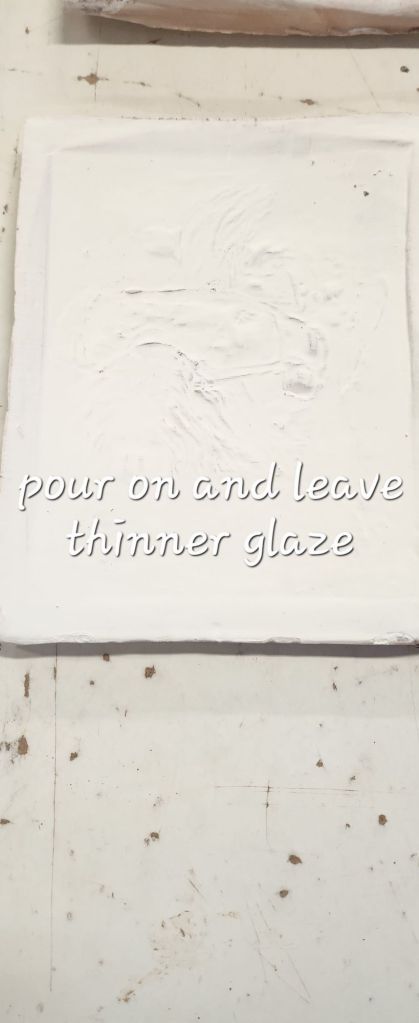
As you can see I poured the diluted glaze over the tiles and wiped off on one tile and left it on the other tile. This is testing to see which process produces a similar finish to the work I did last year.

Ceramic Relief Painting cont…

13th January 2025

With the one on the left, I hadn’t wiped off enough of the glaze. With both of them I hadn’t applied the oxides strongly enough, although they have come through better in the one on the right.

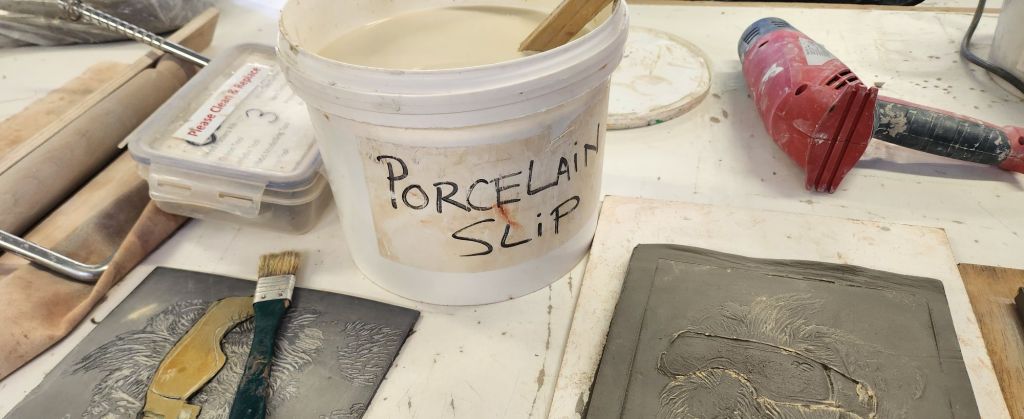
I am trying to work out a process that is going to work, especially if this is part of my range of work I wish to offer customers in the future. There are so many variables that I have no control of in the firing processes that I need to ensure the preparation and how the materials are applied is as consistent as possible.

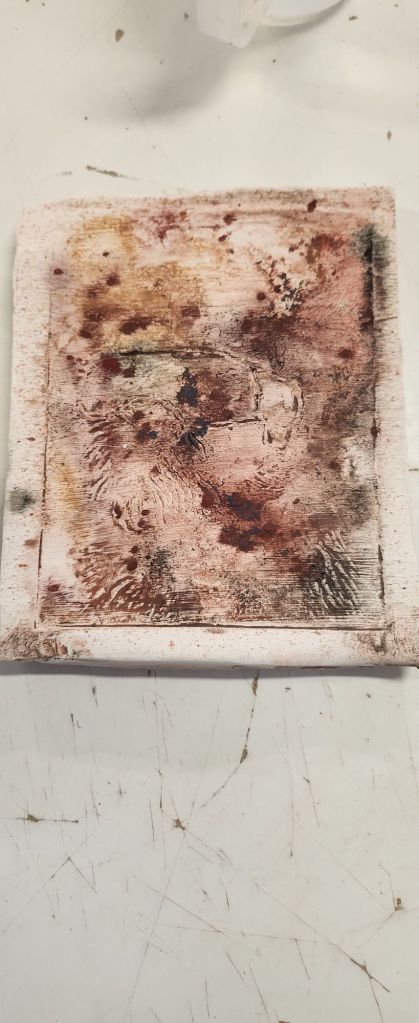
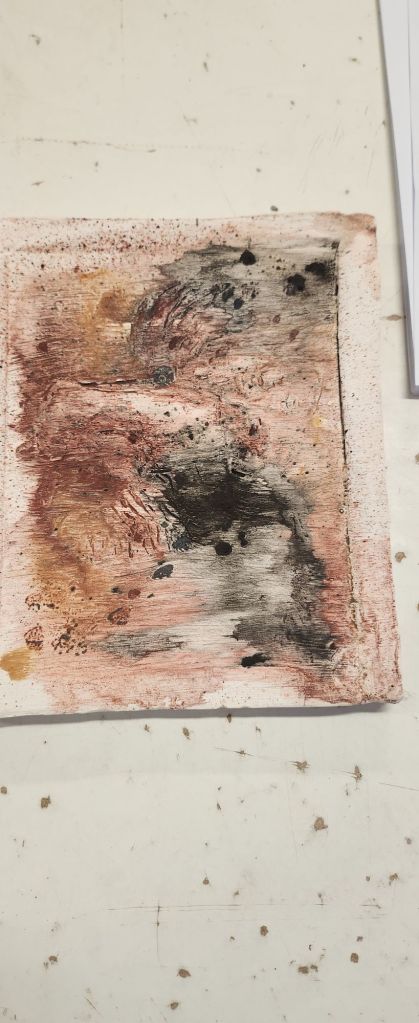
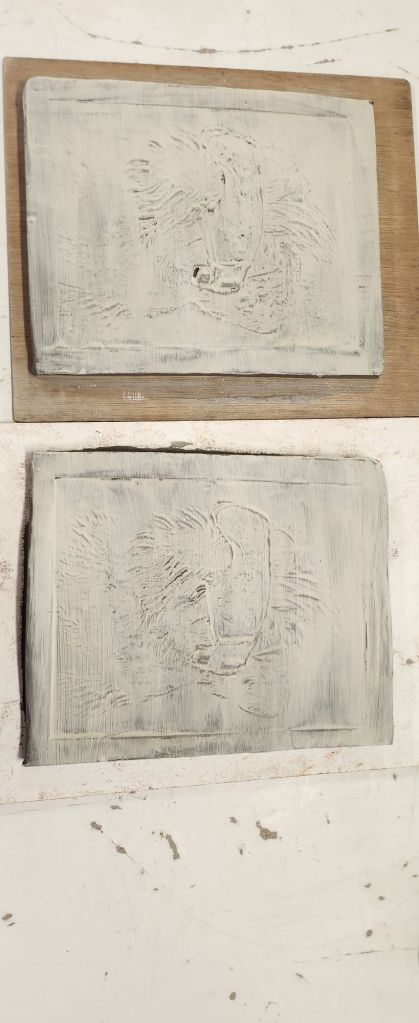
this time I used porcelain slip rather than white slip and applied the oxides more thickly and tried to ensure that the two tiles had the same colour coordination, or as similar as I could get them.

The tiles were then bisque fired.