Screenprinting with a blank screen

12th October 2023

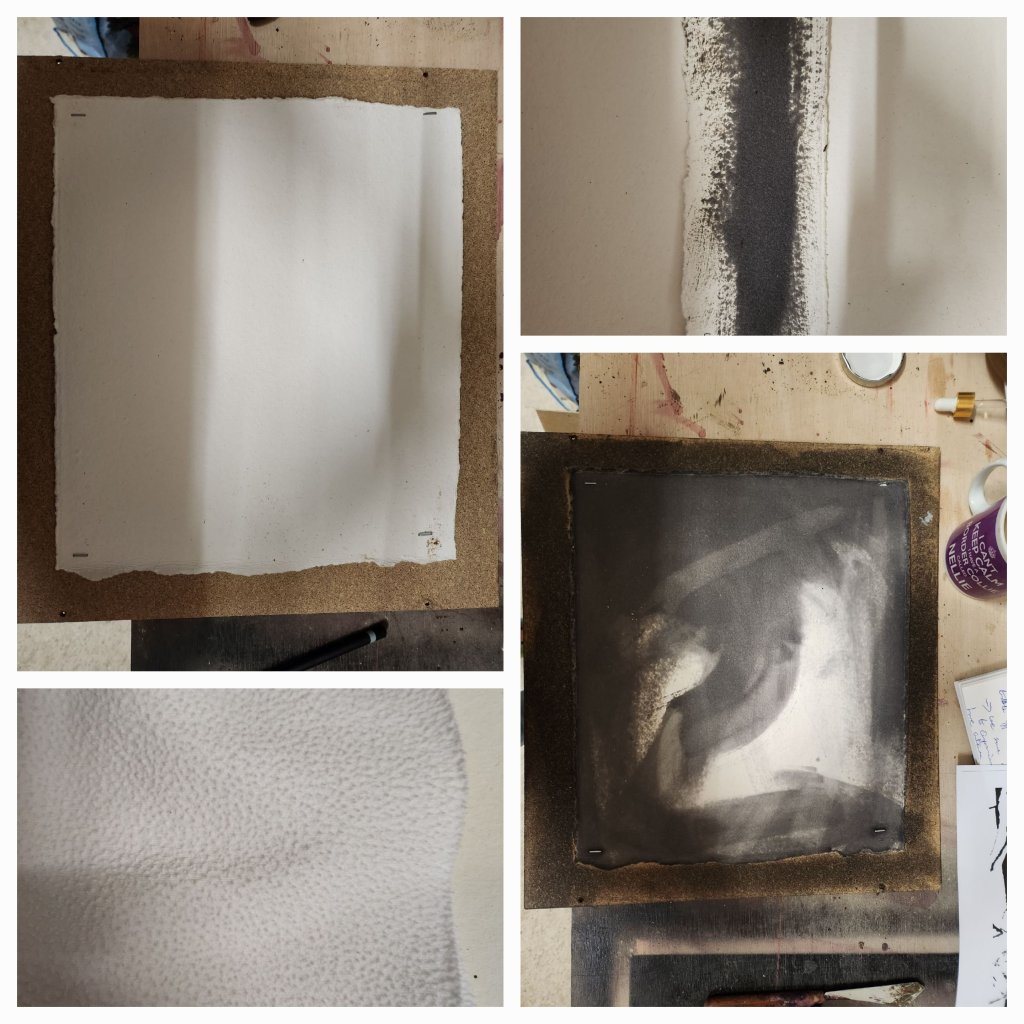
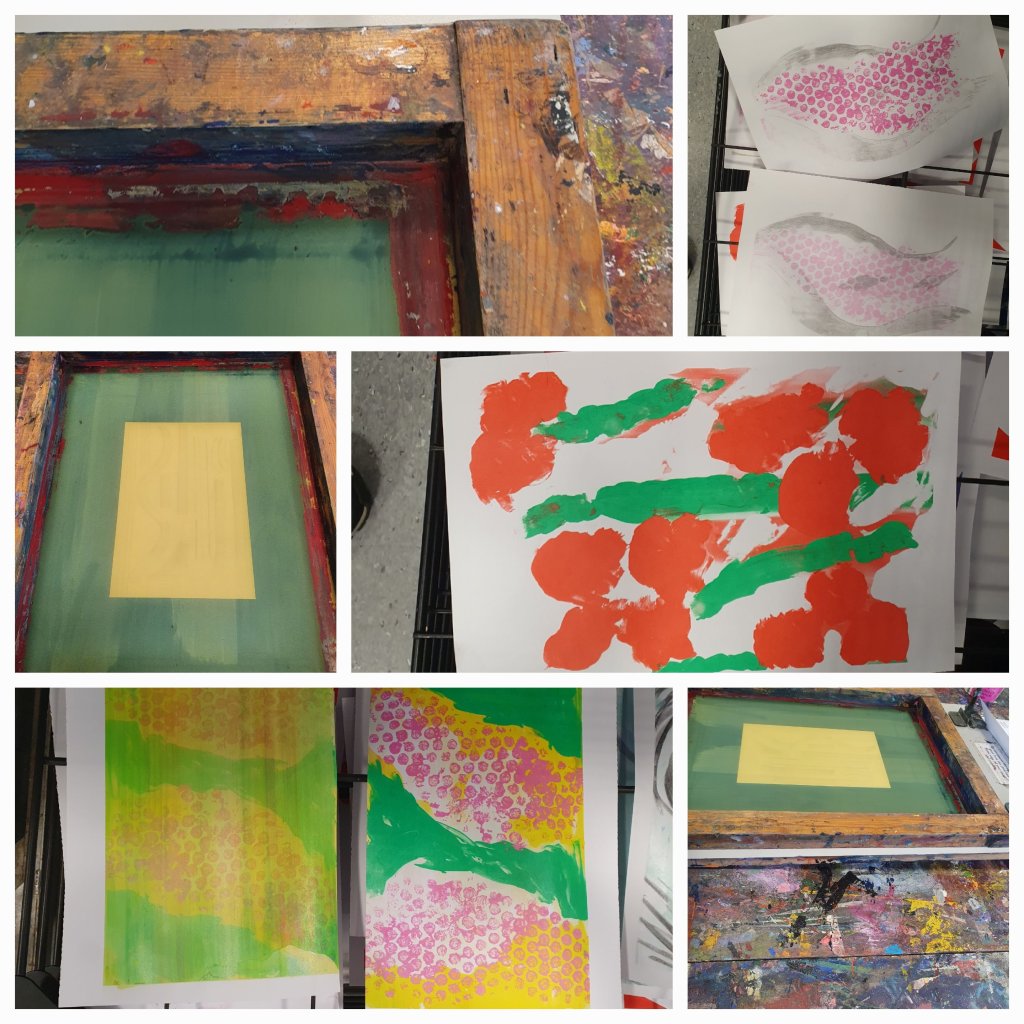
This was a good refresher back into the screen printing process.

I didn’t have any grand ideas or pictures in my mind, I enjoyed using the ink purely as a mark making process. I concentrated on the technique of drawing the ink down the screen.

The simple things of remembering to keep the screen flat, the correct angle of the scraper, getting a good ghost print. How to clean the screen off, using bubble wrap to create texture.

Blank Screenprinting

Reading Weeks

25th October 2022

Reading weeks coincided with half term, this is where I admit defeat a little and that I am a ludite with technology and embracing this whole blog process. I’m a mature student juggling the part time job, with a full time course and a family. I missed the memo that said read the books and write just a little about them in your blog.

I read the chapters from Practices of Looking by Sturken and Cartwright, and re-read John Berger’s Ways of Seeing. I just didn’t log my opinion or interpretation of what I’ve read.

I would like to think that some of the views in John Berger’s Ways of Seeing are outdated, especially the ones about the onlooker being male and the male perspective of the viewer for advertisers etc. However, it hasn’t. Yes we have adverts directed at women as the voyeur and basically that’s what it is. I’m wondering if people think that to market certain products they have to objectify the person in the picture be it male or female? Do they think that if they objectify men to gain more female customers, it’s ok? It balances out objectifying women over the years? I know that’s a bit of an extreme point of view, but we are bringing up the next generations in a crazy social media society that is used to instant gratification. You want a new drill? a new hoover? a new car? with online, next day delivery its there. We are very much a throw away society of almost everything, trends change so quickly what’s in one week is out the next.

The general idealogy of what is the “perfect (woman/man/car/dog/body/hairstyle etc etc)” is still being manipulated by those with power. The big corporations, the politicians, religious leaders, the media, the wealthy and unfortunately a lot of them are men or controlled by men. We don’t accept change in society very well, and some parts of the world have undone 20yrs of progress with regards to equal rights and acceptance of all areas of society. This is clear in the images they are broadcasting to the world. Even in western culture we have a fear of change, a fear of moving away from some of this false idealism.

Reading these two books, I strongly feel that until we change the way we deliver the messages, we won’t change the way we see the world.

There are a few strong, individuals who are brave enough to try

Modernism – Bauhaus

11th October 2022

This was a good one for me, I think because although I have heard of Bauhaus in passing, it’s influence and legacy has never really been something that I have considered in depth. Although I’ve always loved art, I am late to to learning about it and evaluating it and understanding the importance of art as the world changed between the two world wars.

It is interesting to understand the roles assigned to the women of the Bauhaus, in the main they were very traditional. It’s also interesting when the school had to close, how they went on and influenced other schools like the Black Mountain College. I never knew that Kadinsky was involved in teaching colour studies to Bauhaus students. I researched his art last year when I did a small project on synesthesia, music in art. He is a name that keeps coming up in my studies. Another is Joseph Albers, whose wife Annie was also a colour theory teacher.

What the Bauhaus school did was unify art and craft using technology, wanting and promoting change for the better. For the first time art and design were being taught together and it brought out lots of new representation. It incorporated modernism and optimism and had international appeal.

Joseph and Annie Albers taught at the Black Mountain College of Art, in North Caroline. The students there also had a strong commitment to study design and art. Jackson Pollock, Rochenberg, Lloyd Cunningham all had links to the summer school at Black Mountain. American Modernism, Abstract Expressionists all tie back to ideas and lessons that originated from the Bauhaus School and its teachers and students.

Semiotics

4th October 2022

What did I take from our last session?

To See – is a process of observing and recognizing

To Look – is to actively make meaning of the world

Semiotics are a representation – a scientific study of production and use of signs

The interpretation of signs and language – visual literacy

We are meaning makers – Homosignificant.

Well thats a lot to think about in those simple statements. As artists we need to be aware of what we create and how a simple change in an image, like a colour or adding a badge, change a word in a slogan can seem very simple, but have huge connotations in the meaning.

Rolant Barthes Term “Death of the Author” – nothing counts more than what the reader understands and does with the sign. (Baldwin J Roberts, 2014) Adding text to an image fixes it’s meaning to the one most likely.

Understanding semiotics and how an observer is likely to interpret your image and give it meaning, is useful for political advertising and propaganda.

The advances in technology over the past 60 years and how production processes can be blended changes expectations in how we interpret work. Also looking back at some of the examples with hindsight and modern perspective, there are many adverts or images that portray a different and sometimes uncomfortable representation of the world. That back in the 1940’s and 1950’s portrayed society as it was in the rules then, like the segregation of black passengers on public transport in America, which would be frowned upon today, unless it was being used in the correct historical context.

For most of us Semiotics are seen every single day in Road Signs. We know the caution signs for Children Crossing, Elderly People, Horse Riders and the instructional signs, for giving way, one way, priority to oncoming traffic etc.
Images and Meaning

27th September 2022

What do images mean to us? How do we analyse them? Do we actually see what we are looking at? What are the images trying to tell us? Are they are storyline? Part of a visual language?

As an artist and a photographer, there are ways to help you draw the observers attention to what you wish them to notice. These can be subtle or more direct. In general we can use the rule of thirds, leading lines, and perspective to help create a storyboard and direct the eye. We can use a warm or cold colour pallette to enhance a generalised feeling or indicate a season.

With the onset of the digital age we can edit and manipulate the original image, and create composites. There was a time when people used to say the camera never lies, but in today’s society with so many people being concerned about how they look on social media platforms, it often does. Commercial advertising is airbrushed, we can add filters to our own selfies with our phone cameras. We can get apps for our phones that will remove blemishes, change the lighting etc. We can change the background to be somewhere else entirely.

We do all of these things because we want to convey a story, we wish the world to see us in a certain way, or we are unhappy with how we look.

There are times when I struggle to actually see what the photographer or the artist are trying to convey, and that isn’t always a bad thing. Sometimes, having a different perspective to the original intention of the image can lead to conversation and enlightenment.

Negotiated Project: Week 10

26th January 2023

Those of you that have stuck with me on this journey, will realise I’ve not done much with Recycled materials. Fear not! When researching the Art Povera movement and ecological artists. I came across Vivan Sundaram and his works with used engine oil and charcoal.

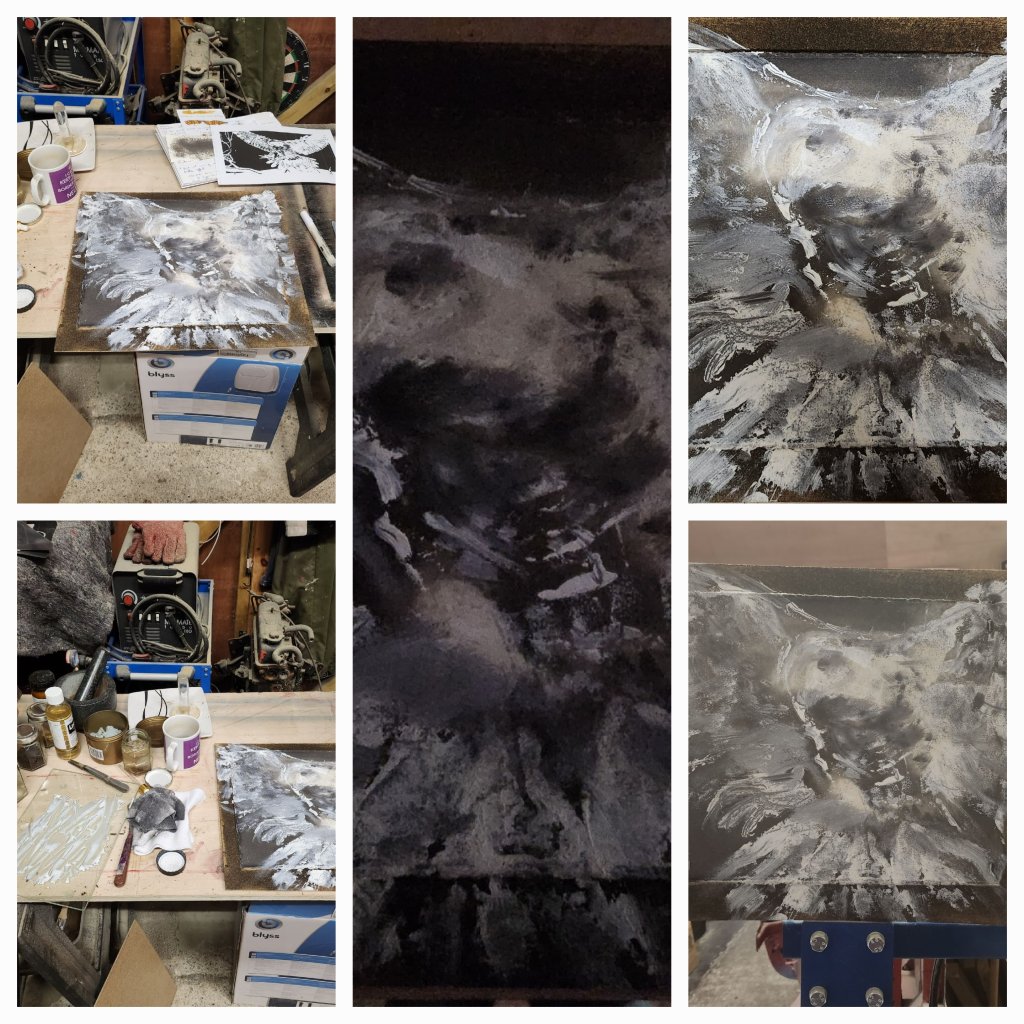
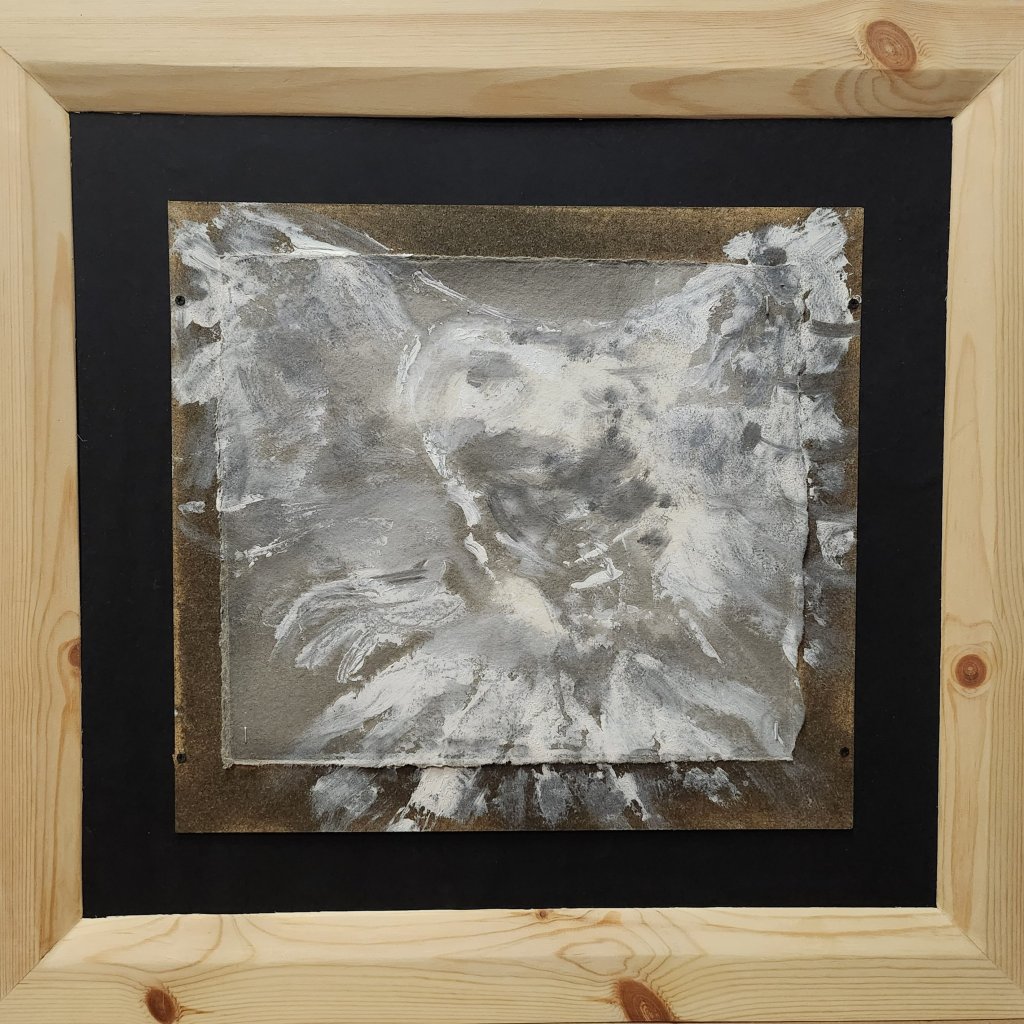
I have access to lots of used engine oil. I felt the canvas should be mix of wood and recycled paper. So I found a piece of hardboard and paired that with 640gsm Khadi Indian Rcycled Cotton Paper.

I took over a dirty workbench in the man cave that I call a garage. Found a rag and using the pour and wipe technique, covered the board and paper in oil.

I love how it reacted with the different materials and the monotone colours that could be achieved. I then mixed up some Zinc White pigment powder and Linseed oil. I had an monotone image of a peregrine falcon that I had created in an Adobe Ilkustrator session. Using it as a guide I applied the Zinc White paint using a pallette knife and blended it into the oil.

I absolutely loved creating this piece, it was smelly and messy, it flowed. I was lost in the process and it really felt like I was getting what I wanted across.

I wanted the subject to be nature because the medium represents the industrial world we live in and the damage we have done to our world for the sake of progress.

Negotiated Project: Week 9

19th January 2023

This week everything just started to come together. My first painting is egg tempra on a plywood offcut.

I loved mixing and using this paint. I used one egg yolk for this whole painting. I was inspired to try this method by a Cathy Pink painting at the Royal West of England Academy in Bristol.

To make the best of this medium I need to spend a lot more time understanding how to blend and layer the colours to get the tones I would like. The painting below started out as a mark making exercise to understand using egg tempra and mixing the paint. The flowers just emerged.

The upside is how easy it is to clean my equipment. Downsides are you can’t store this paint and would need to remember your mix to match the shades, it drys really quickly.

I feel I created “flowers” in a naive style. One of my fellow students said it remined her of Renni Mackintosh, maybe I was subconsciously channeling some China I have at home with his designs on? As I was taking photos I noticed the red plastic coffee table we have in the studio at University. What better irony to photograph a sustainable piece on a mass produced plastic table.

I will use egg tempr again, but I will have to adapt my technique to get the best of this medium.

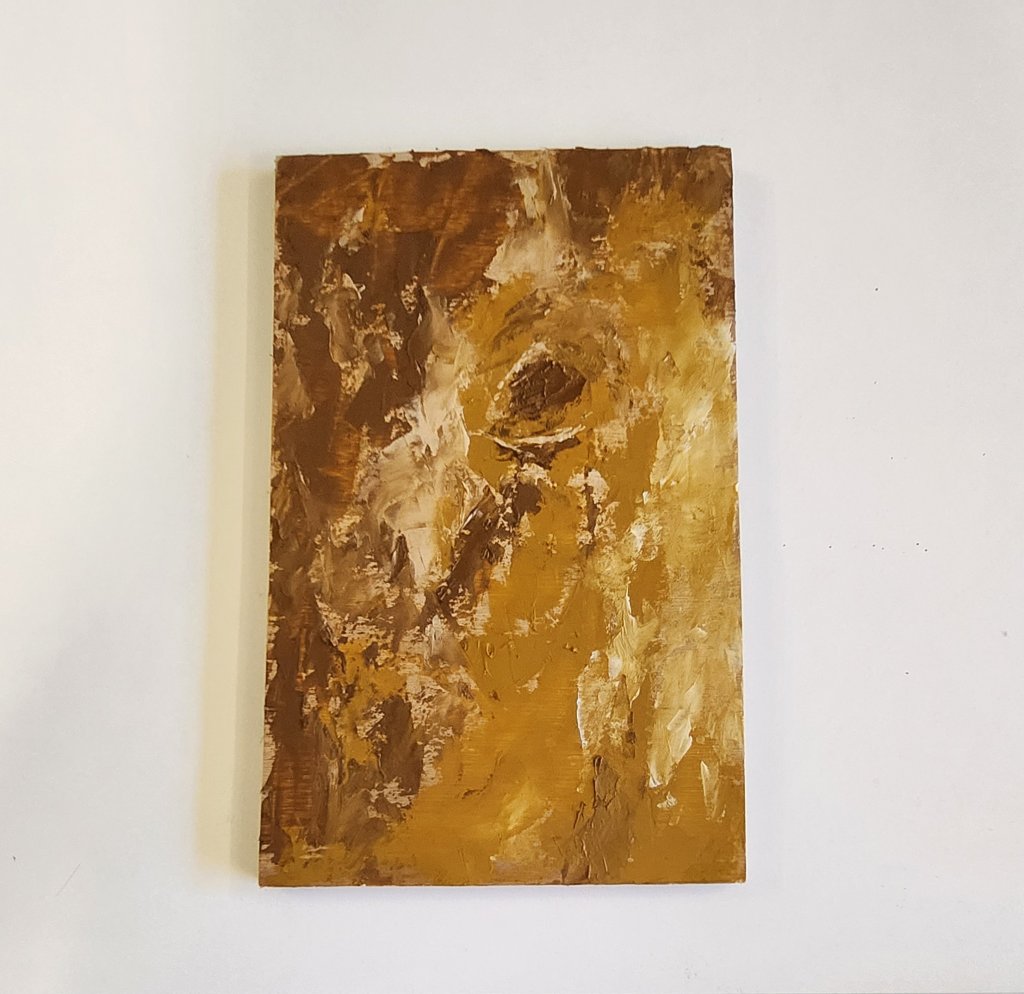
My next image is paint using linseed oil as a binder. I deliberately kept it to a very limited pallette of three colours.

As I started to put the paint down using a pallette knife I remembered a photograph of my friends horse I had taken. His coat is a mixture if these hues and the painting morphed into an abstract representation of him.

I don’t have any air tight containers to store the oil paints. Something I need to figure out how I can do this in a sustainable manner.

This way of mixing paint really suits my style of working, I can see myself using this a lot in the future.

Negotiated Project: Week 8

12th January 2023

Making my own pigments!

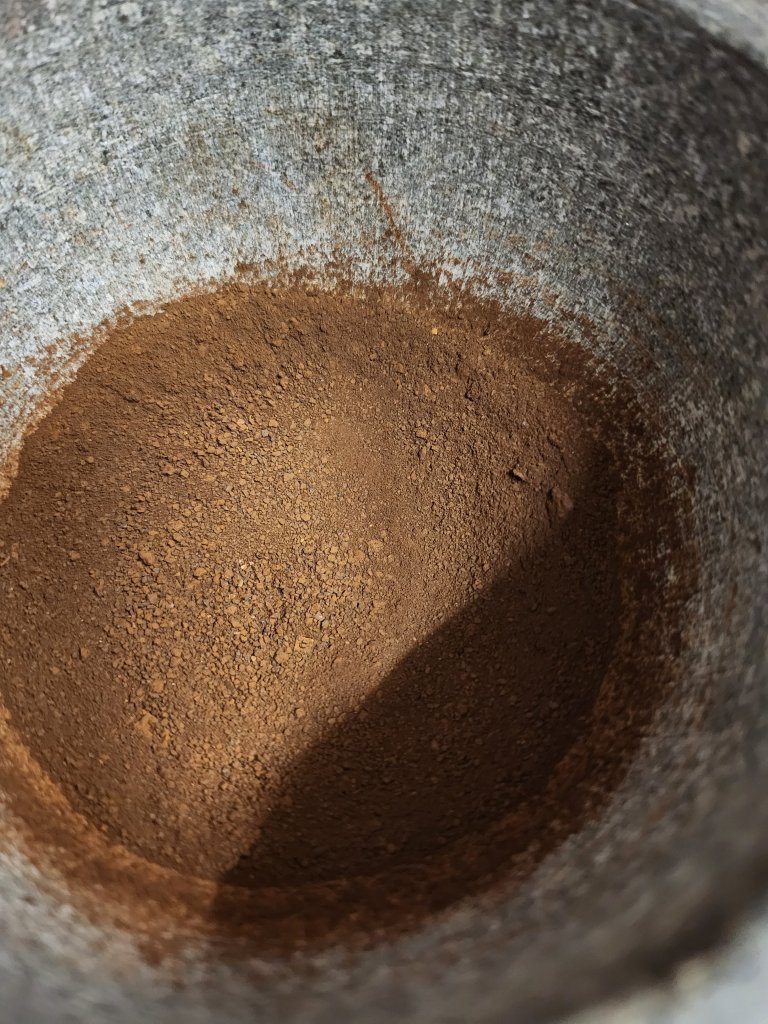
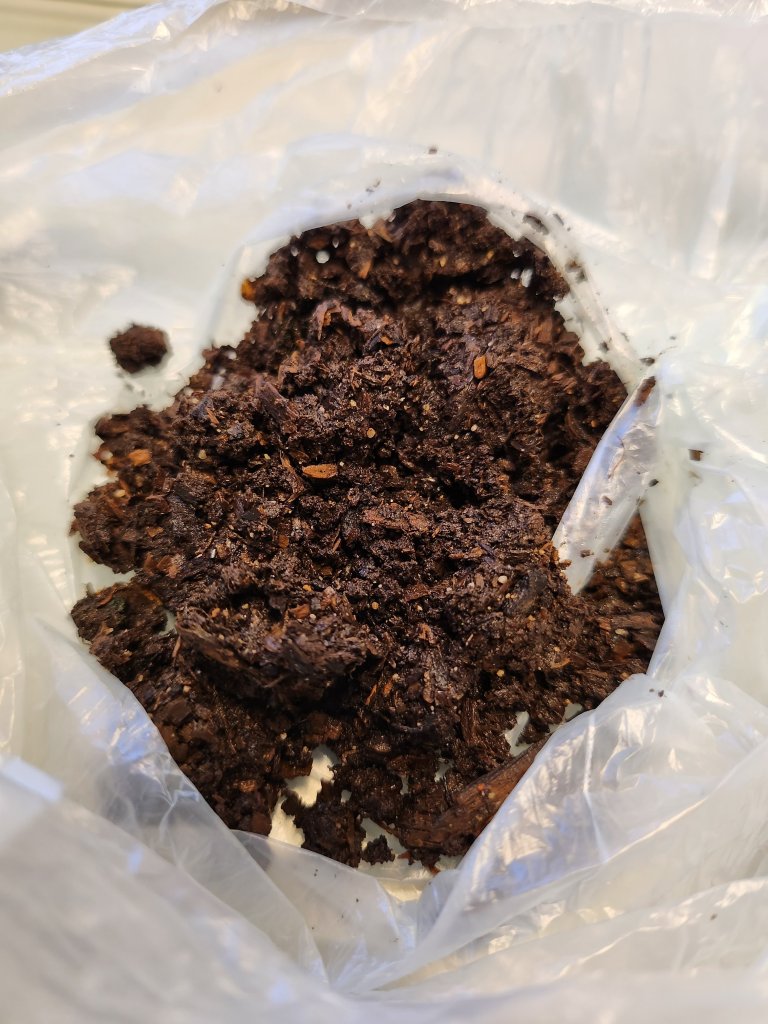
I found the time to make two pigment powders.  The sources were compost from my muck heap and rust from the chassis of a 1968 Triumph Spitfire, one of my husbands restoration projects.  Sources with personal meaning.

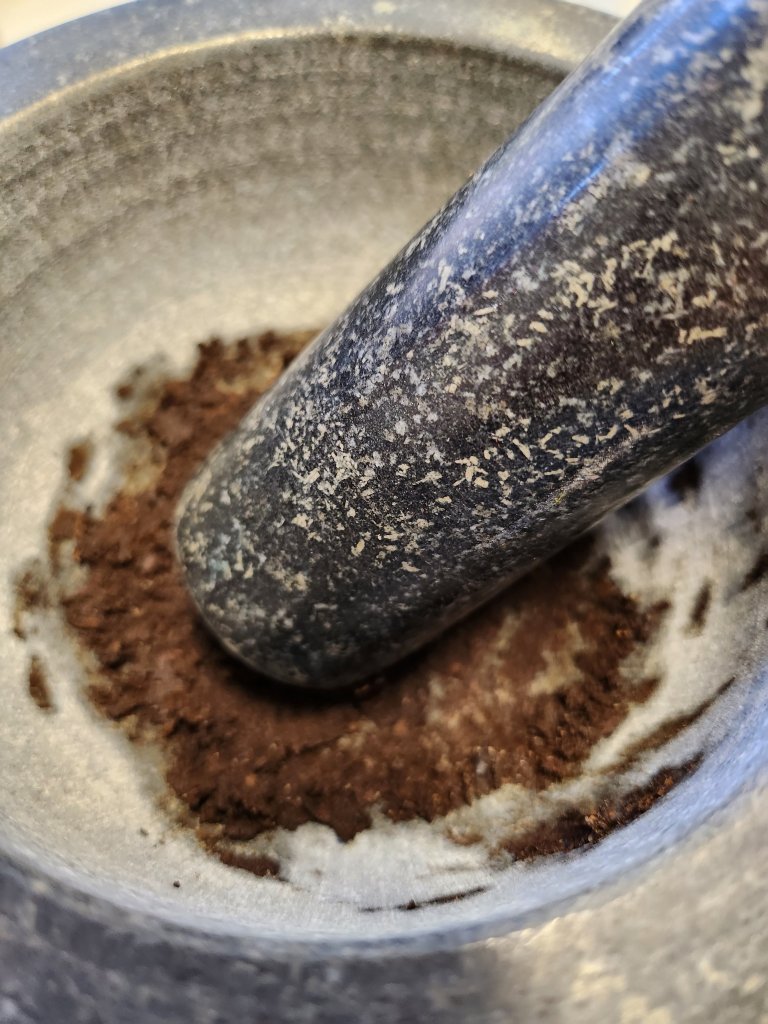
Another steep learning curve. The rust was definitely easier to grind down into a nice fine powder.  However, I found it hard to get a colour out of it just by adding a binder and medium.  I need to do more experimenting with it, use different process to leach the colour.  It had a great gritty texture which I will remember for future projects.

Rust Piece
Pigment Powder
Testing the rust paste

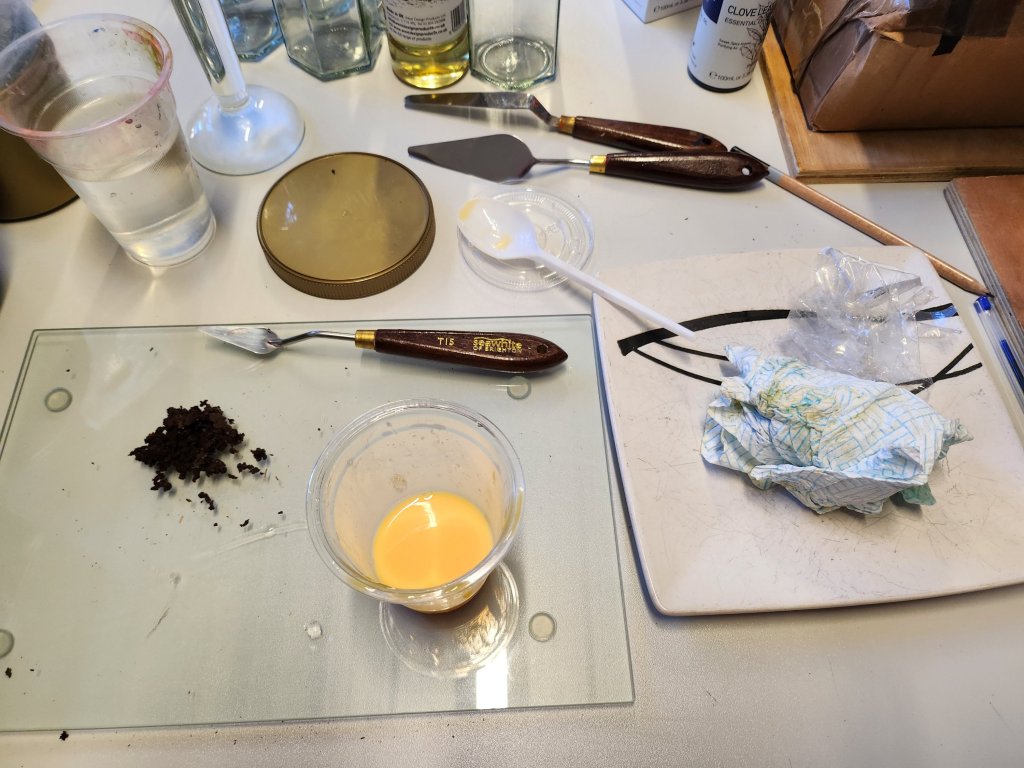
The compost was harder to break down and I should have spent more time with pestle and mortar. I only used it when I made egg tempra. It was a lovely texture and quite easy to paint with, however a finer paste would most definitely have been a better consistency.

3yr matured compost or as gardener’s call it black gold
Needed more grinding for a finer powder
Ready to mix with the egg yolk
Egg Tempra Compost Brown

My conclusion is that I possibly need some form of alchemist qualification.

I definitely need to improve my techniques and understand a bit more about extracting to colour from unusual sources.

Negotiated Project: Week 7

5th January 2023

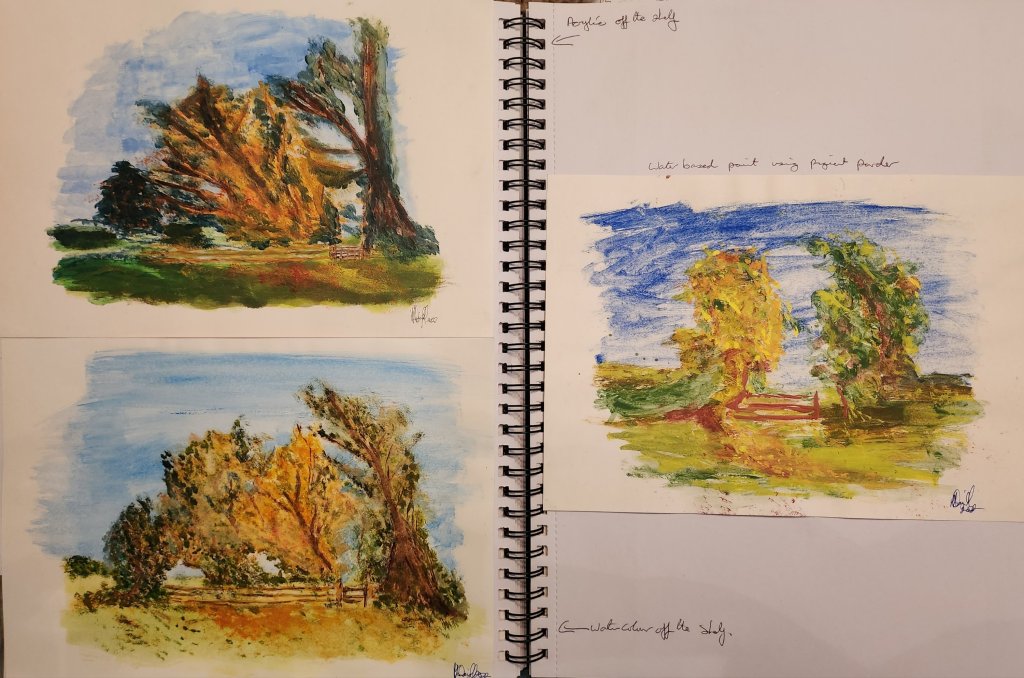
I wanted to have something to measure how easy or not hand made paints were to work with. I have a photo of the treeline in my horses field that is the backdrop of my world. I see it every day, watch the sunsets and seasons come and go.

My decision was to paint the scene in the following mediums:

  • Watercolour
  • Acrylics
  • Waterbased oil paints

My waterbased oils were new and if anything renewed my resolve that I was on the right path, it was the copies amount of plastic packaging this set of paints were wrapped in.

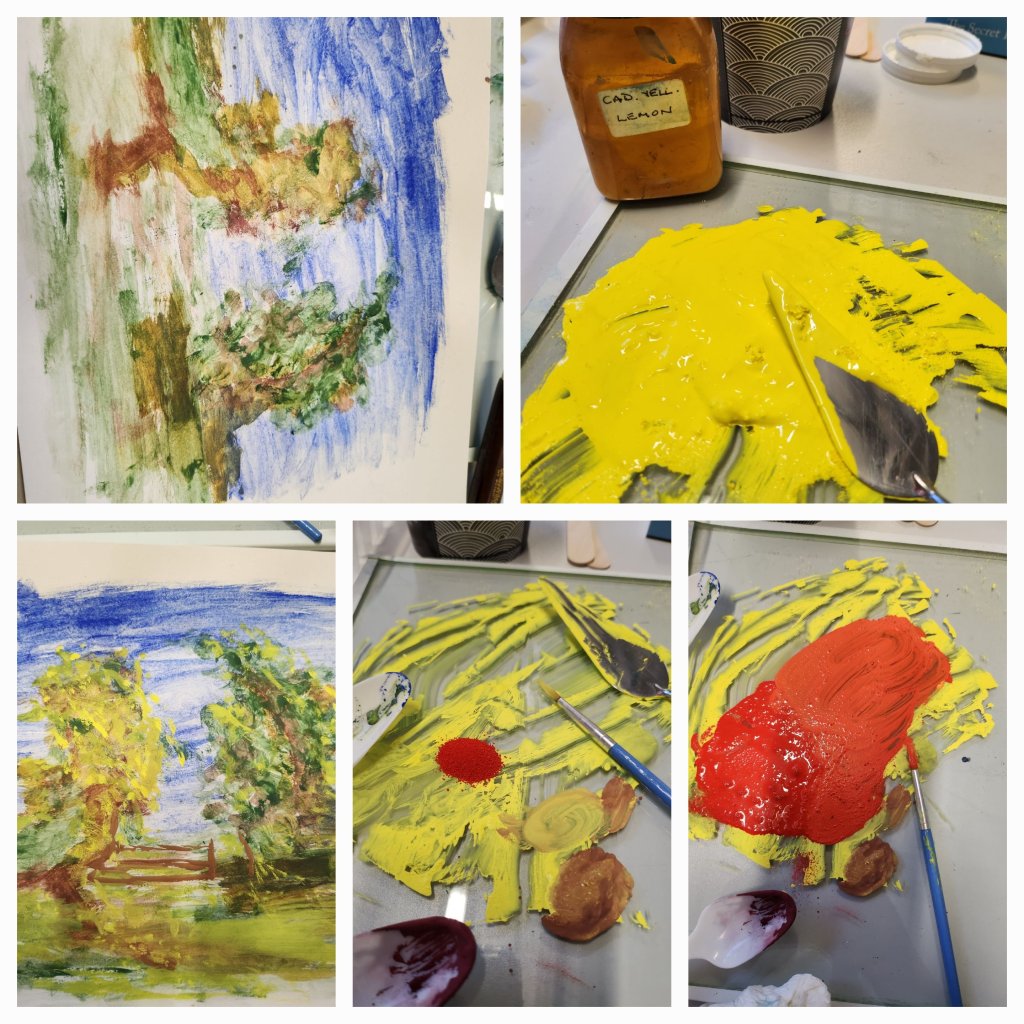
It had been quite an experience working out the mix of powder, gum extract and water to make the paste. It’s very much by feel and each pigment seems to have its own way it wishes to be created.

I’ve found the whole process quite therapeutic. I didn’t get to finish the scene in waterbased oils. I think because I am still feeling all the outside pressures, I was procrastinating a little. Something had to give and the off the shelf waterbased oils painting was it.

I still have three sketches on the same paper in three different mediums. Acrylics, watercolours and my own waterbased paint from pigment powders. I loved making my paints and placing them down on the paper, I found it easy to mix and blend. I also put two different powders together and mixed on my glass palette to achieve the colour or tone I wanted.

Looking at these three images, they represent my journey in this project and that finally in the last one I am starting to feel my inner creative again. I’ve stopped trying to control the process.